 Dr. Bhashyam Kasturi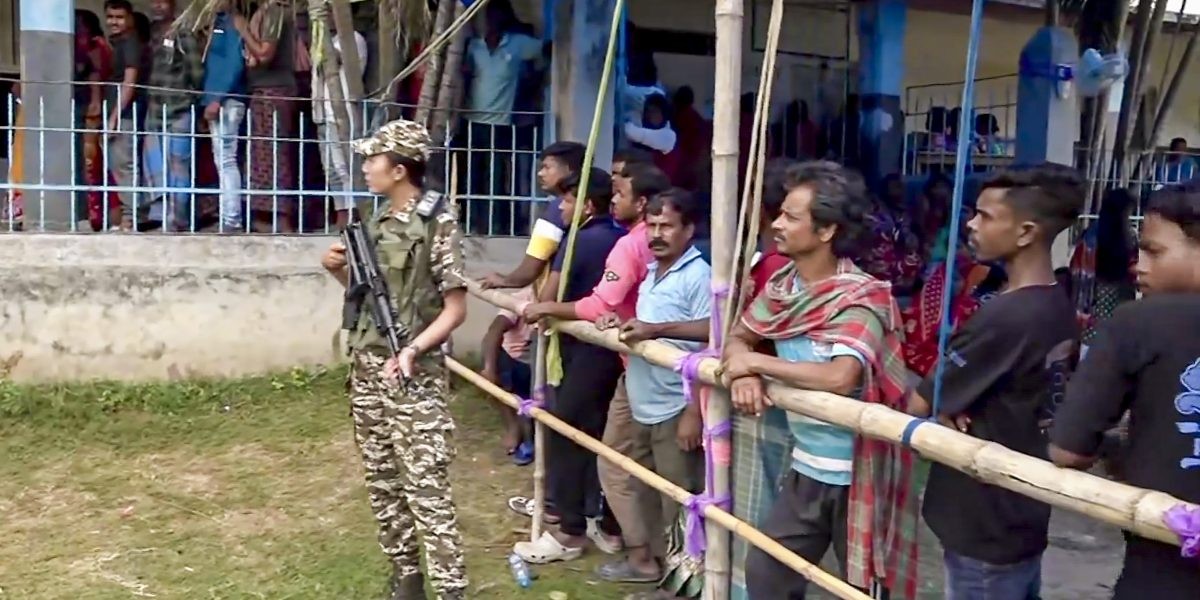
Border security, illegal immigration and the future of India’s relationship with Bangladesh have emerged as central themes in the aftermath of the elections in West Bengal. The primary focus of this analysis is on the impact of the Bengal election results on India’s national security.
The political shift in the state reflects not only the familiar forces of anti-incumbency, but also a broader strategic calculation by the government at the centre, which increasingly views Bengal through the prism of national security. That security dimension appears to have played a decisive role in shaping both the rhetoric and the operational planning surrounding the election.
The implications of the result extend beyond electoral politics. They touch upon the stability of India’s eastern frontier; the management of migration flows and the evolving security architecture along the Bangladesh border. Even before polling began, there were signs that the election was being treated as a matter of exceptional strategic sensitivity. More than 1,900 companies of Central Armed Police Forces were deployed across the state, while senior commanders of the paramilitary forces convened in Kolkata on April 20 to review security arrangements and oversee preparations aimed at preventing political violence.
Equally significant were reports that surfaced immediately after the results were declared, suggesting that large numbers of illegal immigrants had begun leaving the state. While the scale and accuracy of those claims remain subject to verification, the reports underscored the degree to which migration and border management have become politically charged issues in Bengal’s electoral landscape.
For New Delhi, the election outcome is likely to be viewed not merely as a regional political development, but as part of a larger effort to recalibrate governance and security priorities in a border state that occupies a critical place in India’s strategic geography.
One of the first steps taken by the newly appointed Chief Minister of West Bengal, Suvendhu Adhikari, has been to order the transfer of land to the Border Security Force (BSF), to allow continuation of fencing of the India-Bangladesh border. Adhikari announced after his first Cabinet meeting that his government would transfer land within 45 days to the BSF. This issue had been a bone of contention between the central government and the previous state government headed by Mamata Banerjee of the Trinamul Congress, who had transferred only 8 km out of the total 127 km to the BSF.
The Response from Bangladesh
The political developments in West Bengal have also triggered an anxious response across the border in Bangladesh, where concerns over migration, border enforcement and the possibility of so-called “push-in” operations have quickly entered public discourse. Statements from Bangladeshi political figures including expression of concern by a senior Bangladesh Member of Parliament, in the days following the election results underscored the sensitivity surrounding the issue of illegal immigration, including the presence of Rohingya migrants believed to be residing in parts of Bengal.
A day after the Bharatiya Janata Party secured a majority in the West Bengal Assembly elections, Bangladesh’s Foreign Minister, Khalilur Rahman, stated on May 5, that Dhaka would respond if incidents of forced “push-ins” occurred following the change in government. His remarks reflected growing apprehension within Bangladesh that a tougher border and immigration posture could emerge under the new political dispensation.
More inflammatory comments came from Md Nurul Huda of Bangladesh Jamaat-e-Islami, who reportedly urged former Chief Minister Mamata Banerjee to “declare war against New Delhi” and proclaim West Bengal an independent nation. According to reports carried by Mathrubhumi News on May 8, 2026, Huda further claimed that Bangladesh’s 170 million Muslims would stand behind such a move if Banerjee rejected the authority of the Centre.
Taken together, these statements reveal the extent to which immigration and border politics have become deeply intertwined with regional security concerns. They also suggest that the issue of illegal migration is no longer viewed merely as a domestic political question within India, but as a matter with the potential to shape diplomatic and security relations between New Delhi and Dhaka.
The Strain on India-Bangladesh Relations

On May 7, 2026, India said the repatriation of alleged undocumented Bangladeshi nationals was the “core issue”. This was after Bangladesh warned it would act, if “push-in” incidents increased following the BJP’s victory in the West Bengal assembly elections. Speaking at the weekly briefing, Randhir Jaiswal MEA spokesperson said 2,860 nationality verification cases were pending with Bangladesh, some for more than five years. “These comments must be seen in the context of the core issue of repatriation of illegal Bangladeshis from India,” Jaiswal stated. “This obviously requires cooperation from Bangladesh.”
India said it expected Bangladesh to “expedite nationality verification so that repatriation of illegal immigrants can take place in a smooth manner”. Jaiswal’s comments came in response to a question about the Bangladesh Foreign Minister’s statement cited above. The Bangladesh Nationalist Party’s official Facebook page posted his statement with a graphic and message in Bengali. India’s response effectively put the onus for the possible ‘push-ins’ as a consequence of delays by Bangladesh in responding to requests for nationality verification.
Illegal Immigration, Border Security and Deportation
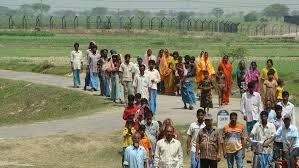
The immediate security concern relates to several ‘thousand’ illegal immigrants residing in West Bengal and their reported movement out of the state in the wake of the announcement of the election results. While the latter movement shown on social media was subsequently proved to be ‘false and misleading’, it reflected the sentiment against the illegal residents in the State, mostly from Bangladesh. Earlier, similar reports appeared when the Special Intensive Revision (SIR) ordered by the Election Commission was announced in the State, a move that reignited debates over citizenship, voter identity and the extent of undocumented settlement along the border districts.
Amit Shah, the union Home Minister, had stated prior to the elections that every single individual living illegally in West Bengal, would be identified and deported. While the process of deportation has been underway for several years now, it is expected to intensify under the new BJP government in Kolkata. For example, illegal Bangladesh refugees were deported in 2016 from the capital New Delhi.
The challenge, however, remains formidable. Over the years, many illegal immigrants are believed to have acquired Aadhaar cards and other forms of documentation that enable them to reside and work in different parts of India, with relative ease. This has complicated efforts at identification and enforcement, blurring the distinction between undocumented entrants and legitimate residents within an already dense bureaucratic system.
Any future verification exercise, therefore, will require both administrative rigor and political restraint. Errors in identification carry serious consequences, not only for those wrongly targeted, but also for the credibility of the institutions conducting the process. In a climate already charged with political tension and competing narratives over citizenship and migration, the margin for error is exceptionally small.
Illegal Immigration, Border Security and Deportation
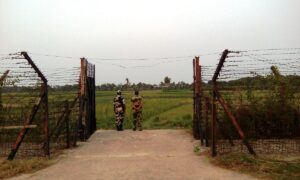
The larger challenge lies in securing the border itself — and in confronting, with urgency rather than rhetoric, the longstanding failure to fully fence India’s frontier with Bangladesh. A porous border has historically provided political leverage within the State to bring in refugees. Estimates of illegal immigrants in the voter lists of the State number around 1.25 crore, while actual numbers are probably higher. There is another category that the MHA terms as migrants who enter India legally but stay beyond their visa validity. Official figures for 2017, 2018 and 2019 are 25,942, 49,645 and 35,055 respectively.
Two things stand out in terms of deportations. While official figures of those caught and deported, as stated by MHA in Parliament, on the India-Bangladesh border do not go above 1000 in the same period 2017-2019. However, as reported by AIR News on 21st November 2025, the BSF stated that as of July 2025, more illegal immigrants were trying to leave the State, with over 3,500 illegal immigrants caught in the same month alone. Some reports suggest that, after the SIR was introduced in West Bengal many ‘thousands’ left West Bengal in late 2025.
Border Fencing: An Unfinished Project
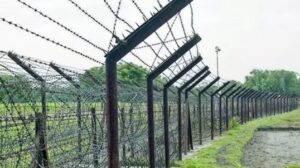
Just how secure is the India-Bangladesh border? Official figures suggest that while substantial progress has been made, the project remains far from complete. Of the 4,096-kilometre frontier, approximately 3,232 kilometres have been fenced, according to a written reply by Minister of State for Home Affairs Nityanand Rai in the Lok Sabha on February 4, 2025.
That still leaves nearly 864 kilometres unfenced. Of this, about 174.5 kilometres fall into what the Ministry of Home Affairs describes as “non-feasible gaps” — stretches where physical fencing is considered impractical because of riverine terrain, marshlands, landslide-prone areas and other geographically vulnerable zones. The Ministry has also cited persistent hurdles including land acquisition disputes, objections raised by the Border Guard Bangladesh, difficult terrain and limited working seasons in border areas.
The issue has also triggered judicial intervention. The Calcutta High Court sharply criticised the West Bengal administration for delays in transferring acquired border land to the Border Security Force. Acting on an earlier directive issued in January 2026, the court had ordered the state government to hand over the required plots across nine border districts by March 31.
But compliance, according to the court, fell dramatically short. The government led by Mamata Banerjee was expected to transfer land covering nearly 127 kilometres of the border, yet only around 8 kilometres had reportedly been handed over. The High Court described the state’s response as “sketchy and evasive,” signalling growing judicial impatience over delays that continue to impede the completion of one of India’s most sensitive border-security projects.
Border Security and the Bangladesh Challenge
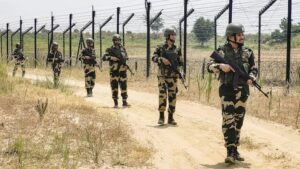
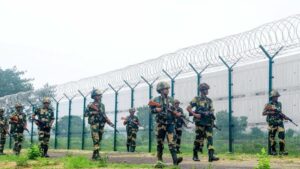
Over the years, the challenge along the India-Bangladesh border has stemmed not only from its porous geography, but also from corruption at multiple levels that enabled cattle smuggling, illegal trade and the movement of undocumented immigrants across the frontier. What altered the sense of urgency in New Delhi was the ouster of the government led by Sheikh Hasina in Dhaka. The political upheaval prompted the Centre to tighten border management, accelerate fencing efforts and expand the operational jurisdiction of the Border Security Force from 15 kilometres to 50 kilometres on the Indian side of the border.
Yet illegal infiltration continued, deepening concerns within the Central Government. Increasingly, the issue has been viewed not merely as a matter of border security, but as a broader law-and-order challenge, particularly in West Bengal under the administration of the All India Trinamool Congress.
Conclusion

The challenge before the new government is to implement the order of the Kolkata High Court on the transfer of land to the BSF and tighten security all along the border.
One can also expect efforts to identify and deport illegal immigrants from West Bengal to intensify, alongside closer monitoring and tighter coordination between the state administration and the Central Government on matters of border security and internal law and order.
Additionally, the Centre and State need to act in unison as far as relations with the new BNP government in Bangladesh. There are pending issues of transfer of water etc. which could be resolved.
Further, the elections have shown that beneath the political wave in favour of the BJP, the concern over security has also heightened, a positive consequence of the focus on illegal immigration. This is the new Bengal that we are looking at. Other priorities beckon, including industrial development of the state, but the first port of call must be the security of the borders and relationship with Bangladesh.