 Dr. Bhashyam Kasturi and Dr. Sumi Gupta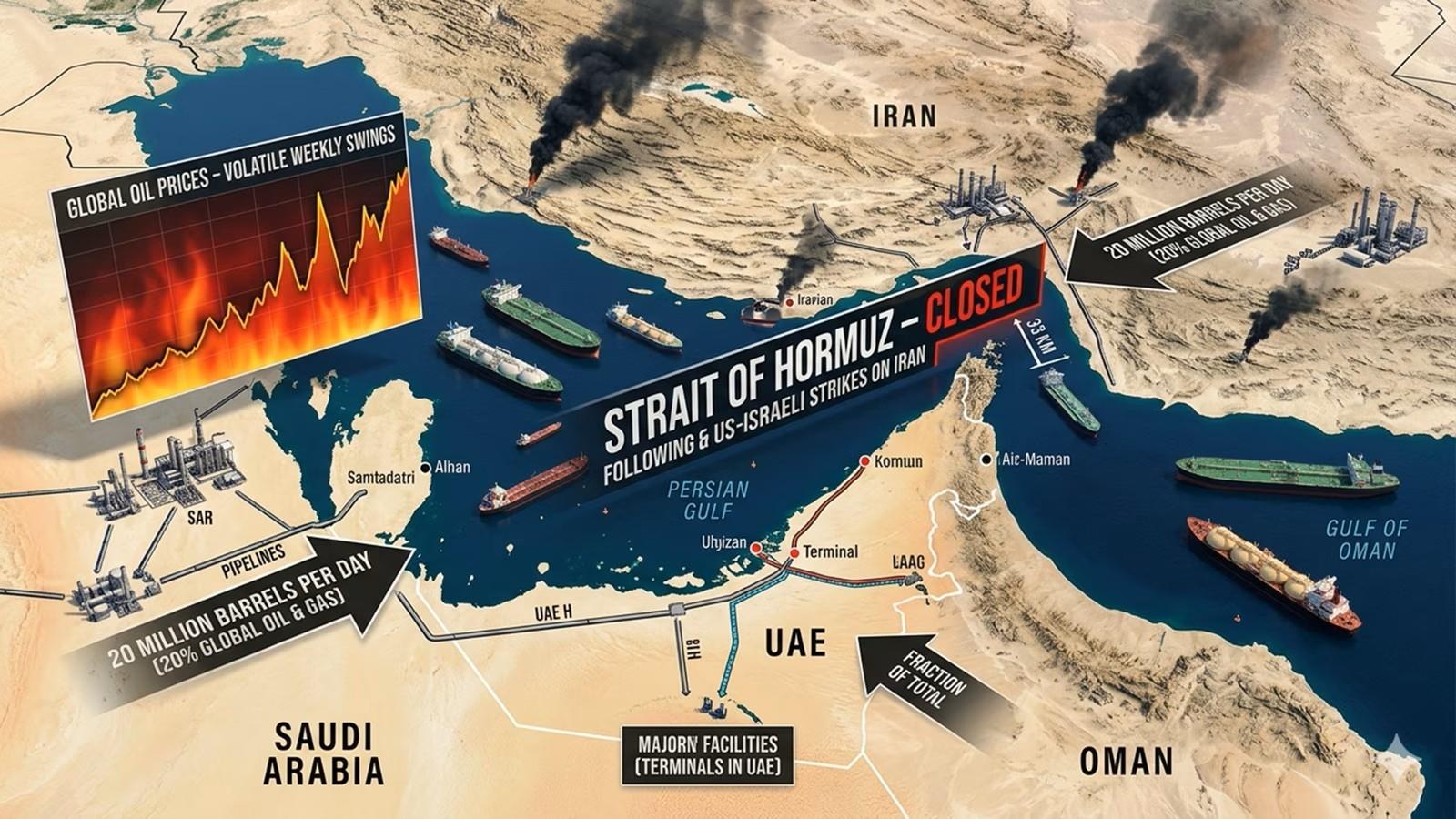
A Fragile Passage: Latest Turns in the Strait of Hormuz Crisis
The latest phase of the Middle East crisis has unfolded in a blur of competing claims and fragile assurances, with the Strait of Hormuz once again at its center.
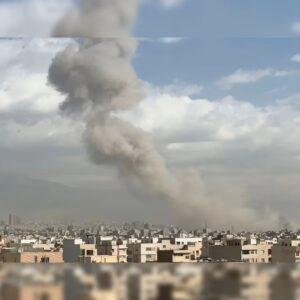
On Friday, Iran declared the vital shipping lane open during a ceasefire between Israel and Lebanon. But quickly attached conditions, insisting vessels follow routes coordinated by its maritime authorities — raising questions about access, control and potential tolls.
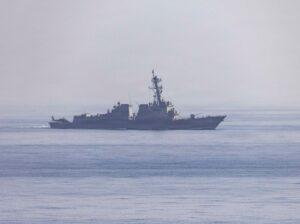
“In line with the ceasefire in Lebanon, the passage for all commercial vessels through Strait of Hormuz is declared completely open for the remaining period of ceasefire,” Foreign Minister Seyed Abbas Araghchi said on social media. However, vessels must transit through a “coordinated route” announced by Iran’s maritime authorities, Araghchi added.
Even as Donald Trump welcomed the move and proclaimed the passage “fully open,” he maintained that a U.S. naval blockade of Iranian ports would remain in force.
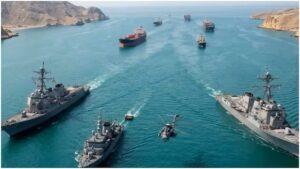
Trump later Friday said, that Iran “has just announced that the Strait of Hormuz is fully open and ready for business and full passage, even as the U.S. blockade remains in full force.”

On early Saturday, Tehran, however, pushed back. Parliamentary Speaker Mohammad Bagher Ghalibaf warned that the strait would not stay open under continued pressure, underscoring how conditional — and reversible — the arrangement remains.
Iran’s parliamentary speaker, Mohammad Bagher and said today on social media that Donald Trump “made seven claims in one hour, all seven of which were false. They did not win the war, and they will certainly not get anywhere in negotiations either with these lies”. On the Strait of Hormuz, he said that, with the “continuation of the blockade”, the strait “will not remain open”.
The uncertainty extends beyond shipping lanes. Iran has firmly rejected U.S. claims that it would transfer its enriched uranium stockpile, contradicting Washington’s portrayal of a near-final agreement. Still, Mr. Trump has projected confidence, suggesting a broader deal is close even as economic pressure continues.
Markets, meanwhile, have responded in real time: oil prices fell sharply after Iran’s announcement, only to remain volatile amid the mixed signals. As diplomatic manoeuvring intensifies — with potential talks now pointing toward Islamabad — the crisis reflects a familiar pattern, where moments of de-escalation are quickly shadowed by renewed brinkmanship, leaving global energy security balanced on uncertain ground.
The Expanding Energy Crisis: How Far Does It Reach?.
The nature of this challenge becomes apparent when one views the imposition of a national emergency in The Philippines and Australia imposing a work from home and several other energy saving measures. India is fortunate so far, in that it has sufficient fuel reserves, while an LPG shortage is likely to be felt soon, as more than 60% is imported from Qatar. This analysis argues that the energy crisis across South Asia and Southeast Asia is likely to intensify in the medium term before conflict termination allows things to go back to normal. With no sign that the conflict is ending anytime soon, the long-term impact.

Bangladesh and Sri Lanka are two other countries faced with this energy crisis. Here again, shortage of fuel is the primary challenge.

At its core, the energy system is a continuous cycle, sustaining domestic demand and powering commerce — from food supply chains to global travel. When that cycle falters, the consequences cascade quickly.
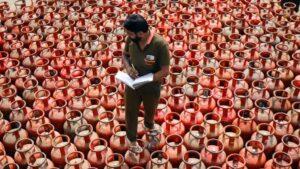
In the Philippines, even the prospect of grounding the national airline — or forcing it to bear sharply higher fuel costs imposed by destination countries — signals how close parts of the system are to disruption, and how swiftly an energy strain can edge toward shutdown.
Pakistan is not far behind in implementing steps to tide over the present crisis. Islamabad notified a price hike of Rs. 55 per litre of petrol in a bid to conserve fuel and most importantly, has grounded a major part of the government’s fleet of vehicles, indicating efforts to curb wasteful expenditure.
Does this make a national lockdown in countries inevitable?
This of course depends on the amount of fuel reserves that a nation has. For instance, India has strategic petroleum reserves for nine days, but in total has reserves for approximately 70 days. The government’s move to cut excise duty is to benefit the oil companies who need to adjust their balance sheets.
The challenge to energy comes from Hormuz being a narrow strait allowing those who control it to use it as a leverage in times of war, as Iran has currently done. To obviate the crisis, countries like China purchased discounted oil from Iran for several years ahead, given their ability to look ahead. Using a combination of tinpot oil refineries, black ships and spot purchases, Beijing has managed to build its reserves.
Though some analysts claim that Trump’s primary aim of going to war with Iran was to gain control over its oil, it seems unlikely that the example of Venezuela can be replicated here. However, the longer the conflict endures, the more hurt will be felt by countries in the global south.
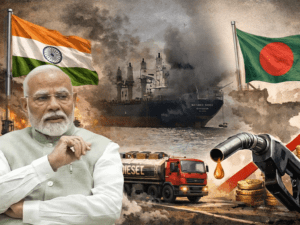
In South Asia, Bangladesh relies almost upto 95% on imported oil and therefore has been hit badly with reserves left only for about 25 days. Imports have been ramped up from Saudi, India and Malaysia. India recently sent 7000 tonnes of diesel through the India-Bangladesh Friendship pipeline. Earlier in March, India had sent 20,000 tonnes of diesel to Bangladesh. This is under the annual deal to provide 180,000 tonnes of diesel. The crisis has led to strict daily rationing of fuel and closure of all public and private universities. Similar and other emergency measures have been introduced in Sri Lanka. Specific quotas have been laid down for supply of petrol to vehicles and a national pass system using a QR code has been instituted for fuel purchases by citizens. Public sector offices, schools and universities are working on a four-day schedule.
Pakistan is not far behind in implementing steps to tide over the present crisis. Islamabad notified a price hike of Rs. 55 per litre of petrol in a bid to conserve fuel and most importantly, has grounded a major part of the government’s fleet of vehicles, indicating efforts to curb wasteful expenditure.
These are a few illustrations of the challenges faced by South Asia. The impact of the fuel crisis created by the West Asia situation is however, much deeper. It goes beyond supply chain disruptions, to the economy of countries being hit in the medium term. For instance, while India’s fuel situation is currently stable in the short-term, a further increase in global oil prices will impact growth. Additionally, there is a diplomatic cost involved as was seen when the US agreed to give a 30-day waiver to India to purchase Russian oil. To be dependent on another nation to grant permission to buy oil is an assault on India’s sovereignty.
In India’s case, the real challenge is LPG, 60% of which is imported from Qatar and UAE. Ironically, more than a decade ago, an Indian company had offered to build an undersea gas pipeline from Oman to India to supply gas to India. This never took off because of the technical difficulties involved. Perhaps, if greater attention had been paid to this option, India might have been in a better position today. The fuel situation is fortunately not so bad, but with the overall energy import bill rising, it is likely to impact GDP also.
Reports also speak of India hiking ATF prices w.e.f 1 April by 115% due to the tensions in West Asia. This again will affect the airline and travel industry all over the country.

Further in Southeast Asia, the Philippines has declared a national emergency. This appears to be maximum effort to conserve energy by a nation which imports 98% of the oil from the Middle East. A surge in fuel prices is but natural, but clearly, only rationing and work from home is not going to solve the issue. Emergency imports from Russia will only add a notch up to the 3-4 weeks of existing fuel stocks. The challenge for many countries is that there are no domestic production facilities or for that matter storage facilities. This makes it more difficult and increases the risks of supply chain disruptions. Australia has among other things, cut fuel excise even as global oil prices reached US$ 115 per barrel. This should help to ease fuel prices. India took a similar step recently to protect consumers and keep pump prices steady. However, the hike in premium fuel prices means that this balancing exercise cannot keep things steady forever.
Conclusion
At the end of the day, the economic, diplomatic and strategic costs of the war in the Middle East will spiral out of control, the longer this conflict continues.
Nations can take measures to control the situation, but to tide over the crisis, need to look towards rise in self-sufficiency in energy. This is most crucial for a large nation like India. Increasing Strategic Petroleum Reserves, investing in oil fields overseas and enhancing domestic crude production are the ways ahead. Linking India to gas supply chains in the Middle East via safer routes or even underwater is really what the future looks like.
Vulnerability is undoubtedly a factor, but then in most cases, energy supply chains are risk prone. But the need to take risks for the future outweighs the potential risks currently.