 Dr. Bhashyam Kasturi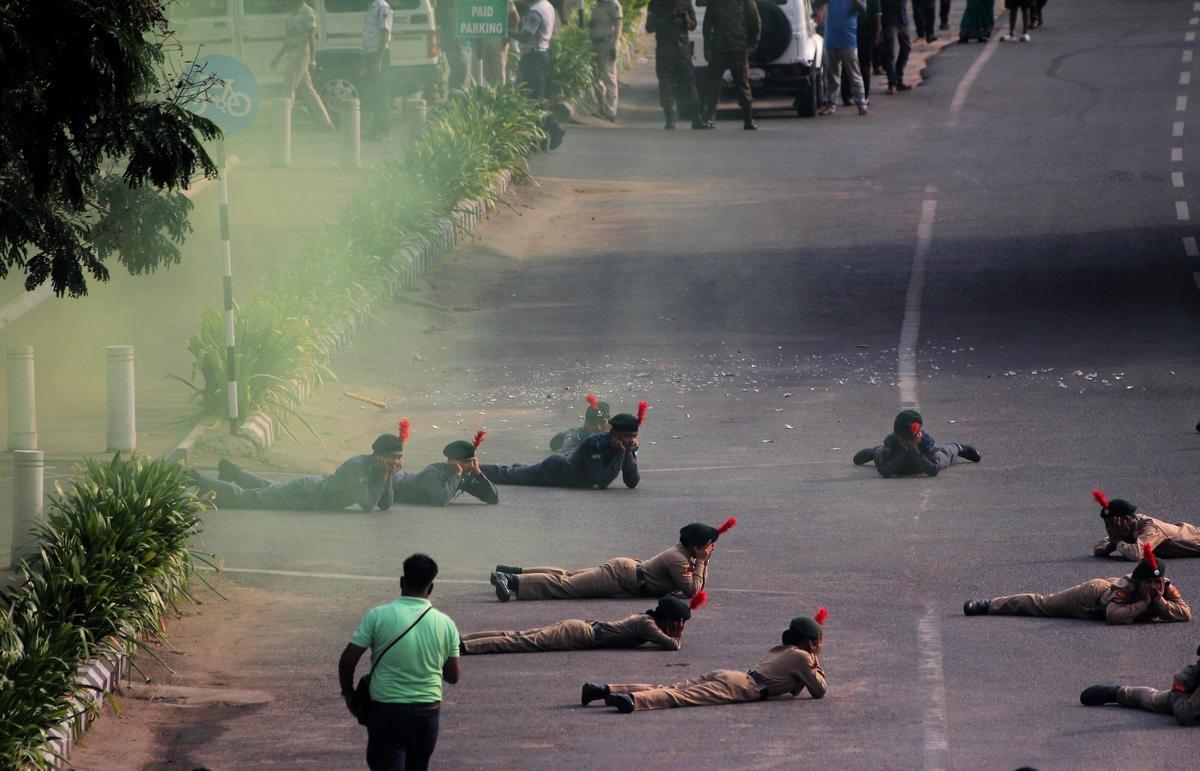
During Operation Sindoor last year, India entered a period of heightened alert, with blackouts imposed across several states bordering Pakistan and civil defence drills conducted nationwide to assess the country’s readiness for emergencies and disaster response.
On 7 May 2025, Operation Abhyas was launched across India to check preparedness for war and civil defence. Spanning 244 districts across India, the drill tested air raid shelters, sirens, training civilians in handling medical emergencies and handling blackouts. This massive exercise was held in civil defence districts.
More recently, media reports indicated that blackouts had occurred in several districts in Punjab and Jammu and Kashmir, close to the anniversary of the Pahalgam attack on 21 April 2026. Pertinently, this is the norm now, to have round the clock security, to alert the civic defence, military and para-military forces so that internal security is maintained. Apprehending a terrorist attack or a natural disaster, either way, preparedness is a must for a nation. India is increasingly being prepared for the realities of war from an internal security perspective, with such measures poised to become a recurring feature of national preparedness rather than an occasional exercise.
On 24 April 2026, mock drills and blackouts were held in parts of Punjab, Jammu and Kashmir and Meghalaya. If one were to break down the civil defence exercises held in April, it is seen that in Punjab, Ludhiana and Amritsar saw a blackout simulation to assess civil defence preparedness. Air raid sirens reportedly went off as drills were carried out in J&K from 20 to 24 April 2026. This was to assess air defence preparedness. Given the state of persisting tensions with Pakistan, the drills in North Western India are understandable, but why Meghalaya? ARMEX-I was held with air raid simulations, blackout and search and rescue drills on 24 April 2026. Held in two stages, the drills tested the response capabilities of the state administration and its wings as well as that of the armed forces in the region. Notably, in all these cases of mock drills, the concerned state administration will submit a “action taken report” to the MHA to assess the state of preparedness.
If we were to turn our eyes to Operation Abhyaas, this nationwide drill witnessed the largest civil defence exercise since 1971. In Delhi, for instance, 60 air raid sirens were activated across 55 locations, while in Assam 18 locations saw the conduct of mock drills and concluded within half an hour. In February 2026, mock drills were held across the entire Northeast region on the possible impact of an earthquake led by the National Disaster Management Agency (NDMA). Obviously, given the scale of the challenge, mock drills must be necessarily held in batches and thus, each region or state has had a mock drill. This calculation would have been based on the outcomes of the national drill “Abhyaas” held last year.
The points of note for learning relate to coordination between government and civilian agencies, testing response mechanisms and put in place new emergency protocols. Some analysts argue that this is India preparing for war. This is partly true, because of tensions on both the Western and Eastern fronts. However, it sends out a different signal when seen as the Central Government’s determination to make civil defence preparedness a part of the Internal Security scenario. Testing the capabilities and resilience of all emergency services, be it medical or disaster response, is a pre-requisite for national readiness in the event of a national calamity or war.
That these drills have extended to every corner of the country, including the Andaman and Nicobar Islands, suggests a nationwide elevation of readiness—an indication that India’s land, air, and sea frontiers are being placed on alert and its response systems tested for the possibility of crisis.
The other notable point is the importance is cyber readiness. Given the global nature of cyber-attacks on India, it is likely that our adversaries will use the cyber domain to create instability. The NDMA would be well advised to test the cyber defence domain of India’s critical infrastructure in order to be prepared for any eventuality.
The other issue of import will be the availability of essential items needed for emergency response. Recall the experience of the Covid-19 pandemic when oxygen cylinders were in short supply and were being sold in the black market. The listing and making available of such items, be it medical, or infrastructure related will be a medium-term need, that the government has to plan for.