 Dr. Bhashyam Kasturi and Dr. Sumi Gupta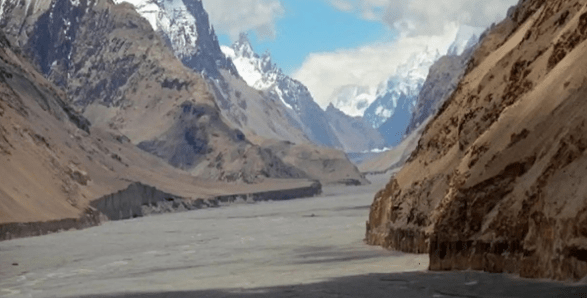
At the heart of the dispute lies a 1963 agreement in which Pakistan ceded roughly 5,180 square kilometres of Indian territory to China—an arrangement New Delhi has never recognized. By now claiming formal ownership of this land, Beijing is attempting to transform a disputed and illegal transfer into an accepted reality. If left uncontested, that effort would further weaken India’s strategic position in the high Himalayas, particularly west of the Karakoram Pass, where geography and military leverage are inseparable.
Can Diplomacy Resolve Territorial Ambiguity
For decades, India has relied on diplomatic protest and legal consistency to underline its claims, including its assertion that it shares a contiguous border with Afghanistan through this region. That formulation, while correct, is no longer sufficient. What must be stated clearly—and backed credibly—is that India’s international boundary with China runs through Pakistan-occupied territory and touches the Wakhan Corridor. Ambiguity on this point does not preserve stability; it invites revisionism.
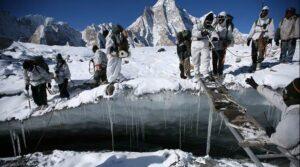
History offers a cautionary lesson. In 1984, when competing claims threatened India’s position on the Siachen Glacier, New Delhi acted decisively through Operation Meghdoot, securing ground that diplomacy alone could not. The circumstances today are different, but the principle remains unchanged: territorial claims, when tested, require more than carefully worded statements.
Why the China–India Border Dispute Still Matters After 60 Years?
China has never accepted India’s position that the boundary between the two countries extends west of the Karakoram Pass. That disagreement dates back to 1960, when Premier Zhou Enlai proposed a Line of Actual Control with India that conspicuously omitted any reference to the boundary in Pakistan-occupied territory. The omission was strategic. Within three years, Beijing would formalize its partnership with Islamabad through the very agreement that underpins today’s dispute.
What has changed since then is the scale and permanence of Chinese activity on the ground. Beginning around 2013, China has steadily expanded road networks and military infrastructure in the Shaksgam Valley under the Xinjiang Military District. It has been reported that missile deployments in the area have been sighted, while satellite imagery confirms a road branching from the G219 highway, crossing the Aghil Pass and extending southward toward the approaches of the Siachen Glacier. These are not symbolic gestures. They are logistical investments designed to endure.
Indian military planners have long warned of the implications. A future China pincer strategy—pressure from Depsang in the east combined with a westward thrust from Shaksgam—would place Siachen in a far more precarious position. Preventing such a convergence before it materializes is not adventurism; it is strategic foresight.
The Risks of Restraint in a Shifting Borderland
Any Indian move to establish a physical presence in the Shaksgam Valley would almost certainly provoke a response from China, and possibly from Pakistan. Military planners will inform that the logistics of such an endeavour are extremely difficult, but not impossible. The risk is real, but it is also foreseeable. Strategic decisions are often taken precisely because the costs of inaction are judged to be greater than the risks of a response. In this case, restraint may no longer preserve stability; it may only accelerate erosion.

A limited and carefully calibrated deployment—focused on unoccupied areas of the Shaksgam Valley—would serve two purposes. It would translate India’s long-standing legal claim over Pakistan-occupied Jammu and Kashmir into a tangible assertion on the ground. And it would complicate Beijing’s military calculus in a region where it has steadily expanded freedom of movement. Against this backdrop, the Ministry of External Affairs was right to respond firmly to China’s latest claim, particularly by stating that India “reserves the right to take necessary measures to safeguard our interests.” Those words should not be treated as routine diplomatic language. Credibility, once diluted, is difficult to restore.
The issue is not whether India accepts a Chinese presence in the Shaksgam Valley—it does not. The issue is whether India is prepared to prevent that presence from expanding unchecked. In terrain as unforgiving as the high Himalayas, delay often means surrendering options that cannot be reclaimed.
Conclusion
The time for polite demurrals may be drawing to a close. What replaces them must be deliberate, lawful and firm—guided by the understanding that in contested mountains, vacuums rarely remain unfilled for long. This is the major takeway from Operation Meghdoot which needs to be recalled swiftly.