 Dr. Bhashyam Kasturi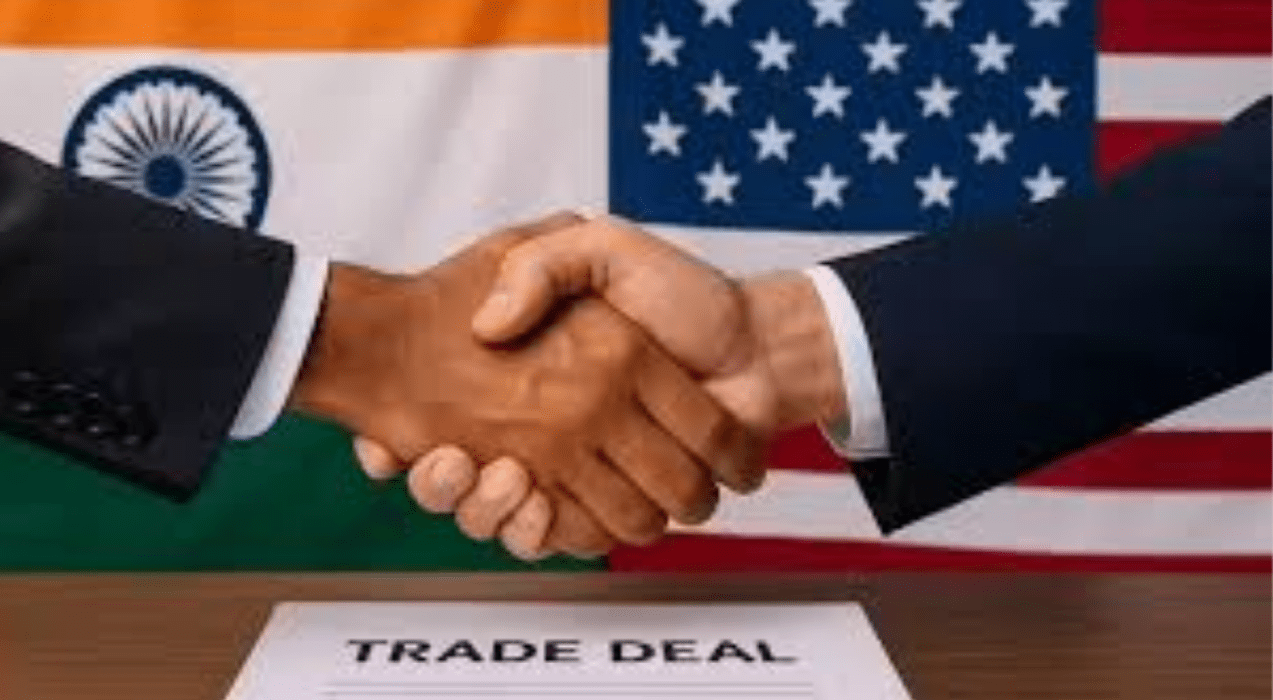
The United States Trade Representative, on 12 March, said, “US had launched an investigation into 16 nations, including India, over unfair trade and manufacturing practices”. This step has been taken soon after the India and the US signed an interim framework agreement on a Trade Deal. This agreement was announced on February 2, 2026. The same was modified by the US at the end of February. The long and short of it is that -a bilateral framework pact has been signed indicating the contours of commitments, that either side will be committed to. On the surface, it does appear that India has lost more than the US.
To this point we now dive into to ascertain the facts.
Will India reduce tariffs to zero on US imports?
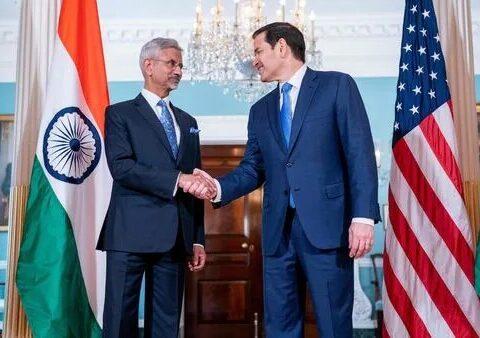
The Press Information Bureau (PIB) of the Government of India released the text of the Framework Agreement on February 7, 2026. Amongst other things, it ‘reaffirms’ the commitment of both India and the US to a broader Bilateral Trade Agreement (BTA). Among the key points agreed upon, the most important is the Indian commitment to ‘eliminate or reduce tariffs’ on all industrial goods and agricultural goods imported from the US.
Of the two significant points, firstly, removal of the 25% tariff as India committed to stop the purchase of Russian oil and reduction of reciprocal tariffs from 25 to 18%. The notable point here is that the US has reduced its tariffs on Indian exports to 18%.
India has not said it will stick to that figure, meaning thereby this is a subject matter for negotiation, while committing to reducing tariffs. As the US has also committed to remove the reciprocal tariff on a wide range of goods, such as – generic pharmaceuticals, gems and diamonds, and aircraft parts, subject to the successful conclusion of the Interim Agreement. It stands to reason that at some stage, India will have to move in that direction.
Another notable point, the reduction of tariff to 18% still indicates high taxes, in comparison to earlier administrations, when it was an average 3 to 3.5%.
From ‘commitment’ to ‘intention’ on Energy imports from US
Secondly, India has stated, it intends to buy more American products and purchase over $500 billion worth of U.S. energy, information and communication technology, coal, and other products. The word ‘committed’ in the earlier release was changed to ‘intends’. The other change that occurred was that reduction of tariffs by India on certain pulses was removed. The earlier assertion that India will ‘remove’ its digital services taxes was modified with a commitment to negotiate these taxes.
This is the broad picture emerging from the agreement. Note that while this is a framework agreement, the US factsheet clearly states, “In the coming weeks, the United States and India will promptly implement this framework and work toward finalizing the Interim Agreement with a view to concluding a mutually beneficial BTA to lock in benefits for American workers and businesses”. The US has also removed tariffs on certain aircraft and aircraft parts from India. Many of these changes cater to Indian sensitivities, and increase the possibility of furtherance of negotiations on the BTA.
Imports of US Agricultural products into India?
Notably, the US Factsheet states that India will address non-tariff barriers that affect bilateral trade in priority areas. This is obviously a reference to possible imports of American agricultural products into India. Thus far, India has maintained protection against import of US dairy products, poultry, wheat and rice. As of now, tree nuts, fresh and processed fruits, soyabean oil, spirits and additional products find mention in the Interim Pact.
Obviously, there are contentious issues that have to be dealt with bilaterally, before both sides could continue negotiations on the BTA. However, subsequent to the Interim Agreement and following the US Supreme Court ruling that struck down the original executive authority used for ‘reciprocal tariffs’, the US implemented a new flat 15% tariff under Section 122 of the 1974 Trade Act. Section 122 allows the President to impose temporary tariffs for a period of up to 150 days, effective from February 24.
Some relief for India?
For India, the Interim Agreement means that we now enjoy a relative cost advantage versus several Asian countries that still face higher tariff rates. In the short-term it should also reintegrate Indian MSMEs into the global supply chain and create conditions for more sustainable employment. Labour intensive sectors like textiles, which felt the immediate impact of US tariffs can now breath a sigh of relief, though their ability and willingness to create sustainable employment will be a question mark. Accounting for 28% of India’s exports to the US, this sector will need time to recover.
The jewellery sector is another area of benefit from reduced tariffs. But this is also a labour-intensive market and any sudden spike in prices could upset the business. But these are short and medium-term signs that will have to be determined by the agreed upon BTA. Uncertainty therefore prevails.
Analysts who view the Interim Pact as a ‘reset’ would know that in the current geo-political environment, it is unlikely to lead to a dramatic shift in bilateral ties, especially under previous administrations. Note that India never really stopped buying Russian oil, with some reports stating that, as of March 2026, India was purchasing one million barrels per day.
US monitoring of oil purchases from Russia
If this is true, then it raises a question mark on the US introduction of a monitoring mechanism for Indian purchase of Russian oil. This has now been compounded by the so-called US waiver allowing India to buy Russian oil, in the wake of the Iran war and closure of Strait of Hormuz. This is an uncomfortable situation, and merits analysis of where and how India is buying its oil.
More recently, with the US ‘allowing’ India to buy Russian oil, particularly POL on ships that stopped in the high seas are now re-starting delivery to India. While only 40% of India’s oil imports is through the Strait of Hormuz, the closure of the strait does create complications for a country that imports 85% of its energy. Currently, Reliance Industries and IOC are leading in terms of imports by volume. For instance, Reliance imported 18.3 billion tonnes from Russia in the first seven months of 2025. IOC along with BPCL reportedly received 60% of Russian oil in early 2026. Nayara Energy backed by Rosneft is another major importer.
The oil factor in India-US relations is important. If India does eventually purchase US$ 500 billion worth of energy product, it could well indicate bulk oil purchase. However, while the US was the fourth-largest exporter of oil to India in 2022-23, today, India is sourcing from multiple sources to reduce dependence on source and logistic supply issues, with the US low in the pecking order.
The US still holds the upper hand
The long-term perspective for a bilateral deal, however, still hinges on the US and its laws. This is because, the US can still use domestic legislation, for example Section 232 of the Trade Expansion Act of 1962 to impose tariffs on products like steel and aluminium on the grounds of national security. That is precisely why the latest announcement of investigations into unfair trade practices under Section 301 of the US Trade Act of 1974 are of concern, as they could eventually lead to a re-imposition of tariffs on India, complicating the negotiations for BTA. In this sense, the trade deal with the US is still some distance away and anybody who claims otherwise may please rest his case.