 Kalyan Chatterjee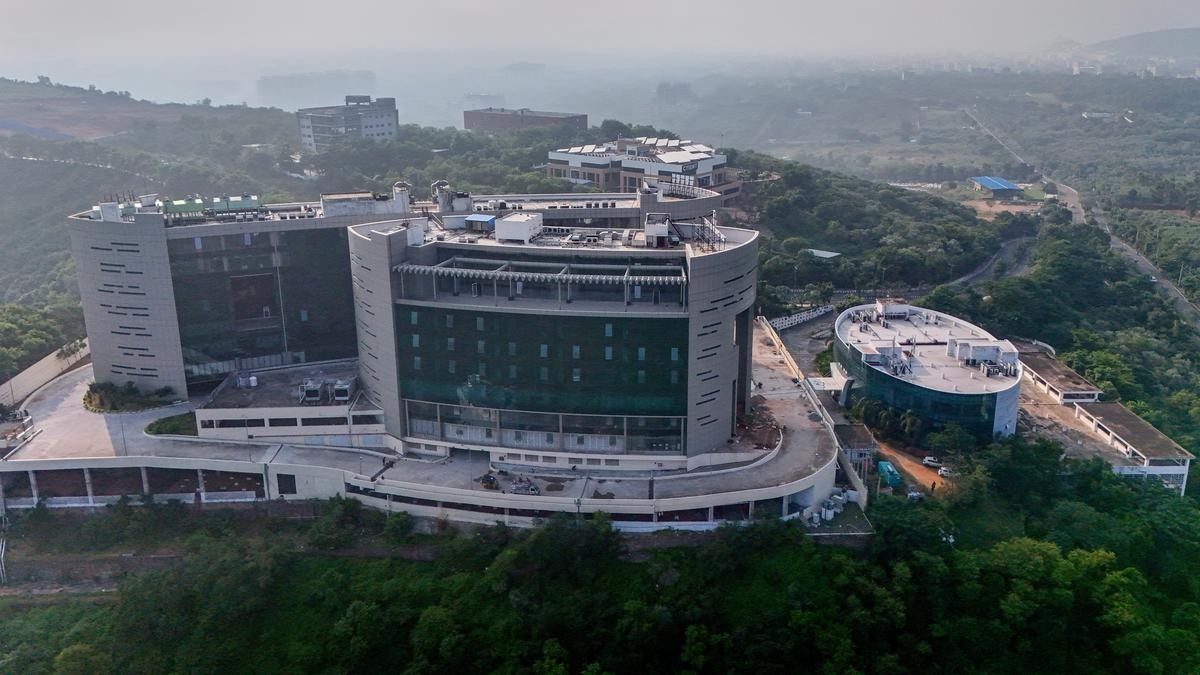
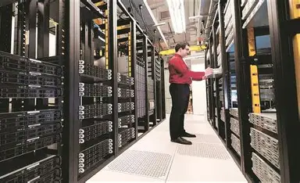
Data centres house the hardware required to store, process and distribute data that connects 5.3 billion people to the internet, through about 30 billion digital devices including the ubiquitous smart phones.
Though India is nowhere close to the 4,619 data centres that have been set up in the United States, it is doing its bit to catch up and has already set up 299, of them in 34 clusters with the biggest being Mumbai with 56 such centres including several that are hyperscale.
Data centres are facilities used to house servers, storage systems, networking equipment and associated components that are typically installed in racks and organised into rows. After the US, the largest number of data centres are located in the UK (564) and Germany (532). Europe as a whole, has more than 8000 data centres, while Asia has 1466 centres. China is a little ahead of India with 373 data centres, according to Denmark-based Data Center Map (DCM).
A breakup of the energy demand of data centres prepared by the International Energy Agency (IEA) shows that, up to 60 per cent of electricity is consumed by servers (computers that process and store data). These can be equipped with central processing units (CPUs) and specialised accelerators, such as graphics processing units (GPUs). The balance is consumed mostly by cooling (up to 30 per cent) and networking equipment and storage systems (5 per cent each).
The IEA categorises data centres into enterprise data centres which are run by businesses and institutions on their own, colocation and service providers that lease space to customers to house their computing and storage centres and hyperscale data centres, which are massive facilities operated by technology majors, such as Amazon Web Services, Google, Meta and Microsoft.
PREDICTIVE AND GENERATIVE AI
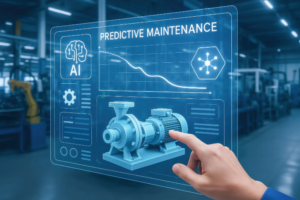
In simple terms, AI can be defined as the science of making machines that are capable of learning to perform tasks that traditionally require human intelligence. AI has largely driven increases in data centre electricity demands as advanced machine learning models require massive computational power for training and inference. AI are mainly of two types – predictive and generative. Predictive AI refers to the use of AI models to predict future outcomes has applications in scientific modelling, weather forecasting, predictive maintenance of energy infrastructure and finance.
Generative AI refers to applications that focus on generating new content, such as text, images, audio and video. ChatGPT, referred to previously, is an example of a generative AI application, although there is a plethora of such applications in use today. Like models that are capable of image recognition, physical AI that operate robots and self-driving cars.
Model training refers to the process of the model learning from data to identify relationships and patterns. In the last few years, the amount of data and calculations required to train state-of-the-art AI models has grown exponentially. For example, estimates put the training data for GPT-4 at around 4.9 trillion data points, and the training compute at around 22 trillion calculations. Training calculations are performed on specialised computer chips such as GPUs. A single GPU can have a maximum rated power consumption of 1 000 watts, in the case of the latest and most powerful chip. This is about as much as the power draw of a toaster. Large, state-of-the-art models are trained on clusters of many GPUs. For example, GPT-4 was trained on 25 000 GPUs with a combined rated power of around 10 MW.
Model training is followed by its use in inference on a query. Naturally, a large amount of energy is used, due to the enormous amounts of calculations for the model, to develop the answer which are performed on accelerated GPU servers. Though the exact amount of power consumed is not clear. Estimates suggests that a 100-word email prompt on ChatGPT requires 0.14 kilowatt hours (KWh or units) of electricity according to a California University study. This is estimated to be 10 times more energy than a traditional Google search.
Water And Power Consumption
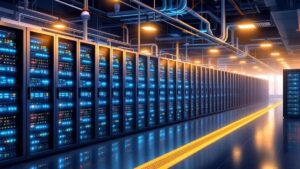
A closer look at how much power our activities using AI consume shows that, an image generation model could generate around 55 trillion images with around 100 TWh of input. A video generation model could generate in the order of 950 million hours of videos with 100 TWh of input. To put this in perspective, Netflix viewers streamed around 94 billion hours of content in the second half of 2024, according to IEA. It said that in 2023, the largest four hyper-scalers (Google, Amazon, Meta and Microsoft) had a combined data centre electricity consumption in the order of 90 TWh.
But it is not just large amounts of power that data centres consume. They also consume huge amounts of water. According to a Michigan University Study, for higher-density data centres, liquid cooling is required to maintain performance requirements. Data centres generate heat primarily due to the electrical energy consumed by its components. A significant portion is converted into heat due to resistance in circuits, semiconductor switching losses, and other inefficiencies. High performance computing tasks, such as AI training, cloud computing, and large-scale data processing, further intensify heat generation because they demand continuous, heavy workloads.
Rising temperatures lead to hardware malfunctions, reduced efficiency, and even permanent damage. Water cooling is often used because it absorbs heat more effectively than air, thanks to water’s high specific heat capacity (ability to store thermal energy) and thermal conductivity (ability to transfer heat). Twenty-two percent of data centre facilities use water-based cooling systems.
A 100-word email generated on ChatGPT once, requires 519 millilitres (ml) of a half-litre water bottle, according to the California study mentioned earlier. If this prompt was used once weekly for a year by 1 out of 10 Americans, (about 16 million people) it would use up more than 435 million litres of water which is equal to all the water consumed by the 1.1 million people of the state of Rhode Island for one-and-a-half days. Billions of AI users worldwide enter prompts into systems like ChatGPT every minute.
Systems like chilled water loops, liquid immersion cooling, or evaporative cooling circulate water to capture and carry away heat and maintain safe operating temperatures while improving energy efficiency compared to air-based methods. Google’s Council Bluffs data centre in Iowa, uses around 3700 million litres of water per year, which is equivalent to the annual water usage of over 4 million homes. Water-cooled systems are water-intensive but energy-efficient while air-cooled systems rely on fans and compressors, consuming more electricity but less water.
A medium-sized data centre can consume up to roughly 400 million litres of water per year, for cooling purposes, equivalent to the annual water usage of approximately 1,000 households. According to the US-based Environmental and Energy Study Institute (EESI), larger data centres can each “drink” up to 20 million litres per day, or about 7 billion annually, usage equivalent to an American town of 10,000 to 50,000 people.
It is not surprising, therefore that in July this year, New York state imposed a one-year moratorium on the construction of large new data centres, over growing concerns that the facilities driving the artificial-intelligence boom are raising power costs, straining water supplies and burdening local communities.
INDIA: Rising AI Power
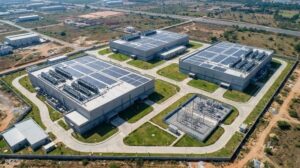
While India is said to account for a fifth of global data generation, it has only 3 per cent of global data centre capacity. And demand for such infrastructure is soaring, with India expected to consume the most data in the world by 2028 – higher than developed markets like the US, Europe and even China. India’s IT load capacity is expected to touch 2.8 Gigawatts by 2028, according to S&P Global Market Intelligence 451 Research. Local and global technology firms have announced investments of more than 32 billion dollars since 2023, to expand data centre infrastructure in India.
One critical driver of data centre investments in India is its growing focus on achieving data sovereignty to ensure that data generated within the country stays under Indian control, which is a key condition for global enterprises operating here. Local data centre infrastructure makes this possible by keeping data secure, compliant, and easy to access. Therefore, the government has budgeted Rs. 10,372 crores under the AI Mission announced in 2024. As a result, data centre demand for power is expected to grow to 57 TWh by 2030 which will be about 2.6 per cent of the country’s electricity demand.
So far as power is concerned, data centres’ main source of power is electricity supplied by the grid through state power distribution companies. The grid is dominated by conventional fuels, with coal-based power constituting more than 70 per cent of total electricity generation.
Many data centres have already been built in India and more are coming up. Google, for instance has announced a 15-billion-dollar hyperscale 1 GW centre in Vishakhapatnam (Andhra Pradesh). Microsoft and Amazon have already poured billions into building data centres in India, a critical growth market where nearly a billion users access the internet. Data centre clusters have come up mainly in Mumbai (81), Bengaluru (31), Chennai (33), Hyderabad (36) and Delhi NCR (32).

But, Bengaluru, India’s Silicon Valley, is already struggling with an acute water shortage, with a daily deficit of 500 million litres. This has left the authorities scratching their heads over the impact of water-guzzling data centres that power the city’s digital infrastructure. The government has admitted that about half the borewells have dried up while water bodies too have either been encroached upon or dried up and are instituting measures to recharge them.
Chennai, home to a cluster of 33 data centres faces a severe water crisis. In June, 2019 a zero-water day was declared when the city ran out of fresh water. Water had to be brought in by train to tackle the crisis. The city which receives 75 cms of rain annually has been facing water shortages for the last decade or so, a period that coincides with the growth of data centres.
In Vishakhapatnam the Google Tarluvada data centre, spans 266.6 acres and is a key component of Google’s investment in Andhra Pradesh. The Tarluvada site is one of three linked data centre campuses planned around Visakhapatnam, with commissioning targeted for July 2028. Andhra Pradesh already has two other data centres including the AdaniConneX hyperscale centre. Naturally, this would mean huge consumption of both water and power.
But of late Vishakhapatnam too has been facing water shortages. To meet its daily demands Vizag needs 300 million litres (MLD) of water, while units like its steel plant and other industrial units, Gangavaram Port, and the 2000-MW National Thermal Power Corporation (NTPC) power plant require another 190 million litres (MLD) making a total of 490 MLD. The supply is maintained from reservoirs which however pose shortages at times due to poor monsoons. Groundwater levels have also declined sharply in several parts of the city. Residents fear the shortage may worsen.
Ongoing Protests …

The people of some areas where data centres are coming up are alarmed about negative impact of these centres fearing water shortages and environmental damage due to use of fossil fuel to generate power. In Mumbai’s Thane suburb, Hundreds of residents from Balkum and Majiwada in Thane recently took to the streets to protest Amazon’s proposed 53-acre hyperscale data centre. Residents fear the project could worsen Thane’s existing water shortages, with claims that the facility may consume up to 12 million litres of water daily.
Water may thus prove to be the main hurdle for India’s ambitious plan to build a comprehensive AI ecosystem. India’s data centre water consumption is expected to more than double from 150 billion litres in 2025 to 358 billion litres by 2030, putting further pressure on its water table.