 Dr. Bhashyam Kasturi
Business-focused Rubio visit
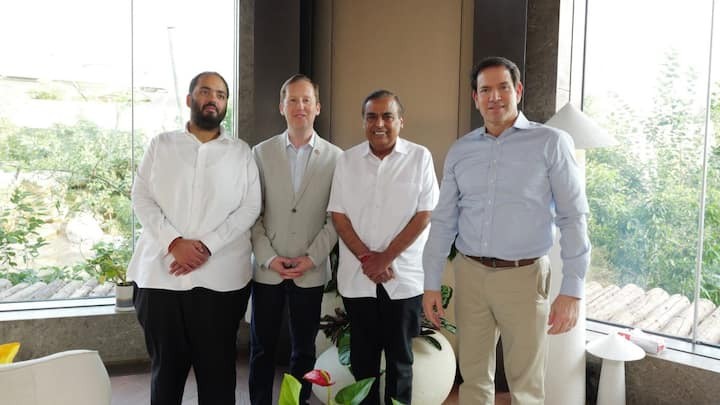
The US Ambassador to India, Sergio Gor, a US national with Russian ancestry in his blood, informed listeners, on October 15, 2026, at the Bloomberg New Economy 2026 programme, that Secretary of State Marco Rubio would be visiting India. He added that this was a “business focused” visit and it is clear why Rubio came to Mumbai and then went to Jamnagar. Post the visit it is clear, Gor was not exaggerating when he emphasised the business aspect of the trip.

Reliance has the largest oil refinery in the world, and the US wants India to refine Venezuelan heavy crude and also cut back on purchase of Russian crude oil. The US also wants Indian importers of crude to shift to the US and Venezuela, currently controlled by Washington.

Note that Gor remarked that Reliance was one of the first companies to open a refinery in the US in 50 years. Fair enough, if the US wants Reliance to look at buying more crude from the US and Venezuela, then, the rates have to be competitive, given the fact that India is already sourcing oil from forty countries as per official reports.
There is nothing inherently unusual about a US Secretary of State meeting the head of a major corporate house at its own premises. The concern, however, lies elsewhere. Ambassador Sergio Gor’s remark — “we expect Minister Dr. Jaishankar will be joining us there, along with other individuals here from Delhi” — made while Rubio was in Mumbai, carried its own diplomatic and protocol implications. The choice of words appeared to suggest that a bilateral official engagement would take place in Mumbai, rather than at a mutually agreed diplomatic venue. That distinction is not merely semantic. It raises questions about the manner in which official engagements between two sovereign governments are conceived and communicated. One is left with the impression that New Delhi chose to overlook the implications of Gor’s phrasing, when a more considered response might have been warranted.
Rubio visit 1 ! Rubio visit 2 !
The last time Rubio was in India, he chose first to go to Kolkata and visited the Missionaries of Charity; a symbolic gesture to show American concern over India’s latest amendments to the Foreign Contribution Regulation Act, 2010.
The political signals are clear. This time around the ‘business’ trip was focused on Reliance, with a request that they buy and refine more Venezuelan crude and explore investment opportunities in US.
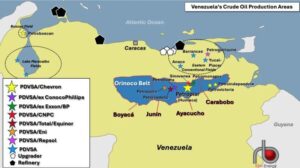 Ajay Srivastava points out on ‘X’ that ‘Reliance is already buying more crude from Venezuela and the US’. Given this, why would Rubio want India to purchase more? This could have something to do with domestic US demand and supply. For instance, diesel prices in America have gone sky high. While Washington has just signed a deal to directly import diesel from Russia, there could be an additional demand for India to refine and sell more diesel to the US. The commercial value of such a venture will have to be worked out by Reliance, and will only move forward if profitable. India’s diversification of crude oil purchases to keep domestic demand in check requires a nimble commercial mind, Reliance as well as Nayara others have got into the act.
Where does the UAE fit into the scheme of things?
The current state of play was perhaps best captured by Marco Rubio during his discussions with External Affairs Minister Dr. S. Jaishankar on the sidelines of the UN General Assembly in September 2026. Rubio indicated that the United States was ready and willing to meet India’s energy requirements. Yet this raises an obvious question: if Washington is itself purchasing Russian diesel, why should India be expected to scale back its imports of Russian crude? There may, of course, be commercial considerations that justify such a shift. But the larger strategic question is whether India can use this period to strengthen its energy security, particularly by expanding its strategic petroleum reserves.
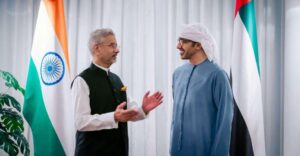
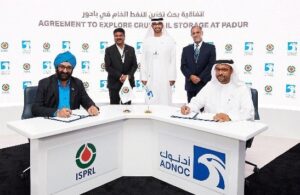
This is where the UAE enters the picture. Significantly, Sheikh Abdullah bin Zayed Al Nahyan, the UAE’s Deputy Prime Minister and Foreign Minister, was also in Mumbai during Rubio’s visit, where he held discussions on energy security with both – Rubio and Dr. Jaishankar. The timing and substance of these engagements are noteworthy. The state-owned Abu Dhabi National Oil Company (ADNOC) is already a key participant in India’s expanding strategic petroleum storage infrastructure, including the proposed addition of 30 million barrels of storage capacity. It also holds a 50 per cent operational stake in the Mangaluru underground Strategic Petroleum Reserve, which has a storage capacity of 5.86 million barrels of crude oil.
The security of hydrocarbon supply chains, therefore, is not merely a matter of commercial cooperation between India and the UAE; it is a shared strategic imperative. Protecting these supply routes, diversifying sources of energy and expanding storage capacity are central to both countries’ long-term energy resilience. These concerns were consequently an important part of the bilateral discussions in Mumbai, underscoring the growing strategic dimension of India-UAE energy cooperation.
What does the US want from Reliance?
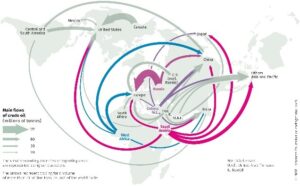 Three distinct but interconnected developments converged in Mumbai and Jamnagar. The United States is seeking to increase its direct crude oil exports to India, while Reliance is looking to import and process greater quantities of heavy Venezuelan crude. For India and the UAE, meanwhile, the security of energy supplies and other critical commodities forms an important pillar of the Comprehensive Economic Partnership Agreement (CEPA) currently under discussion. The UAE is keen to protect its investments and supply-chain interests, while India has an equally compelling objective: ensuring the security and continuity of its energy supplies from the Gulf region.
Reliance, therefore, occupies a pivotal position in this emerging arrangement. It is arguably the most consequential commercial partner for all three countries, given its refining capacity, global reach and role in international energy trade. This also helps explain Washington’s decision to engage directly with the company rather than approach the issue solely through government-to-government channels.

Reliance operates its refining infrastructure through two principal streams: one catering primarily to the domestic market and the other geared towards exports. The latter has been particularly significant in India’s international energy trade. Russian crude, for instance, has been processed at its export-oriented facility and the refined products subsequently shipped to markets in Europe and the Americas. Any shift in the sourcing and refining of crude at these facilities could therefore have implications extending well beyond India’s domestic energy market, affecting global trade flows and the strategic calculations of its partners.
Import more from Venezuela only if it is profitable
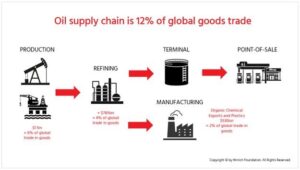
As Reliance accounts for 74.3% of imports from Venezuela, it is important for the company to view its profitability, if it considers increasing the quantum of crude. Ultimately, the direction in which Reliance goes will depend on commercial viability. It has already reduced intake of Russian crude to balance more imports from Venezuela and the US.
While India’s crude imports remain Russian dependent, it must not shift totally to Venezuela without getting either a discount or a strategic incentive.
From an American perspective, President Trump waiving the threat of 100% tariff under the recently passed Lindsay Graham Act, is an incentive to take this step. There is however, need for a better quid pro quo. That could well be the pending trade deal with the US. Both sides have indicated that they are ‘weeks’ away from signing the deal, which indicates that US could possibly give India more lollipops.
Nevertheless, India would be well advised to exercise caution and avoid premature commitments to any major trade agreement with Washington until the full implications of the US midterm election results are clear and the resulting political landscape in America becomes more predictable.
The Trump administration’s approach to trade negotiations has been marked by unpredictability, shifting demands and, at times, a willingness to revisit understandings already reached. The recent change in the political balance in Congress, could also alter Washington’s negotiating posture. India would therefore be prudent to preserve its strategic and commercial flexibility rather than rush into an agreement whose terms may prove difficult to sustain.
Are profits taking precedence over strategy?
The narrative thus far has been an official Rubio visit to India to discuss energy cooperation. The unstated part is that the US wants India to reduce its imports of Russian crude. There appears to be no other reason for this “business” focused visit. However, if the US objective was to meet business heads in India, why did they ‘expect’ EAM Jaishankar to land up in Mumbai? This was because in diplomacy such visitations are not done in isolation. A business meeting must have a political overhang and using the pretext of discussions on the Trade Deal, defence cooperation and other issues, Rubio visited, but without travelling to New Delhi.
India’s options are open, the commercial viability of the US request is being considered by Reliance, and it is up to the Government of India to take a considered final view of the American offer. The commercial nature of oil imports today indicates that diversification is fine as long as it is profitable. Strategic considerations have thus become secondary to the global purchase of crude by India. The future demands clarity, on how India intends to tackle American pressure on oil purchases, without in any way impacting domestic consumption patterns.