 Dr. Bhashyam Kasturi

The ‘Hijack’ Plot
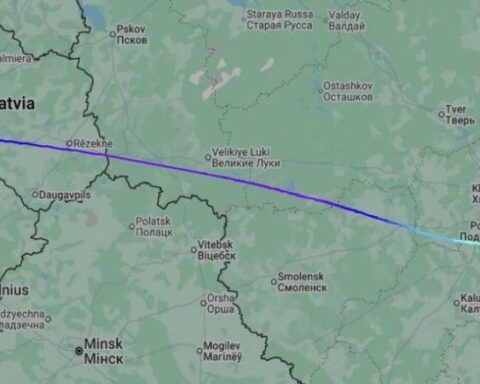
Initial investigations into the co-pilot – Hammam Al-Hammami, show that he acted as a ‘lone wolf’ and who had been radicalised in Australia, while residing there as a student. As a pilot in Oman Air, authorities had noted his radical views and forbade him from flying. However, his antecedents as one who had been Islamised, somehow remained internal to Oman Air and when he subsequently moved to FlyDubai for employment, this part of his record was never shared. Therefore, there was a security lapse in the first instance. Then, while working in FlyDubai, Al-Hammani was rostered twice to fly to Tel Aviv on what he termed as ‘recce’ flights. Given the fact that he was an Omani national should have automatically prevented him from flying to Israel, as nationals of countries with no diplomatic relations with Israel cannot fly there. This was the second lapse in security.
Further, rostered to fly on a Dubai-Tel Aviv flight for a third time, Hammami attempted the hijack. His rostering for the flights was obviously deliberate and must have involved someone else at the airport and airline. No one has tried to link this with the eventual ‘hijack’. As al-Hammami was a seasoned pilot, he must have known about the emergency axe, that is kept in the cockpit to break open the cockpit door or window in an emergency situation. Al-Hammami’s LinkedIn profile showed that he worked with Oman Air for four years before leaving in February 2025. He then worked with Royal Air Maroc (RAM) till January 2026. Notably, when al-Hammami moved to this Moroccan airline, his vetting probably did not have information about his de-rostering by Oman Air. However, the Guardian newspaper reports that he never flew with RAM.

According to the Haaretz, Israeli authorities did receive the Flydubai flight’s crew and passenger lists before it departed. Under a law passed in 2023, airlines are required to provide information about passengers and crew members, including their names and nationalities, to Israel up to 48 hours before a flight. Despite this information was received, it was probably viewed as a routine one and ignored. Thus, there was no alert sounded. There is another important facet regarding al-Hammami’s vetting at FlyDubai.
The BBC reports that al-Hammami was hired by FlyDubai in early 2026, in a hiring spree to fulfil pilot shortages. The possibility of this leading to some lapses in security vetting cannot therefore be ruled out in the rush to recruit more personnel, quickly. The other notable point is that al-Hammami went through the standard vetting for criminal antecedents. With no antecedents to trigger alarm bells, his entry into FlyDubai would have been fairly simple. The security audit should have flagged his career in Oman Air and the fact that he had been de-rostered from flying. All in all, a HR and security failure that is currently being investigated by the UAE authorities. Clearly, all countries will have to tighten the strings of their aviation authorities and ensure compliance, depending on the rules of engagement enforced.
The Wider Network around the Hijack
Captain Smit Machhar, of Indian origin, was brave enough to fight his co-pilot and managed to open the cockpit door. The reserve crew which was seated behind the cockpit took over the aircraft and flew it to Saudi Arabia.
Media reports state that al-Hammami had wanted to execute his plan in July 2026 but apparently, he had a change of heart when he met familiar crew members.
More recent investigations have brought to light the alleged role of two Maldivian nationals (detained on 3 October 2026) who were also working in FlyDubai. These two nationals have recently joined the airline and reportedly lived in the same residential building as Al-Hammami.
That FlyDubai is taking things seriously is evidenced by the fact it has already terminated the services of several of its employees in HR and other wings.
Radicalisation began in Australia
Al-Hammami’s indoctrination has been revealed by official UAE investigations to have taken place in three phases. It started in Australia in 2015-2017 when al-Hammami was a student. Between 2017 and 2024, he was influenced by Al-Qaeda ideology. Digital forensics revealed that his accounts contained images and videos of former al-Qaeda leader Ayman al-Zawahiri and Humam Khalil Abu-Mulal al-Balawi, the 2009 CIA base suicide bomber.
By 2024, while undergoing pilot training with Oman Air, al-Hammami’s extremist views had become sufficiently pronounced to attract the attention of Omani security authorities. The discovery of extremist material in his possession led authorities to classify him as a security risk and bar him from the cockpit, reassigning him to an administrative role. Yet, his ambitions appeared undeterred. He continued to train physically, taking up boxing in what seemed to be a calculated effort to prepare himself for a future mission. Taken together, these developments suggest that his actions were not impulsive, but part of a longer-term, carefully considered plan.
Warning of October 7, 2023 …
But while the attempt by Al-Hammami to repeat the 9/11 attack by crashing the FlyDubai flight into the passenger terminal at Ben Gurion airport was unsuccessful, a political bomb did burst over Israel, when the Haaretz newspaper revealed on 8th September 2026, that the UAE President, Mohamed bin Zayed al Nahyan, had personally warned the Israeli Prime Minister Benjamin Netanyahu of an impending, major Hamas attack roughly ten days before October 7, 2023.

Picture Source: X.com
The Emirati leader conveyed then to Netanyahu that Yahya Sinwar, Hamas’s Gaza leader, was planning a massive operation, referring to as a “huge surprise” or “earthquake”, that would cause severe bloodshed and destabilise the entire region. The Israeli PM reportedly said that Israel was ready for anything but obviously took no pre-emptive action. The New York Times not only corroborated the account but also reported that Emirati intelligence agencies had subsequently alerted the CIA to the “looming threat”, while confirming that they had issued an advance warning to Israeli authorities in Tel Aviv. While the Israeli PMO denied the allegations, and the UAE foreign ministry said they did not comment on ‘private exchanges’ involving heads of state.
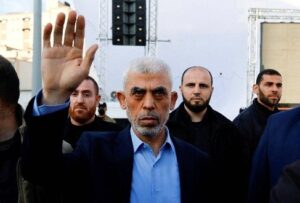
Subsequent media reports identified the source of the intelligence originating from the UAE as Sufian Abu Zaida, a Palestinian negotiator and former Cabinet Minister, in the Palestinian Authority, who had been involved in negotiating prisoner exchanges with Israel. During a meeting with Hamas leader Yahya Sinwar on September 14, 2026, Abu Zaida reportedly voiced his frustration over the lack of progress in the negotiations. Sinwar’s response was chilling. He instructed Abu Zaida to convey a stern warning to Israel: unless it agreed to a long-term arrangement with Hamas and released all Palestinian detainees, Israel should expect an “earthquake” — the Arabic word zilzal — and a “massive surprise” before the end of September.


Abu Zaida subsequently passed on the warning to his contacts in the UAE and also shared the intelligence with Shin Bet, Israel’s internal security service. Shin Bet, in turn, urgently relayed the information to Prime Minister Benjamin Netanyahu. The Abu Zaida–UAE connection ultimately prompted the Emirati President to establish direct contact with Netanyahu through a trusted, encrypted Emirati communication device.
Intelligence Assessment
The tragedy was that the intelligence input was ignored and assessed by the Israeli agencies as sabre rattling by the Hamas and no further action was taken. Israel’s failure was therefore twofold: a failure of leadership and a failure of intelligence assessment. The implications extend well beyond the immediate security lapse, raising fundamental questions about both – the country’s political calculations and the effectiveness of its intelligence apparatus. Although Israel has denied receiving the intelligence warning, the October 7, 2023, Hamas attack had already exposed a profound failure to anticipate the group’s intentions and assess its operational capabilities. The consequences were not merely tactical; they were strategic and political.

Israel found itself locked in what has become an apparently open-ended state of war — whether by design or as a consequence of its own policy choices. In the process, the conflict drew the United States deeper into the confrontation and helped set in motion a wider regional crisis, whose repercussions continue to extend far beyond Israel and Gaza.
The general elections in Israel have shown that people want a change of government but are unable to decide if it is good to move away from the catastrophic war that the nation has engaged in since October 2023.
Thus, there are lessons for the globe from the hijacking in every sense, both from an aviation security perspective as well as national security.