 Dr. Bhashyam Kasturi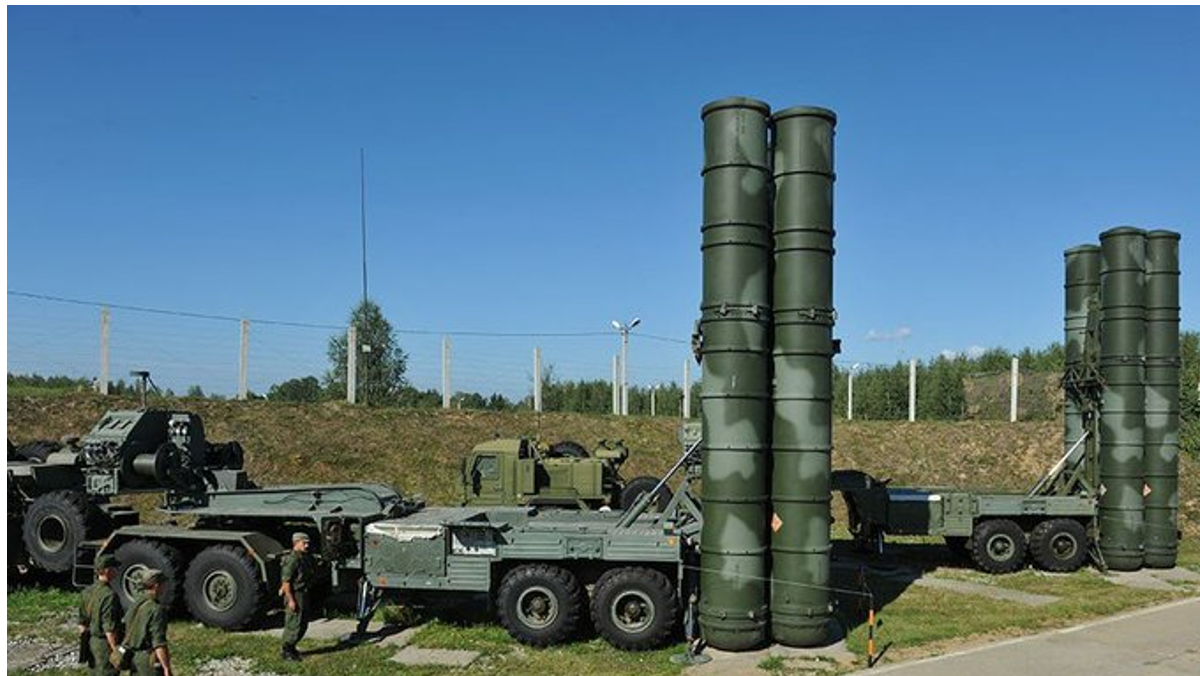
Of the five S-400 systems contracted with Russia in 2018, three were delivered by 2023. It is only now that Russia has managed to deliver the remaining two systems. The delay was in some ways fortuitous, as India expended all its S-400 anti-ballistic missiles during Operation Sindoor last year, necessitating the request to Russia to quickly deliver the remaining two and ordering another US$ 6.1 billion worth of S-400s. The last two will be delivered now and in November 2026. In March this year, India’s Defence Ministry approved the purchase of five additional S-400 systems from Russia, among other weapon systems for a total of US$ 25 billion. What makes this ABM system relevant is that it proved its battle-worthiness as a defensive and offensive system during Operation Sindoor.
S-400 during Op Sindoor
What makes the S-400 Triumf special? Each system has four launchers, capable of intercepting all forms of aerial targets flying as low as 10 metres to as high as 30 km. The system operates a mix of supersonic and hypersonic missiles, with a tracking system capable of simultaneously tracking and engaging 300 targets.
As reported by The Hindu, in March 2026, under the original contract with Russia, India had ordered around 1,000 missiles, for different types of deployment with the Indian Air Force. India has three squadrons of S-400, the fourth will be deployed shortly. During Operation Sindoor, a 40N6 Surface to Air Missile (SAM) was used to strike a Pakistani AWACS 300 kms away and destroyed five Pakistan Air Force aircraft that attempted to intrude into Indian airspace. A remarkable feat by any standards!
According to Military Watch magazine, February 2026, the S-400 system also provided protection against the drone swarms launched by Pakistan last year, on 7th & 8th May, and successfully intercepted most of the swarm drones and other aerial platforms subsequently.
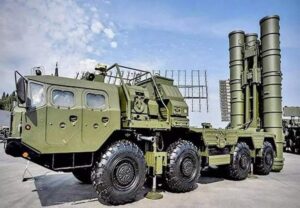
Open sources indicate that each IAF S-400 squadron has 8 to 12 Transporter Erector Launchers (TEL). Each battery can fire 4 missiles in a ready state, while other reloadable missiles are kept in stock. During Operation Sindoor, the S-400 is said to have been fired 11 times, i.e., each time if all 12 TEL in a squadron were used, then a total of 528 missiles were fired. This guess-estimate indicates that the IAF fired full salvos to prevent the Pakistani drone swarms and other aerial targets from entering and impacting any Indian site, civilian or otherwise. As reported by The Hindu, on 10 May 2025, Pakistan’s strategy of using 400 drones was faulty, as it was dispersed across a wide front stretching from Leh to the Rann of Kutch. India was thus able to deal with most of the threats using the layered air defence systems.
India to get more S-400s
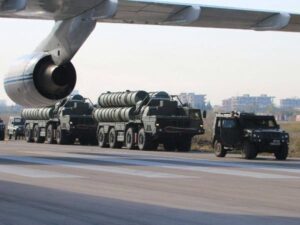
Based on the experience of Operation Sindoor, the government has cleared proposals for an additional 168 long range missiles and 120 close-in area defence missiles for the S-400 system. Pertinently, the Indian air defence network has been considerably enhanced by the induction of the S-400.
Today, apart from the availability of older Russian Pechora SAMS, India has the Israeli Barak SR-SAM, as well as the indigenously developed Akash SAM systems. The S-400 makes India’s layered air defence more robust and also gives it offensive capability making the Indian skies much safer than before.
Incidentally, it was the Barak SR-SAM which shot down the Pakistan Fateh II surface-to-surface missile (SSM) over Sirsa in Haryana. As the experience of imports from abroad, including Russia show, there is a need to develop such systems indigenously urgently. It is the very reason why Defence Research and Development Organization (DRDO) is developing Project Kusha, which will have a series of missiles to complement and eventually supplant the S-400.
Turkey to sell its S-400
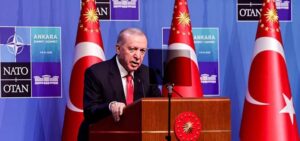
As we conclude this piece, reports indicated that Turkey announced its intention to sell the S-400 BMD. The future of layered air defence is thus secure. Recall that Turkey purchased the system from Russia in 2019 at height of its diplomatic tensions with the United States. Post that, the US pushed Turkey out of the F-35 programme and imposed sanctions. Pertinently, President Erdogan announced his country’s intention to sell the S-400 to the United Arab Emirates immediately after the NATO Summit (7-8 July, Ankara) with a view to getting back on the F-35 programme and also mend ties with the US. So, Turkey has made an important diplomatic announcement.
India, on the other hand, needs the S-400 to protect its cities and critical infrastructure from Chinese and Pakistani missiles and therefore, is purchasing the system from Russia on a G-to-G basis. What India needs to ensure and achieve in a time-bound manner, is to develop an indigenous air defence missile system that will forestall delays in acquisition and external interference during a crisis.