 Dr. Bhashyam Kasturi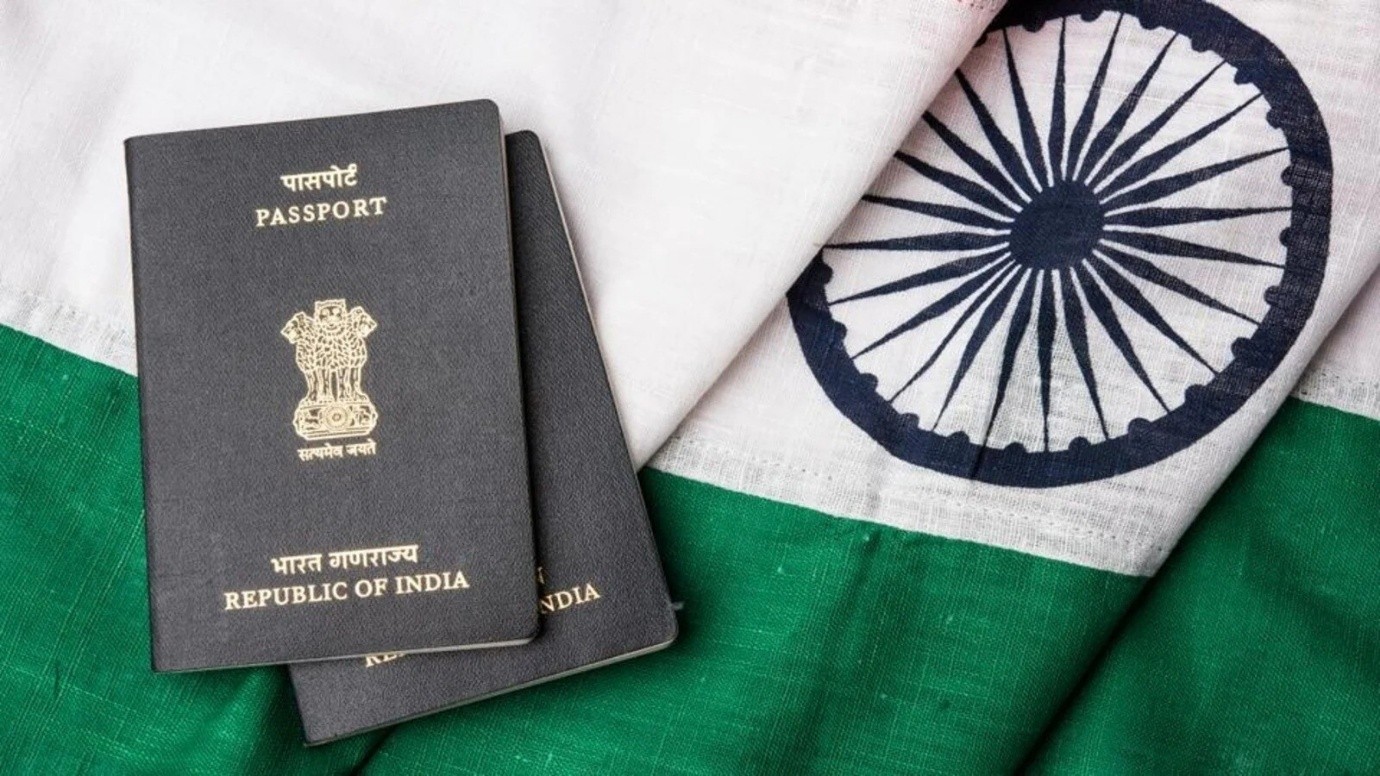
Why is this an issue now?
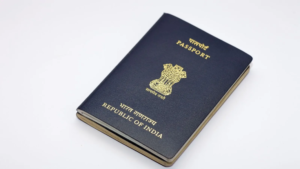
The issue came to light when queries were directed at the MEA on 24 June 2026. Asking if a Passport could be used to challenge an exclusion from the Special Inclusion Revision (SIR). To this the MEA merely responded by saying that the Passport is only a travel document and not a citizenship document.
The MEA response came to a specific query posed, whether a person excluded from the Election Commission’s SIR, from the electoral rolls could rely on their possession of an Indian passport to establish citizenship.
The Legal Position: Passports Act Vs Citizenship Act
The Passports Act of 1967 was passed by Parliament on 24 June. Notably, the Passports Act was enacted to enable the Government to issue ‘passports and travel documents’ to regulate ‘the departure from India of Indian citizens and other persons.’ The preamble itself makes it clear that the Passport is a travel document to facilitate Indian citizens to travel abroad. Section 6 (2) (a) of the Act, however, also states that the government can, inter alia, refuse to issue a passport or travel document, if the applicant is not a citizen of India. This by implication means that a Passport can only be issued to a citizen of India, indirectly affirming that a Passport determines citizenship. However, Section 20 of the said Act also states that the government can issue a passport to a person who is not a citizen of India in the “public interest”.
Legally, an Indian can claim citizenship only under the Citizenship Act of 1955 (and as amended from time to time). The distinction made in India between Citizenship Law and Passport Law is somewhat similar to what prevails in the case of the US, UK and several other countries. Each of these countries have a separate law or statute to determine citizenship. India’s 1955 Act has been enacted to acquire and determine Indian citizenship. A person can acquire citizenship by either birth, descent, registration or naturalisation. There is no single document that can be used, except for a birth certificate, which adheres to the timeline mentioned in the Act of 1955. Apart from that, registration or naturalisation certificates issued by MHA can also function as citizenship documents.
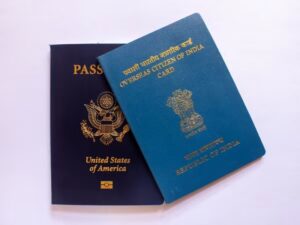
Like in the UK and the US, India distinguishes between a Citizenship law and Passport law. But that does not take away from the significance of the document itself in the public imagination. After all, a passport is issued only after the Government has duly verified all the information supplied by the applicant. Therefore, while there is a legal distinction, it is time to see if this can be done away with to make the Passport a proof of citizenship, the only challenge being that it depends on “verification” of documents supplied by the applicant.
The other issue is that obtaining fake or duplicate documents is fairly easy, as has been seen in the case of Aadhar and other documents. That fake passports are still available, only strengthen the call for making the entire documentations eco-system more fool proof. As an illustration, one may mention here, cases of fake passports intercepted by the Bureau of Immigration at various ports of entry and exit in India. Answering a unstarred question in the Lok Sabha in 2022, the Minister of State for External Affairs stated that Immigration authorities detected 623 cases in 2018, 1135 in 2019,190 in 2020 and 299 in 2021. This is probably the tip of the iceberg, but indicates that the problem continues to persist.
The Passport as a citizenship document
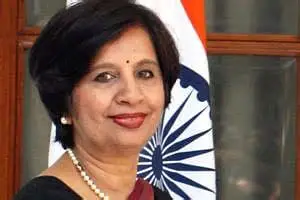
The points made by Nirupama Rao on ‘X’ are valid. First, as she states, Indians see the passport as the most authoritative document issued by the “Republic of India” and bears the name and date of birth of the applicant. Second and pertinently, it is accepted around the world. Every Indian who has applied for a passport knows the various checks and balances put in place prior to obtaining such a document, including police verification. Schedule III of the Passport Rules 1980 specifies the conditions under which the passport officer can direct that police verification of a certain applicant or set of applicants is required. This is line with the Section 5 (2) in the 1967 Act that says the government shall “make inquiry” of the information provided by an applicant prior to issuing the Passport.
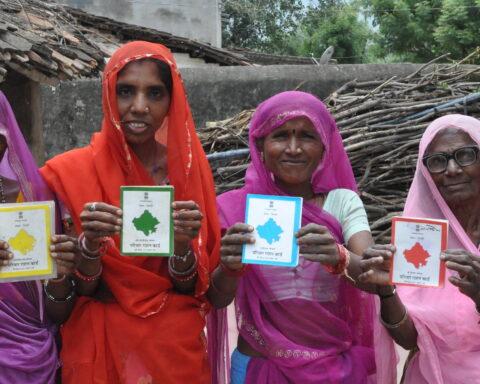
Going back to the query raised with the MEA on the SIR ordered by the Union Government in Bihar and some other States. The Supreme Court, while hearing petitions on the SIR, reasoned in its judgement that a Ration Card could not be accepted as proof of identity, “unlike a Passport or birth certificate” (p.109 of WP 640 of 2025 Judgement). However, technically only a birth certificate currently determines citizenship. After all, under the 1955 Act, there are a number of ways in which to acquire and determine citizenship, including birth and naturalisation. The 2003 Citizenship Amendment Act introduced a new section – Section 3. Which brought the rules relating to “Citizenship by Birth” upto date from 3 December 2004 onwards, wherein one sub-section deals with a situation wherein one of the parents is an illegal migrant.
NRI’s are Indian Citizens?
In 2010, the MEA informed that NRI’s living abroad and holding Indian Passports could ask for information under the RTI Act thus making them citizens of India. While news reports state that both the MHA and MEA had then concurred that holders of Indian Passports living overseas could be considered as “Indian citizens” to enable them to obtain information under the RTI, whereas OCI holders and PIO could not have this privilege.
This analysis tied into the MEA’s own position that the Passport could be used abroad to demonstrate that the traveller or resident in a foreign country was an Indian. If this be the case, what stops the government from amending the Citizenship Act of 1955 with a new provision that states that the Passport is the only document that proves Indian citizenship?
Rethinking Proof of Citizenship
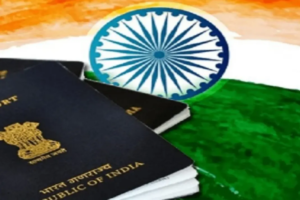
The argument that a Passport issued by the Government of India satisfies the condition of citizenship is a powerful sentiment. In a sense, it can provide evidence of Indian citizenship, but cannot be used to show citizenship. At the same time, if as a travel document, other countries accept the Passport as a document showing one’s Indian origins, then the Citizenship Act should be amended to include the Passport as direct evidence.
The larger challenge is two-fold. First, is to update the 1955 law to streamline provisions relating to civil birth registration so that it is more comprehensive and completely digital. This process has made considerable progress and is more secure than before. The second, is to add provisions to the 1955 Act that provide for a single platform for citizens to be registered. This is the role envisaged for the National Register of Citizens (NRC). This should reconcile different names, dates of birth and the like, to remove documentary inconsistencies that currently exist. The experience of the Assam NRC demonstrated how inconsistencies in documents can create hardship, when citizenship itself comes under legal scrutiny. This needs speedy resolution.
Can India have a National Identity Card as proof of citizenship?
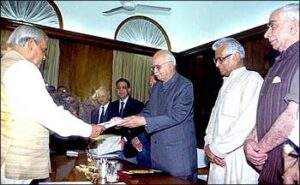
The Kargil Review Committee had, in its wisdom, in 2000, asked the government to create a national identity card. This was initially meant to be issued for citizens living in the border areas, but in 2003 the Group of Ministers, in 2001, recommended compulsory registration of all citizens and non-citizens. This would have led to the issue of multi-colour coded ID cards. The roots of the NRC were thus laid in 2003, with the Citizenship Amendment Act which gave the government powers to compulsorily register all Indian citizens. The Aadhar card emerged out of this strategy. But we are still a long way from ensuring that streamlined procedures are put in place to make this a smooth exercise.
Meanwhile, the debate on the Passport will continue and more importantly, what constitutes the legal benchmark for a document to prove one’s ident
ity as an Indian citizen? The sooner the air is cleared on this issue the better.