 Dr. Bhashyam Kasturi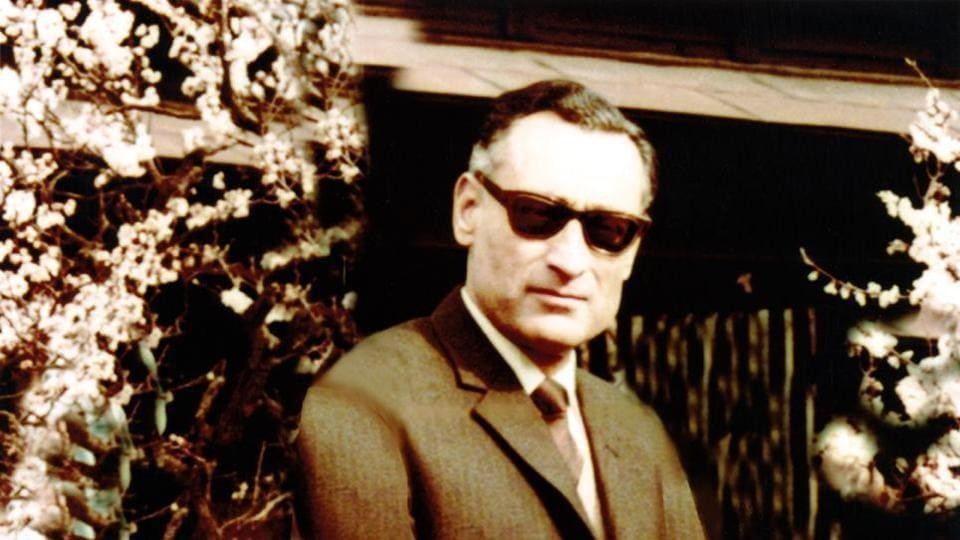
From IB to R&AW
Kao leaves a very important trail of operations and missions that R&AW officers still look up to. Of course, much advance has taken place in the organization, but the basic structure that Kao established still exists.
The first thing that Kao is remembered is for the founding of the R&AW. He was handpicked by Prime Minister Indira Gandhi to lead R&AW in 1968. The initial force comprised about 250 officers and personnel, drawn largely from the Intelligence Bureau, where Kao had served with distinction—first overseeing VIP security and later helping to build an intelligence agency for Ghana.
At Nehru’s behest, Kao was also drawn into the investigation of the bombing of the Kashmir Princess, the aircraft that was to carry Chinese Premier Chou En-lai, to Bandung for the Conference of Asian and African Countries. Fortuitously, Chou did not board the plane.
Kao was also the first head of the Aviation Research Centre, the US aided organization, created under the Directorate General of Security by the then IB chief B.N. Mullick, to conduct aerial surveys of China and provide support to the Special Frontier Force (SFF). Kao served as Secretary (R) from 1968 to 1978. Kao was also the security adviser for Indira Gandhi, during her second term and later to Rajiv Gandhi.
Kao was also the first head of the Aviation Research Centre, the US aided organization, created under the Directorate General of Security by the then IB chief B.N. Mullick, to conduct aerial surveys of China and provide support to the Special Frontier Force (SFF). Kao served as Secretary (R) from 1968 to 1978. Kao was also the security adviser for Indira Gandhi, during her second term and later to Rajiv Gandhi.
I wanted to interview Kao and write a brief profile of this famous yet remarkably private man, who, even in retirement, seemed to remain an undercover operative—working quietly from his home in Vasant Vihar.
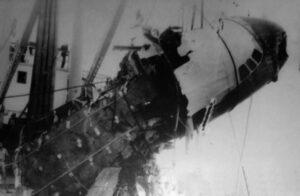
A.K. Damodaran, who had worked with Kao in the Policy Planning Committee in the MEA, introduced me to Kao. Damodaran, who had retired from the Indian Foreign Service, was serving as the editor of the Selected Works of Jawaharlal, when we were preparing the volume covering the Kashmir Princess crash. I met Kao and we had a long chat on the air crash and the Bandung Conference. He also gave me a detailed perspective of his observations of the Chinese delegation at Bandung including Chou en-Lai.
The brief bio I had then prepared, and which was published in Volume 29 of the Selected Works is as follows:
“Assistant Director, Intelligence Bureau. He joined Indian Police. 1940: on deputation to Intelligence Bureau. Ministry of Home Affairs. 1947-68; Cabinet Secretariat. 1968-78 and retired as Secretary: Senior Adviser in the Cabinet Secretariat. 1981. and with Policy Planning Committee under G. Parthasarathi. 1984-86.”
As a journalist, I met Kao again in 1996 to write a story on the 25th anniversary of the Bangladesh war. On his office wall was a framed Khukri, if I recall correctly, which had been given to Kao after the Bangladesh operations. Again, we spoke at length, casually asking me right at the beginning of our conversation, if I was carrying a tape recorder? Much of what he said could not go into the story I wrote for the Deccan Herald, the newspaper which I was working for then. But Kao was the epitome of politeness, each time I went to meet him. Bangladesh and Sikkim were therefore among the most significant achievements of his career. But Kao’s legacy was defined by more than the creation of Bangladesh or the integration of Sikkim. It also lay in the quiet counsel he provided to successive prime ministers, often away from the public eye.
Kao was equally clear about the limits of his role, whether as head of external intelligence or as a security adviser. He could assess risks, offer counsel and place the facts before the political leadership; the final decision, however, belonged to the elected authority. The episode surrounding Sant Jarnail Singh Bhindranwale in 1984 illustrated that distinction.
Kao sought advice from a British security official and conducted his own assessment of the risks of mounting a heliborne operation by the Special Frontier Force to remove Bhindranwale from the Golden Temple. The plan, code-named Operation Sundown, was ultimately left to Prime Minister Indira Gandhi to approve. She judged the risks too great, and the operation was never carried out. Operation Blue Star, which followed, would prove far more consequential in terms of lives, political costs and the eventual assassination of Indira Gandhi. But that is the clarity—and the danger—of hindsight.
Keeping Friends Happy
In 1982, Count Alexandre de Marenches, then head of France’s external intelligence service, the SDECE, described Kao as one of the great spymasters of his generation. He also observed a quality that was perhaps as striking as Kao’s achievements: his reluctance to speak about himself or take credit for what he had accomplished. That was Kao, the man who also helped Ghana establish its intelligence service in the 1950s.
Kao was also the interlocutor sent by Indira Gandhi in 1984 to Beijing to meet with Chinese leaders and open a diplomatic channel. Indira Gandhi was assassinated on 31 October, forcing Kao to return immediately. Kao was the perfect intelligence operative meeting with his counterparts across the world in quiet corners and doing what he was best at, protecting India’s interests. The merger of Sikkim was also Kao’s handiwork, the actual operation being handled by P.N. Banerjee, then Joint Director in Calcutta and G.B.S. Sidhu in Gangtok.
Kao was a True National Hero
There is much more to Kao the man, than just being an institution builder. Born in Varanasi, this Kashmiri Pandit served India with distinction and honour till his death in 2002. He was a silent man with his own set of faults, but not that these faults ever compromised India’s security. That was Kao’s hallmark.
A man who walked tall among the intelligence agencies of the world with a panache only fit for a king. He was a king who remained undercover, both while in service and outside. I sadly recall the day in 2002 when I heard of his passing from a Kashmiri friend. I thought to myself, there goes another legend. God would have certainly welcomed him in heaven, amongst the clouds and perhaps providing seeking his advice on how to handle humanity hell bent on destroying itself!