 Dr. Bhashyam Kasturi
Some view the protests, led by various political parties, NGOs and student associations affiliated with the Left Wing, as a Western-sponsored attempt at regime change. Others point to the genuine nature of the demands made by the protestors against Gyanesh Kumar, Chief Election Commissioner of India. The challenge lies in distinguishing political mobilisation from legitimate public grievances—and in examining the evidence before drawing conclusions about either.
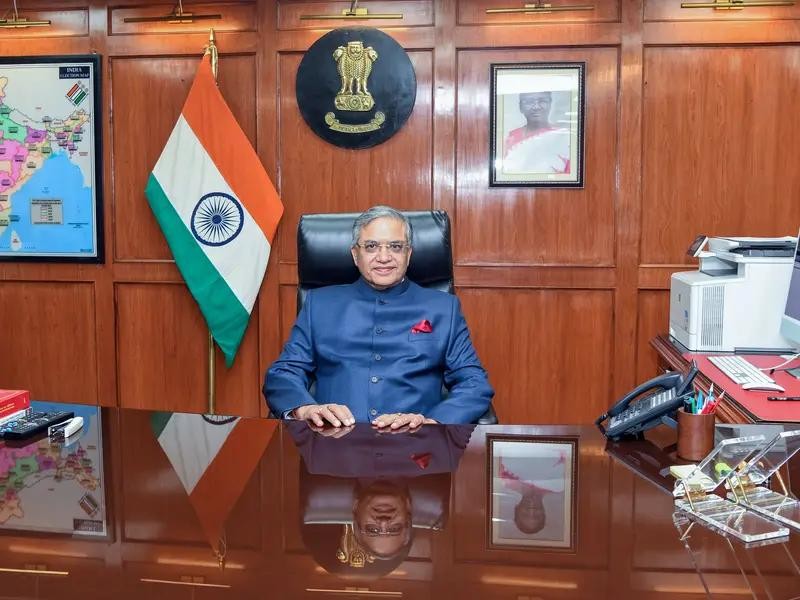
At the heart of the impasse lies the government’s response. Fundamental to this situation is the approach of the government – relying largely on the heavy deployment of police and paramilitary forces to prevent any escalation of violence. While maintaining public order is a legitimate concern, an overwhelming emphasis on security risks betraying a siege mentality rather than a willingness to engage. What remains conspicuously absent is a sustained dialogue with the protesters to address their grievances and find a political resolution to the standoff.
The prognosis therefore is not very conducive, as both sides have taken a hard line. The arrest of Leader of Opposition Rahul Gandhi is likely to set off a chain reaction. In the next year or so, with many states scheduled to witness elections, the situation is likely to remain disturbed.
This will remain the case unless the government chooses to use negotiation as a mechanism to resolve issues rather than rely solely on force.
Dr. Bhashyam Kasturi
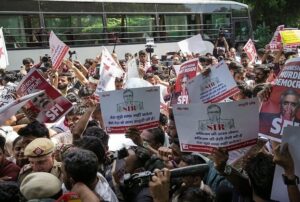
The Protests: Is the US behind the protests?
The experience of Nepal, Sri Lanka and Bangladesh in recent years suggests that while people’s anger on the streets has a good reason, the mobilisation and funding for such protests come from outside the country. The intent is regime change.
The US Central Intelligence Agency knows this very well and is an expert practitioner. There are others too and the Chinese are today equally adept at this game. Therefore, one should not discount efforts by external powers to challenge the incumbent government.
This, however, is not to suggest that the situation should be viewed solely through the prism of law and order. Such an approach would risk reducing a complex political confrontation to a question of policing, while overlooking the underlying grievances that have brought the protesters onto the streets. For instance, the issues raised by the opposition over the functioning of the Election Commission of India (ECI) are quite valid and resonates with the vast majority of Indians.
The Political Landscape of Protest
There is a concerted effort by several political parties, organizations and individuals to protest against the ruling BJP government over the alleged irregularities perpetrated by the Chief Election Commissioner Gyanesh Kumar in the electoral rolls. Deadlines have been set, and attention now turns to October 10, the date fixed by the Cockroach Janata Party for the resignation of Chief Election Commissioner Gyanesh Kumar. Whether this ultimatum will yield any result, or merely deepen the confrontation, remains to be seen.
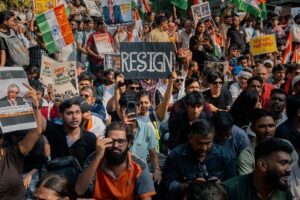
Apart from the CJP who launched protests in Mumbai on October 2, the Congress-led INDI Alliance, several Left organizations and student bodies are planning to launch or join the protests. Clearly, there is a pattern that reflects the issue-based nature of the protests. In July it was over the resignation of Dharmendra Pradhan on the NEET leaks. Unstated reason for the July protests was also the FCRA Amendment Bill which was to have been introduced in the Parliament. The FCRA draft bill was then quietly sent to a Joint Parliamentary Committee to be examined further. Note that the Monsoon Session of Parliament began on July 20, and the protests began on July 10.
In the current situation, the CJP has taken the lead by staging peaceful protests in Mumbai on October 2. The focus of these agitations is the CEC, Gyanesh Kumar, who has allegedly modified Form 6 in the course of the SIR. The ECI issue has brought together many forces, and each plans their own style of protest. The protests launched by the CJP in Mumbai set the process in motion, with the party demanding the resignation of Chief Election Commissioner Gyanesh Kumar by October 10. The protests have since continued in Delhi, prompting the Delhi Police to invoke Section 163 of the Bharatiya Nagarik Suraksha Sanhita (BNSS), which replaced Section 144 of the Code of Criminal Procedure. The provision empowers authorities to restrict assemblies and impose prohibitory orders when they believe such measures are necessary to prevent a disturbance of public order.
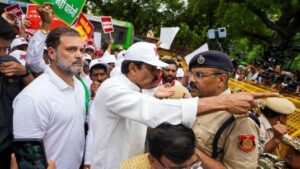
The Congress, on the other hand, intends to begin a country-wide campaign from October 10, even as both LOP Rahul Gandhi and Priyanka Gandhi were detained briefly in Delhi on October 6, as part of their efforts to meet the CEC. The objective of this Congress-led protest is to transition from the capital to an all-India campaign, titled “Vote Bachao, Desh Bachao”.
The rallying around the Congress of Left parties and student associations, like the ‘All-India Students Association’ to help “consolidate” the movement makes it clear that there is convergence of strategy on the protests against the BJP government. The Aam Aadmi Party is already a part of the Congress-led agitation in Delhi, and participated in the march to the Election Commission and Jantar Mantar. The segment most represented in the protests are GenZ and youth, who are voluntarily flocking to popular protest sites in Delhi and Mumbai. The CJP, led by Abhijeet Dipke, is showing its strength, vis-à-vis Government raising the question of motives and intentions.
Government’s Response
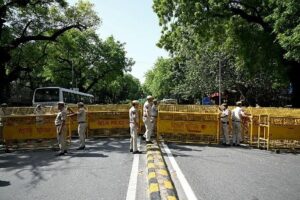
The government’s response has been to deploy large number of security forces, especially in Delhi. Paramilitary forces like the BSF have been found to be deployed. In July the heavy deployment of forces led to some degree of control over the protests, but the use of force created challenges from the perspective of law and order. The change of guard in Delhi Police was also probably a result of the inadequacy of police measures in containing the protests, both physically and in terms of communications. Reports currently indicate that 221 companies of paramilitary forces have been deployed to assist Delhi Police. Numbering some 23,000 personnel, this scale of force deployment demonstrates the challenges the government faces. The key protest areas in Central Delhi are being looked after by the Delhi Police, supported by the ITBP and RAF (CRPF). With the experience gained in July, all frontline personnel have been given body cameras to do their work transparently.
Conclusion
The long-term challenge will be to maintain law and order while ensuring that democratic rights are not imperilled. The degree to which the government performs this task will depend on the genius of the Delhi Police and other State Police units. The CAPF will, of course, be there, but the police will be on the frontline.
It is make or break time for the opposition, politically. Merely coming together on a single issue may not serve the purpose of bringing down the BJP government. That is a much more difficult task. However, the limited objective of securing the resignation of the CEC may well provide a sense of limited victory to the opposition.