 Dr. Bhashyam Kasturi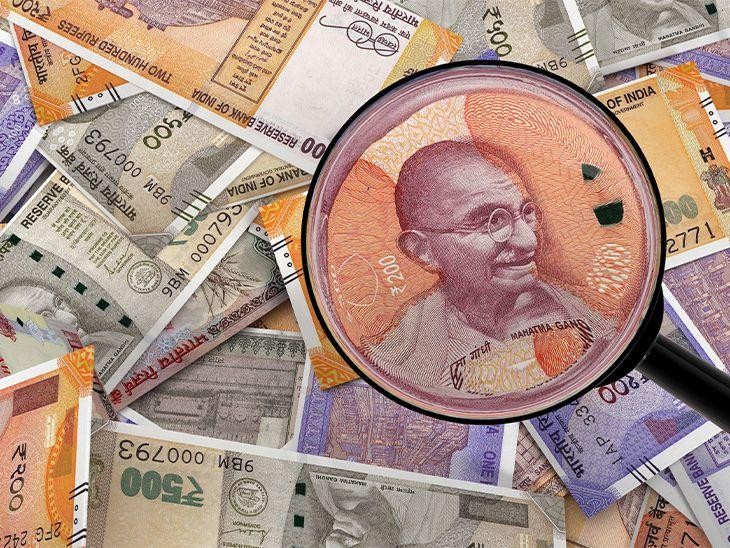
Everyone who has seen the film Dhurandar knows that the story of the Khanani brothers in Pakistan, was a real one. These Khanani brothers were involved in circulating fake currency and money laundering business for over a decade. They not only helped Pakistan fund its terror war against India, but also helped global drug and narcotics smugglers in their trade.
Javed and Altaf Khanani mastered the art of printing and circulating fake currency and spent decades infiltrating India and supporting the Inter-Services Intelligence (ISI), in its efforts to promote terrorism across the globe. This was the Karachi Project that helped Pakistan fund its terror war against India.
Although one of the Khanani brothers is no more, it is likely that the process they initiated continues in some manner or the other. This is asserted because the ISI which provided the logistic basis for printing of Fake Indian Currency Notes (FICN), still remains intact. While demonitization and digitization of currency as well as strict FATF action on Pakistan, has reduced the importance of FICN, this informal trade continues to this day, promoting terrorism and narcotics, the world over.
KKI Money Laundering operations
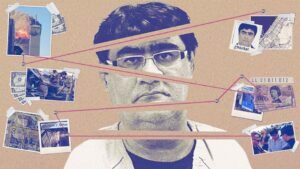
Khanani and Kalia International (KKI) was established in Karachi, by the Khanani brothers and Kalia brothers, basically to launder money across the globe. Some reports claimed that they controlled 40% of Pakistan’s foreign exchange and according to the US DEA, laundered US$16 billion annually between 1999 and 2017.
Strangely, Pakistan claims that it shut the KKI operations in 2008, after a forex scam was unearthed. The system they used was age-old, basically a hawala and hundi network, where traders moving from one place to another, but never carried money or gold. At the port of their business, they had a counterpart who would give them the money, once the similar account was given to KKI in Karachi. Similarly, KKI laundered money in virtually every part of the world.
This was just the tip of the iceberg as two military printing presses in Pakistan also printed Indian currency notes, which were subsequently flooded into India. Thus, KKI helped in funding the terror groups in Pakistan like the LeT and JeM, funded the Kashmir insurgency and helped launder money for global drug cartels. Even D-Company of Dawood Ibrahim fame, used the KKI for its illegal activities.
What is little known is that Altaf Khanani was caught by the US Drug Enforcement Agency (DEA), during a sting operation in 2015 and sent to a US prison. Interestingly, Altaf was released in July 2020 and his present whereabouts are not known; most likely in Pakistan. His brother Javed reportedly committed suicide in 2016 after jumping from the 8th floor of a building in Karachi. During their heydays, their ISI contact was one Major Iqbal, who also coordinated the printing of the fake Indian currency notes in Pakistan. The NIA later, after a thorough investigation concluded that FICN could only have been printed in a state-controlled printing press.
Coincidentally, an officer named Major Iqbal (obviously a cover name) had also been the ‘espionage agent’ for David Coleman Headley, when he was in Pakistan in 2006. Iqbal gave Headley a total of US$ 30,000 and fake Indian currency, for expenses and trained him for intelligence collection. Subsequently, Headley travelled to India on his US passport for his surveillance operations in Bombay.
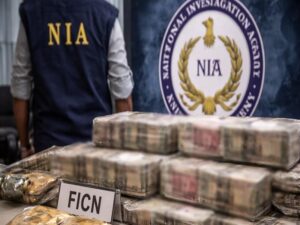
Also in 2014, the arrested LeT operative, Abdul Karim Tunda, told the Delhi Police, that the ISI ran the entire network of FICN, which was smuggled into India. He also revealed that Iqbal Kana, the biggest dealer of FICN who is still active in Pakistan, got the notes through an ISI Brigadier, pushing them into India via Bangladesh and Nepal. The challenge was that the ISI was using multiple routes to push FICN into India. The NIA named a retired Brigadier Lala and Aslam Chaudhury, as being central to the FICN racket, with Iqbal Kana being the mainstay of the operations in Lahore.
Indictment by the US Treasury
The US Department of Treasury identified KKI in Karachi and Dubai’s Al Zarooni Exchange, as Transnational Criminal Organizations. The Khanani Brothers funded and aided terrorist organisations like the Al-Qaeda, the Afghan Taliban, Lashkar-e-Tayyaba and Jaish-e-Mohammed.

In 2008, the Pakistan government exposed the forex scam in which KKI was also involved, apart from several other such agencies and closed all of them down. But in 2015, Altaf pleaded guilty in a US court, with a potential to expose their global business and its secrets. The US Treasury Department indictment also meant that others who were part of the network came under scrutiny and blacklisting. Obeid Khanani, Altaf’s nephew was one of the four accomplices who was blacklisted. Meanwhile, the UAE government froze the assets of Al Zarooni exchange in Dubai, leading to closure of another path for the Khanani’s to operate.
Javed was probably eliminated by state and non-state actors whose profile details he had held and could have used to blackmail these individuals.
The volume of FICN circulating in India around 2016 was around Rs. 400 crores, indicating the scale of the operation launched by the ISI to create an economic imbalance in the Indian economy. However, the Kalia brothers, Hanif and Munaf Kalia were acquitted by Pakistani courts in 2011 (after their arrest in 2008) and are currently quietly operating as the Kalia Group, engaged in IT services and consultancy.
The UK Link to FICN
In order to understand the background to the Khanani FICN issue, one name cropped up on both sides of the border, a British firm named Da Le Rue, which supplied printing paper for currency notes to India and also to Pakistan. In 2010, the Reserve Bank of India (RBI) banned this agency from supplying printing paper and threads to India, as it detected some major faults. The Central Bureau of Investigation (CBI) subsequently filed charges against Arvind Mayaram, a former Finance Secretary. The allegation against Mayaram was that he granted a three-year extension to the British firm. For India, the deal was signed in 2004 for a five-year contract to supply “colour-shift” security threads. After the contract expired, Mayaram is alleged to have granted three unauthorised extensions to the British firm, without the necessary security clearances or without verification of the false patent claims made by the company.

Indian intelligence agencies reported in 2014 that De La Rue had supplied currency printing paper to both India and Pakistan. A 2014 NIA report based on intelligence inputs showed that paper used to print FICN matched Pakistan’s legal currency, indicating that the sources of printing paper were probably the same.
India Today published a written compilation of the oral submissions by the intelligence agencies which states that: “Forensic opinion has revealed that the notes have been printed on highly sophisticated machines…..The pulp found to be 100 per cent rag in the FICN, which is normally used in making currency papers. The perfection of window and watermark formulation indicates the manufacture of FICN paper on regular currency making machines which can only be owned by a country or state. Most of the pivotal parameters of the paper, were found matching with the legal tender of Pakistan.”
Demonetisation India 2016
Demonetisation in India, November 2016 did temporarily curb FICN circulation within India, but the problem persisted and by 2021-22, the detection of Rs. 2,000 fake notes has been reported to have increased by 57%. With withdrawal of the Rs. 2000 note in 2023, the FICN printing shifted to Rs. 500 notes. Subsequently, the introduction of the UPI and digital payments transformed the nature of FICN operations in India.
That Pakistan continues to fund terror in India using the old hawala and hundi means, it has been exposed in several arrests and discovery of money transfers that have taken place in recent years. The only shift lies in the multiplicity of channels used to deliver the funds; narco-terrorism funding, use of digital channels like EasyPaisa and SadaPay, and massive collections raised through charitable organizations are some of the new tools used by the ISI. They bypass normal banking channels, as occurred in the case of KKI, and provide funding. This subterranean channel of operation is a real and present danger to India’s national security.