 Dr. Bhashyam Kasturi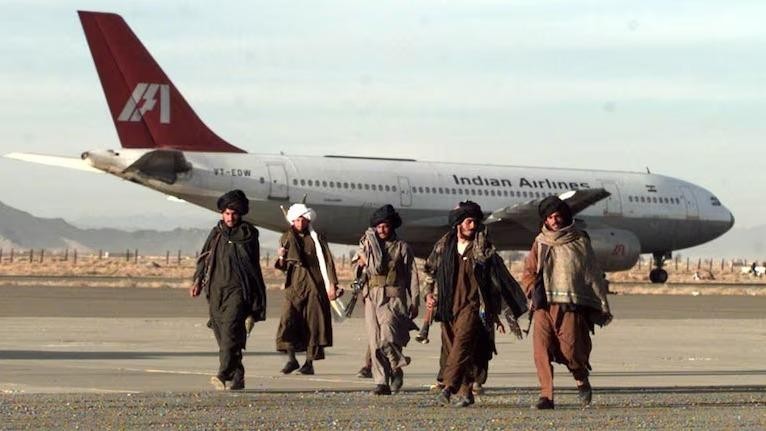

The opening scene of the film Dhurandar shows R. Madhavan (Ajay Sanyal) in the role of Ajit Doval, currently National Security Adviser (NSA), then Additional Director, Intelligence Bureau, talking to the passengers on board IC 814. Once the negotiations between the Indian team and the five hijackers were complete, Doval went into the aircraft to talk to the passengers. In a recent interview, Doval also recalled what he said on the evening of 30th December 1999, to the passengers. He said that they were safe and an agreement had been reached with the hijackers to free all of them. He also told them to shout “Bharat Mata ki Jai”, the response he got was total silence. Doval later said he realised that the passengers had been traumatised. That is stating the obvious. The journey from Kathmandu to Delhi was one-week long. In between, the hijackers took the plane to Amritsar, Lahore, Dubai and finally Kandahar. The passengers also got to know of the brutal stabbing and killing of Rupin Katiyal, a young and newly married man. At the end of all this, to expect the passengers to be ‘nationalistic’ was perhaps a bit too much. While cinematic license gives one the freedom to focus on the role of one individual, in this case, Ajit Doval. There were others who were engaged in equally important tasks on the tarmac of Kandahar airfield.
Negotiating with Hijackers
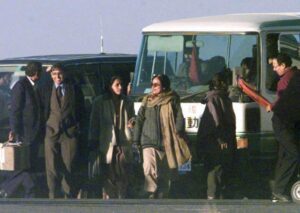
The team of negotiators at Kandahar was led by Vivek Katju, then Joint Secretary, PAI in the Ministry of External Affairs. This team flew into Kandahar on 27th December, 1999. Katju was supported by A.R. Ghanshyam, then Counsellor (Commercial) in the Indian Embassy in Islamabad. In fact, Ghanshyam arrived in Kandahar, a day before the negotiating team arrived and held discussions with the Taliban. Accompanying Doval from the IB was Nehchal Sandhu. From R&AW there was C.D. Sahay and one other officer. It is this core team, which handled negotiations with the hijackers and the Taliban, and after some hard bargaining brought down the demand for release of 36 terrorists jailed in India to three. When Ghanshyam first contacted the Taliban, the demands included release of ‘some Kashmiri militants’ including Maulana Masood Azhar of the Harkar-ul-Ansar. One of the five hijackers, spoke Urdu and English and was the sole communicator with Ajit Doval, during the crisis. What became clear through these negotiations was that the hijackers wereconstantly in touch with their handlers in Pakistan. Each time, Indian negotiators sought release of the women and children, the hijackers at Kandahar had responded after some time. On our side, it seemed to be a reasonable tactic, because the UAE authorities had earlier managed to get 27 woman and children released in Dubai in exchange for refuelling the aircraft.
When the hijackers made known their final demands, it was written on a sheet of paper and thrown onto the tarmac. They wanted 36 militants, US200 million in cash and body of terrorist Sajjad Afghani, killed in Jammu a year earlier. The challenge was two-fold; first the Taliban was playing the role of a mediator but clearly siding with the hijackers. And second, the hijackers had done their homework well on the government’s position. For instance, when told by Doval that Central Government would have to convince Farooq Abdullah to release the wanted terrorists, the hijackers retorted: “He is the one who released Rubiya Saeed in exchange for five militants”. This had occurred in 1989. Just like in 1989, Abdullah opposed the release of the three terrorists for IC 814 a decade later.
Rescue attempts abortive
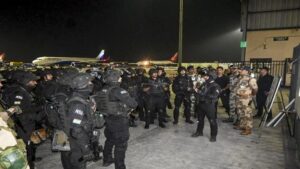
Debates within the Indian government about a NSG rescue attempt did take place and that is why a plane load of commandos were flown to Dubai, but the Emirati authorities refused to let the plane land. In Taliban country, such an attempt would have been dangerous and risky. The only possibility for a rescue operation had been at Amritsar, but this too could not take place as the NSG was delayed, due to the lack of air transport from the capital. There was an Army unit with three tanks that was stationed at the end of the runway, commanded by Brigadier Kuldip Singh and the local police could have shot the wheels of the aircraft to prevent it from taking it off. Tragically, everyone waited for orders from New Delhi, which never came, because everybody waited for someone to take the decision. Subsequently, the government claimed that the aircraft had taken off very quickly even before anyone could react. Officially, the aircraft landed at 7 pm and took off for Lahore at 7.49 pm, without refuelling and no permission from ATC.
In Kandahar, the Taliban had surrounded IC 814 with heavy weaponry and armour, making their intervention a high possibility, in case an Indian rescue attempt took place. Knowing Ajit Doval, he must have been amongst those who would have sought to have a rescue attempt. On 30 December 1999, the Indian team was told by the Taliban that their patience was wearing thin and the aircraft would be forced to fly out, if the demands of the hijackers were not met. At this time, the hijackers laid down the last demand, give us three terrorists. A.S. Dulat, then Secretary (R) flew to Srinagar that evening to negotiate the release of the three wanted men, as the State Government under Farooq Abdullah were in charge. After much persuasion, the three were handed over to Dulat who brought them back to Delhi.
A personal note
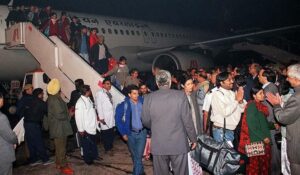
On 31 December 1999, I was told by Bureau Chief at Deccan Herald to go to the Delhi airport, along with a colleague to Palam airport to cover the return of then foreign minister Jaswant Singh from Kandahar with the passengers of the ill-fated IC-814. What a way to spend new year’s eve!
I suppose the same sentiment would have arisen in the mind of foreign minister Jaswant Singh when he landed and emerged from the Terminal looking haggard and old. He did not answer any question thrown at him by the waiting media. He would later (29 February 2000) speak in Parliament outlining the reasons for the government having released three of India’s most wanted terrorists, including Masood Azhar, Ahmed Omar Saeed Sheikh and Mushtaq Ahmed Zargar in exchange for the lives of 155 passengers on board IC814, the scheduled Indian Airlines flight from Kathmandu to Delhi. In fact, the then government justified it as the best course of action it could have taken to get all the passengers released.
Intelligence Failure
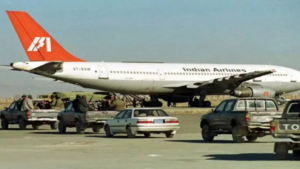
Between 24 December and 31 December, the drama of the hijacking and travel of the aircraft to several places including Dubai and the eventual negotiations and final release took place. Meantime, one passenger Rupin Nautiyal was stabbed to death by the hijackers in Dubai. There 27 passengers were released. The other aspect of IC814 hijacking was the lack of security in Kathmandu, which allowed the hijackers to smuggle weapons aboard the aircraft. Over the years, this has shown improvement, but the worst part was the rejection of inputs to the effect that Pakistan terrorists were planning to hijack an Indian Airlines aircraft from Kathmandu. This according to former RAW officer, R.K. Yadav, was conveyed by U.V. Singh, Second Secretary, stationed in the Embassy in Nepal. He had received a tip-off from an airport official in Kathmandu about the plan to hijack an Indian plane by Pakistan based terrorists. He gave the report to his superior, S.B.S. Tomar, who was then station chief (Counsellor) in the Indian Embassy in Kathmandu. Tomar refused to acknowledge the input. As a result, the report never reached the HQ in New Delhi. Ironically, Tomar was one of the passengers on board IC 814 to Delhi. That he retired as Special Secretary in 2022 was possibly because he was related to N.K. Singh, then working in the PMO as Principal Secretary.
Link between Taliban-Hijackers and Pakistan
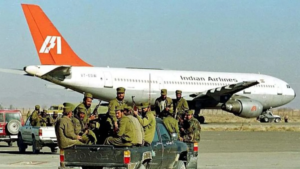
Who were the hijackers? The five persons belonging to the Harkat-ul-Mujahideen were all Pakistani nationals. Ibrahim Athar was the leader and brother of Masood Azhar. Zahoor Ibrahim Mistry was from Karachi and the hijacker responsible for the stabbing to death of Rupin Katiyal. Mistry was killed in 2022 by unknown gunmen in his shop in Karachi, which he had opened under an assumed name.
The story of IC814 would not be complete without a mention of two facts. First, the choice of Kandahar as the final destination for the Indian aircraft. Given the fact that the Taliban ruled Afghanistan at that time, the hijackers felt at home. Second, all three terrorists who were released in exchange of IC814 passengers, disappeared into Pakistan, courtesy the ISI. In early 2000, Masood Azhar launched the Jaish-e-Mohammed, a terror outfit that caused considerable damage to India and its interests in the region.
There are many lessons learnt. The most important thing is having an active Crisis Management Group and having the right mix of people to perform the task. The other thing is intelligence. In both cases, things have evolved and changed over the years. The NSG has since evolved, having more hubs and better integrated with the armed forces for aerial assets for quick movement. That India has not since 1999 witnessed any hijackings, is by itself a welcome sign, one showing that airport security has been strengthened, but in the case of IC814 it was Kathmandu that proved to be the weak link.