 Dr. Bhashyam Kasturi
Did India miss an opportunity to sign a long-term oil deal in 2022 with Iran when the latter offered a 25-year pact on energy to India? While this was undoubtedly a missed opportunity, India’s reluctance to do business with Iran in the face of US sanctions made it a non-starter. More recently, when the US gave India a waiver to buy oil from Iran, the opportunity rose again to do a strategic deal. Instead, New Delhi chose to sign a pact with the UAE on a long-term deal that would fill India’s strategic petroleum reserves (SPR) with 30 million barrels of oil, of course, but in the future. This is because, firstly the oil has to be shipped to India and secondly, the Chandikol SPR facility in Odisha, one of the proposed recipients of the crude oil, is currently in the pre-construction phase. Thus, while the long-term needs for India are taken care of, the immediate crisis will need speedier resolution.
India’s Strategic Oil Reserves Get a Critical Boost
India’s current Strategic Petroleum Reserve (SPR) facilities lie at three locations, two in Karnataka and one in Andhra Pradesh. To put it simply, these facilities give India a reserve of 9.5 days of crude oil. Open sources indicates that, India has a total storage capacity of 5.33 million metric tonnes of oil, according to Press Information Bureau on 3rd August 2023. Of this approx. 64% (3.372 MMT) is said to be full, according to information provided to the Parliament in a reply to an unstarred question in the
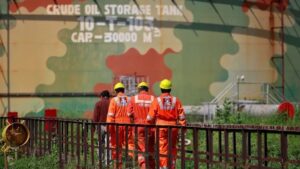
Rajya Sabha by Minister of State in Ministry of Petroleum & Natural Gas, on 23 March 2026. Of the three facilities, the SPR at Mangaluru in Karnataka is already being utilised by Abu Dhabi National Oil Company (ADNOC) and holds around 1 MMT. The latest deal with ADNOC means that ADNOC is familiar with Indian conditions. Importantly, the deal will give India an extra 4.1 MMT (equivalent to 30 million barrels) and shore up India’s strategic reserves.
As per the terms, ADNOC remains the owner of the oil stored in India’s reserves, and will bear the full cost of storage and management. As reported in The National, on May 15, 2026, in a crisis situation, India will get first right of access to the crude, while allowing ADNOC to sell a portion of the stored crude to either Indian refiners or to third countries. Assuming that, the first tranche of oil carried on VLCC arrives in India by August 2026, this is likely to resolve the fuel crisis that besets India. Of course, by that time oil prices in India may have gone by at least Rs. 20/- going by current upward price revisions. The government is working towards expanding India’s SPR to 6.5 MMT. In the case of Chandikol in Odisha, capacity will be 4 MMT, while Padur in Karnataka is expected to be enlarged to 6.5 MMT capacity wise. Notably, India and the UAE also signed a 10-year agreement worth US$ 3 billion for the supply of Liquified Natural Gas to India. Deliveries of LNG are scheduled to begin in 2028, according to a press release issued by ADNOC on 19th January 2026.
How Sanctions Reshaped India’s Iran Strategy
However, it is worth going back to the proposed 25-year long-term agreement proposed by Iran on energy. This came to light during the 2022 visit of Ali Bagheri, Deputy Foreign Minister of Iran to India. The key to this suggestion was that India would invest in Iran’s energy infrastructure and in return Tehran would supply New Delhi with discounted oil. Iran has long sought Indian investment in their transport and energy corridors. Apprehensive of the impact of US secondary sanctions, India chose to remain neutral and did not commit itself to Tehran. Instead, India chose to buy discounted oil from Russia.
Further in 2024, India signed a ten-year deal with Iran on Chabahar Port, according to a Press Information Bureau Release dated 13 May 2024. However, the current status of the Port and India’s involvement do not lend confidence on how far this initiative will go. After all, even Chabahar Port has been subject to secondary sanctions. The US did give India a waiver which ended on 26 April 2026. Reports indicate that India did two things in the run-up to the end of the waiver. First, it withdrew its technical personnel from Chabahar and second, New Delhi prepaid its investment commitments (US$ 120 million) to ensure that the Port Terminal remains operational, as stated by Minister of State, Ministry of External Affairs, in a reply to an unstarred question on 06 February 2026.
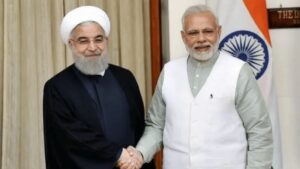
While India’s strategic vision was correct in seeking access to Afghanistan through Iran, it invested too little. India invested US$ 84 billion in two berths at the Shaheed Beshthi terminal at Chabahar. This was the figure approved by the Indian Cabinet in October 2014, as per the reply by Minister of State, Ministry of External Affairs, in the Lok Sabha on 21 July 2016. This was followed by formation of a company known as Indian Ports Global Limited, to operate the two terminals.
Long story cut short, Indian investment did not produce the desired results. The threat of US sanctions always loomed and second, both India and Iran dithered on speedy execution. India did manage, when required, to send food and medicines to Afghanistan. Ironically, in July 2015 Iran’s president had offered PM Modi ‘sovereign commitments’ on Chabahar Port according to an Indian Express article dated 18 July 2015. For reasons best known only to the government of India, no forward movement occurred. While Iran wanted India to invest around US$ 8 billion, New Delhi was reluctant to move ahead in view of the US sanctions.
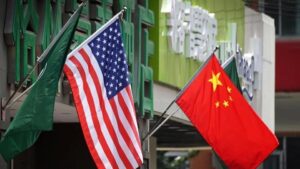
The opportunity missed by India over time was taken by China. According to TRT World, 15 January 2022, in 2021, China signed a 25-year partnership agreement with Iran, and purchased discounted oil from Iran, despite and inspite of US sanctions.
However, as mentioned above, India did purchase oil from Russia and benefitted by refining the same and selling it to Europe. This channel of purchase was approached through private companies like Nayara and Reliance, despite a sanctions threat and a waiver from the US, raises the question as to why the same was not done with Iran in the past?
Even now it is not too late to call for oil imports from Iran and let the market do the rest, as reported in Reuters, 18 May 2026. As per this report, India has been buying Russian oil even when there were no US waivers. The so-called US waiver is really a red herring and bypassing these can be easily done, if the right tools are applied.
Conclusion:
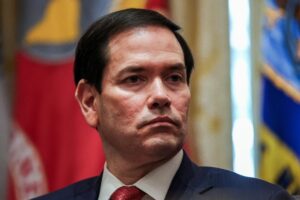
At this moment, the US wants to control the world’s supply of crude and therefore, the US Secretary of State Marco Rubio informed the public on 21st May 2026, that the interim President of Venezuela, Delcy Rodriguez would travel to India soon and that Washington is quite okay if India buys crude oil from Venezuela, according to a report in Times of India, 22 May 2026. Clearly, the US is making it clear that it wants to control where India buys its oil from. That is the real question before India. With an 85% import dependency on crude oil, India must have the freedom to make a choice as to from whom it wants to buy. The future of India’s energy security depends on that ability to take sovereign decisions.