 Dr. Bhashyam Kasturi
The Diesel Pact with Russia
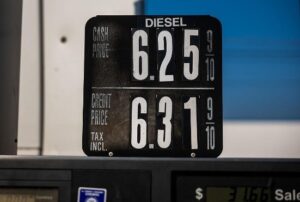
US President Donald Trump has done two things ahead of the mid-term elections in the United States. First, he has ordered that diesel be purchased from Russia to meet the domestic demand and to curb rising prices just ahead of the mid-term elections in the US. To counter soaring domestic fuel and diesel prices (which peaked over $6.30–$6.35 per gallon) and appease voters ahead of the midterms, the Trump administration eased sanctions via OFAC General License 135 to permit specific Russian diesel imports through April 2027.
Second, Trump has put a hold on the implementation of the Lindsay Graham Act on Russia and Iran. Which means that India gets a breather from the 100% tariff threat that hung like a Damocles sword.
But the purchase of diesel from Russia has created a fundamental rift with the EU, which views this as a sell-out of Ukraine in its conflict with Russia. Europe has therefore, launched its own preparations to sustain Ukraine at this juncture and boost defence spending to ensure that Europe is prepared for a Russian invasion, if it should occur in the near future.
The Trump administration’s announcement on October 9, 2026, that the United States would purchase diesel from Russia caught many of Washington’s allies off guard, raising questions about the consistency of US energy policy and its approach towards Moscow. The entire focus till now had been a Western economic squeeze of Russia aimed at bringing its war waging capacity to a standstill. This bubble was burst with Trump stating in a social media post – “Russian President Vladimir Putin had agreed to immediately supply more than three hundred thousand tons (2.25 million barrels) of diesel to the US and global markets, followed by an additional five hundred thousand tons in November 2026 and a million tons ‘immediately’ thereafter. Russia will also release three million tons of diesel ‘within a short period of time’, depending on the state of its refineries.”
Americans paying high prices for diesel
 Almost simultaneously, the US Treasury Department announced a temporary licence suspending sanctions on the purchase of Russian energy products until April 2027. Trump has said he hopes the latest arrangement will encourage Moscow to return to the negotiating table over Ukraine. However, the immediate domestic consideration for the administration is the sharp rise in diesel prices ahead of the US mid-term elections scheduled for 3 November 2026.
According to the US Energy Information Administration, diesel prices averaged US$6.18 a gallon as of 12 October 2026, compared with US$3.48 at the beginning of the year. The increase has translated into higher transportation and distribution costs, placing additional pressure on American consumers. The impact is also reflected in inflation figures: consumer prices reportedly rose by 0.6 per cent in September 2026, taking the annual inflation rate to 3.7 per cent. With fuel costs feeding into the broader cost of living, energy affordability has emerged as an important domestic political consideration for the Trump administration as voters headed to the polls.
The larger question is whether the volumes of Russian diesel reaching US shores can make a difference before the mid-term elections. However, analysts and energy experts noted that the volume of Russian diesel shipments (announcing blocks of 300,000 to 500,000 tonnes and up to a million tonnes) was too small to meaningfully shift domestic or global diesel prices.
Following the Republican losses in the 2026 US midterm elections—which handed control of both chambers of Congress to the Democrats—the focus on US diesel imports and energy policy, involves several direct actions and market shifts. Following the Republican congressional setback and acknowledgment of the economic pain caused by fuel costs and the Iran war, oil and energy markets saw sharp price drops (such as an 8% plunge in oil prices) driven by investor expectations that the political shift could accelerate efforts to wind down or alter foreign conflicts.
Is Trump weakening his own sanctions regime?
Many analysts argue that Trump’s U-turn over Russia runs the risk of weakening his own newly introduced sanctions law on Russia. Further, by putting on hold implementation of the 100% tariffs threat against five top buyers of Russian energy, Trump is guided by commercial considerations; after all, the leverage still exists and can be used at any time in the future.
This strange dichotomy must be understood as a Trump tactic, that is short-sighted and unlikely to benefit anybody, including the Republicans in the mid-term elections. However, it is a carrot for Russia, and it remains to be seen if Putin is willing to bite, in other words, will he stop attacks on Ukraine’s energy facilities in return for assured global supply of diesel?
The EU and Ukraine
Ukraine faces a problem with Trump having decreed that Kyiv should halt attacks on Russia’s energy facilities otherwise Washington would halt arms supplies. Having complied with Trump’s diktat but faced with Russian intransigence in adhering to the so-called deal, Ukraine is left with Europe having to defend its interests. Europe has pledged more support to Kyiv and a proposal for joint defence has been mooted. The EU is currently constrained in fully providing for the needs of Ukraine’s armed forces. Short of entering the war in direct support, the EU’s industrial capacity cannot meet Ukraine’s military requirements.
Europe is ‘angry’ with US

One major consequence of Trump’s latest actions has been a stiffening of resolve by Europe to continue support for Ukraine at any cost. EU President, Ursala Von Der Leyen, recently reiterated that EU sanctions on Russia will not be lifted. She added that a fresh package was being prepared to sanction Russia. The announcement came against the backdrop of the EU Summit in Brussels, which was also attended by Ukrainian President Volodymyr Zelenskyy.
The message from Der Leyen and EU Council President, Antonio Costa, was unambiguous: Europe would continue its support for Ukraine. Leyen noted that they had supported Trump in the proposal for non-attack on energy facilities of Russia and Ukraine, but added that Moscow had not adhered to the proposal in the least. Therefore, it was essential to keep Russia sanctioned and in fact, extend and enhance the same.
India’s ‘peace’ proposals
Donald Trump’s plan on halting energy attacks on each other is one way of reaching a preliminary stage. However, Russia has not shown any interest in such a deal. Apart from the US, India, Turkey, and Egypt have also proposed separate peace deals for Ukraine.
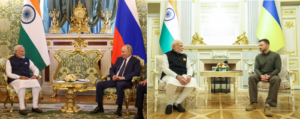
From India’s perspective, the two most pressing issues requiring an early resolution are: the cessation of attacks on energy infrastructure and the restoration of freedom of navigation in the Black Sea. The latter is particularly important, given that the Black Sea’s ports serve as critical gateways for the movement of energy supplies and grain, both of which have significant implications for global markets.
The limited scope of this Indian initiative has been welcomed by Ukraine, but Russia opines that it is looking for a broader political settlement of the conflict. While Ukraine has welcomed the Indian initiative, it knows that unless there is a comprehensive package deal, Moscow is unlikely to take heed.
US President Donald Trump’s decision to grant Russia a temporary licence to sell diesel in the global market appears aimed at easing domestic fuel prices in the United States.
Whether Russian diesel imports will have any meaningful impact on US domestic fuel prices remains to be seen. Equally uncertain is the White House’s expectation that this move will help keep diplomatic engagement with Moscow alive and bring Russia back to the negotiating table over Ukraine. The reason for this becomes clear from Moscow’s response to the several proposals that have been brought up so far. Putin wants a comprehensive package that suits Russia. This much is obvious; anything in between, like the diesel deal is a bonus.
India has a long way to go before it reaches the status of a serious mediator. It needs to actually mediate between both sides to understand the points of view on the table.