 Dr. Bhashyam Kasturi
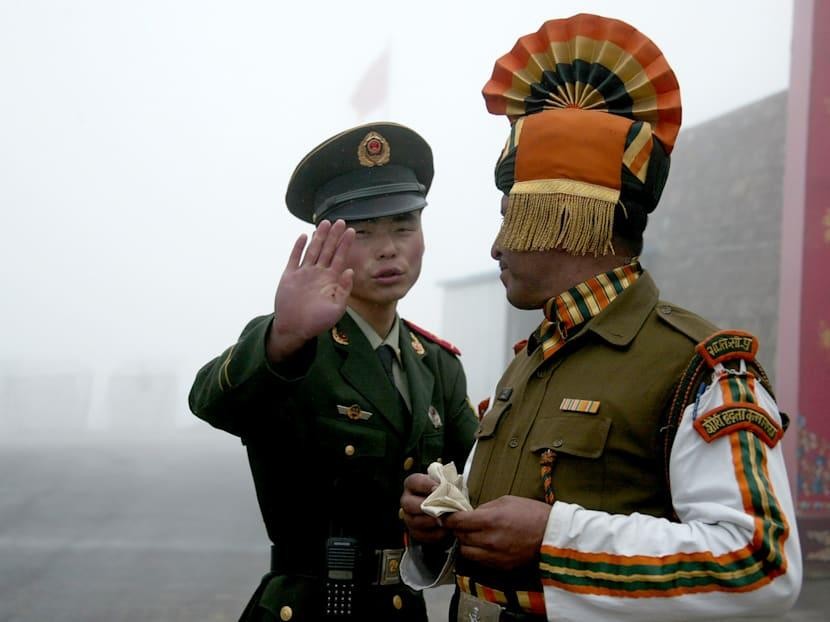
The border situation with China in Arunachal Pradesh has taken on a new colour with Shatrujeet Singh Kapur, DG – ITBP, claiming that China had intruded into Indian territory in some pockets of Arunachal Pradesh. This was followed by a long and convoluted statement by the MEA which in essence accepted the remarks made by DG, ITBP. A couple of months ago, the Indian Ministry of Defence, in its Annual Report (2025-26), claimed that concentration of PLA troops along the LAC had come down to 10 Combined Arms Brigade (CAB). Ironically, around this time reports emerged of incursions by China’s PLA, in the Taksing area.
A tribal society group in Arunachal Pradesh made these assertions, which were flatly denied by both the military and the MEA. Post the ITBP chief’s remarks it has become clear that the July 2026 incursions were correctly reported by the locals in Arunachal Pradesh.
Lesson learnt is don’t try and be too friendly with the Chinese. The issue is that the border issue with China must get top priority and sufficient attention given to its speedy resolution. There can be no intermediate solution, especially one driven by the Chinese. That is the key takeaway from the recent events surrounding the LAC with China.
What the DG’s Remarks Signify
DG-ITBP, made the remarks while addressing ITBP personnel at Alwar, Rajasthan, on October 22, 2026, ahead of the 65th Raising Day of the force. The points he made related to continuing face-offs with Chinese forces along the LAC “in the last few days”, at multiple locations in Arunachal Pradesh.
The DG also characterised the LAC as the most difficult border to manage and observed that China was India’s biggest adversary. DG Kapur also stressed the massive investments that China had made to modernize its military and drew attention to the need for our own forces to move away from using traditional warfighting methods against China. So far so good. The DG’s remarks at an official event then went viral on social media. In a short span of time the ITBP removed the video of his remarks from social media.

DG – ITBP made one interesting observation about the Shaurya Commando teams demonstrating their capability against the Chinese, in the recent face-offs at multiple locations in Arunachal Pradesh. While he did not elaborate, it would be fair to assume that these teams were able to quickly respond to Chinese intrusions along the LAC. That by itself is important. He also said that commando units would be stationed alongside main battalions at every ITBP post along the LAC. These forces enhance the ITBP’s tactical agility and reduce response time in crisis situations. The Indian Army is already using SF units for offensive operations as they did during Operation Snow Leopard in 2020 in Eastern Ladakh. Thus, the ITBP’s new commando units could act as a force multiplier along the LAC, if properly equipped and are rapidly mobile.
The MEA Steps in: Finally!
Subsequently, the Ministry of External Affairs (MEA) gave out a statement clarifying what the DG had stated. Couched in diplomatic language, the MEA stated, “As we have noted in the past, the situation in the India-China border areas get disturbed from time to time, when the Chinese deviate from established patrolling patterns”. The spokesperson proposed that media could approach the Ministry of Defence for specific areas where face-offs had occurred. The balance statement was on efforts by both sides to avoid such incidents and the diplomatic and military mechanisms to resolve outstanding issues along the LAC. The operative part of the statement –“maintenance of peace and tranquillity in the border areas is essential for overall development of bilateral relations”, makes it clear that India treats the latest incidents seriously. In other words, India recognises that China has been engaged in salami slicing with Arunachal Pradesh being the latest theatre of action.
The Timing of the DG’s Remarks: What Lies Behind Them?
In remarks made in the run-up to his retirement on October 31, 2026, Shatrujeet Singh Kapur, Director General of the Indo-Tibetan Border Police (ITBP) and former Director General of Police, Haryana, indicated that face-offs with Chinese forces had been taking place since July 2026 and were continuing. From an organizational perspective, he was merely reflecting on the ITBP’s performance under his watch and what challenges lay ahead. Thus, specific mention of Arunachal Pradesh is significant because in the normal course, retiring DG’s normally speak in general terms.
So, why are the Chinese active in Arunachal Pradesh now? The last time something like this happened, it was in Yangtze in 2022 when China tried to dislodge the strong Indian presence. They have also established a Xiaokang village in Longju, on the banks of the Tsari Chu river. Longju, incidentally was in Indian hands till 1959.
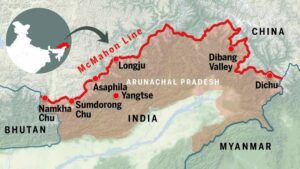
India’s military focus has been on Eastern Ladakh since 2020. The Eastern sector remains more distant and demands a different strategy. Also, in Arunachal Pradesh there are two lines of relevance. First, is the MacMahon Line which the Chinese broadly agree to and second, the LAC over which differing perceptions often lead to clashes and face-offs. India continues to recognise the McMahon Line, established under the 1914 Simla Convention, as the boundary separating Arunachal Pradesh from Tibet. China, however, rejects the line and refuses to recognise it as the legitimate international boundary, maintaining its territorial claims over Arunachal Pradesh.
Thus, LAC remains contested. Asaphila, currently in the news, is in the Upper Subansiri District of Arunachal Pradesh, and during the 1962 war was taken by China. Subsequently, the PLA withdrew north of Asaphila, but retained control of Longju. Over the years, they continued to patrol in the Asaphila region, and the recent face-offs have taken place in the Asaphila/Maja region.
For Beijing, Arunachal Pradesh is “South Tibet” and, by extension, territory it claims as its own. The ambiguity surrounding the LAC provides an opportunity to incrementally extend its military presence, establish infrastructure and consolidate its position on the ground. What may appear to be isolated incursions could, over time, contribute to a larger strategy of territorial consolidation.
Patrolling the LAC: Where Friction Meets Strategy
As the MEA spokesperson aptly pointed out, ‘the problem arises because the Chinese deviated from established patrolling patterns’. When established patrolling protocols are not adhered to, Chinese troops can enter disputed areas without prior notice, sometimes catching Indian patrols off guard. The situation becomes more complicated when Chinese forces pitch tents or establish temporary structures in these locations, potentially using their physical presence to reinforce subsequent territorial claims. This is the crux of the challenge.
The underlying problem, therefore, lies in the nature, frequency and geographical extent of patrolling undertaken by both sides. The possibility of face-offs increases when patrol routes overlap or when either side departs from established patterns. Yet, despite such encounters, most face-offs are managed by military commanders on the ground through established communication channels and do not escalate into physical confrontation. The challenge for India is to ensure that such encounters do not gradually translate into a permanent alteration of the ground situation.
Differing perceptions of where the LAC lies, makes it easy for China to assert fresh territorial claims. This was the larger point underscored by the ITBP Director General. That such incidents have continued since July 2026, rather than subsided, is a matter of considerable concern. It suggests that the underlying tensions along the LAC remain unresolved and that the risk of incremental changes to the ground situation cannot be discounted.
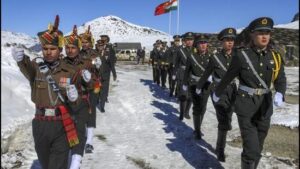
As the LAC remains un-demarcated, the high ridges in the Upper Subansari region often witness overlapping patrols. In fact, recent military standoffs and face-offs between the ITBP and China’s PLA occurred precisely because Chinese troops pitched temporary camps roughly 6 to 7 km inside India’s perception of the LAC in the Asaphila/Maja sector, though the village of Taksing itself remains securely under Indian control. This strategy makes it easy for China to assert fresh territorial claims, in some pockets.
China’s Official Response
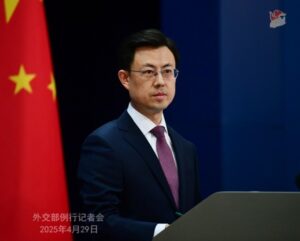
China responded to the MEA’s allegations about the Chinese forces having deviated from laid down patrolling routes in Arunachal Pradesh. During the press briefing on October 26, 2026, the On October 26, 2026, Chinese Foreign Ministry spokesperson, Guo Jiakun, stated, “China has consistently and strictly abided by relevant agreements and common understandings reached with India”.
The operative part of the statement states that China “conducts normal patrolling and management activities in border areas to safeguard its territorial sovereignty…”. China asserted that it has ‘consistently and strictly abided’ by all the agreements with India adding that it conducts ‘normal’ patrolling in the ‘border areas’. Notably, the Chinese are using this term, without applying the term LAC or boundary.
The Road Ahead
There are three things that are important from an Indian perspective. First, India should make a declaratory statement to China bilaterally, on its perception of the LAC in Arunachal Pradesh. One part of this exercise was done in August 2026, when India formally identified and standardised the names of 27 locations, most of which are on or along the LAC.
Second, India should remove all limits of patrolling on Indian forces till such time that both sides agree on mutually agreed patrolling limits.
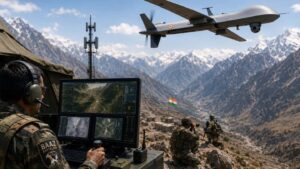
Finally, India must move towards a more integrated approach to border defence, promoting greater jointness between the Army, ITBP and other security agencies operating along the LAC. In particular, the Army-ITBP interface requires a new operational framework that ensures seamless coordination, intelligence sharing and complementary deployment of resources. The calibrated employment of Special Forces for specialised missions along the LAC, could add a new dimension to intelligence gathering, reconnaissance and operational preparedness in difficult terrains. Such capabilities would enable quicker and more effective responses to Chinese attempts to alter the status quo. This must be complemented by enhanced intelligence coordination, improved surveillance and better integration of ground-level information. A more coordinated, intelligence-driven and proactive posture is essential to prevent incremental changes on the ground from becoming an established reality.
India and China have ‘managed’ the border for several decades now, it is time to move towards resolution.
(The writer would like to express his thanks to Mr. Claude Arpi, author and Tibetologist for having read an earlier draft of this article and made valuable comments.)