 Dr. Bhashyam Kasturi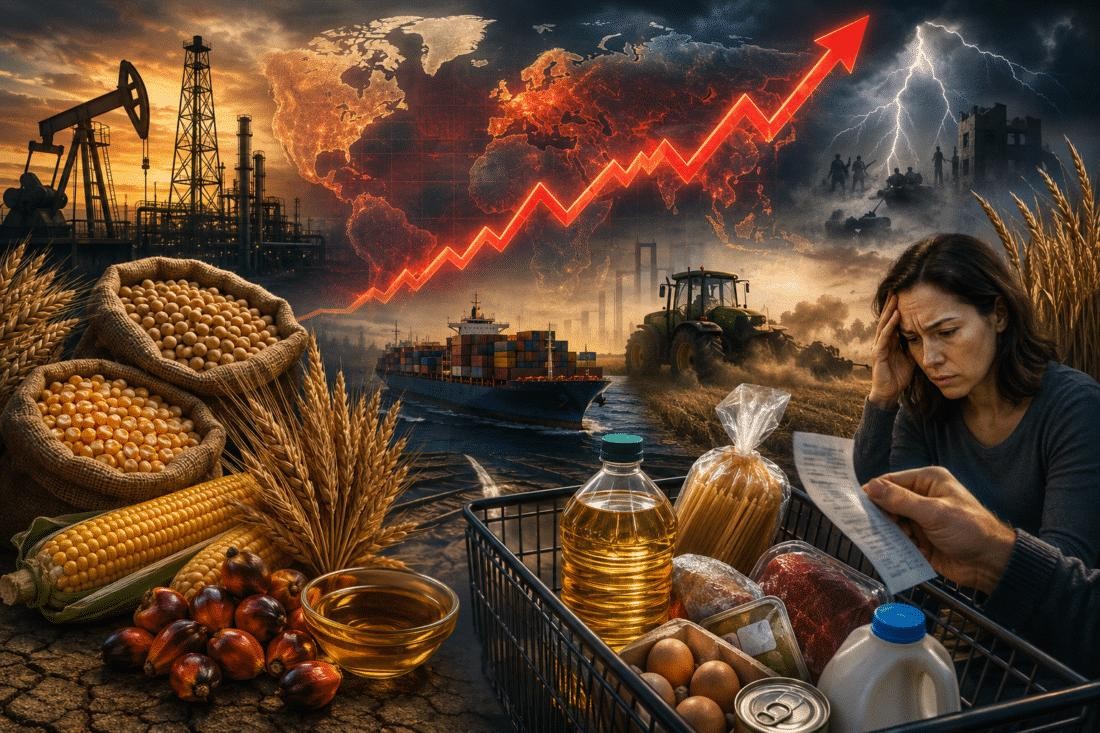
India’s ‘Four F Crisis’ in a World at War
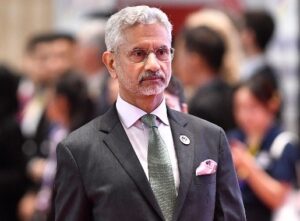
Dr. S. Jaishankar, India’s External Affairs Minister, has done well to warn the citizens of India about the ‘Four F crises’ facing India. Possibly, he has chosen to do so because the crisis is already upon us and there is little that he or the government can do about it.
To put it mildly – Food, Fuel, Fertiliser and Finance, are all caught in an upward spiral of costs and uncertainty. It is difficult to dismiss the prospect that India could face one of its most formidable economic challenges in recent years. The country may yet navigate these converging pressures, but the task will be complicated by an increasingly fractious international environment. The United States’ threat to impose tariffs of 100 per cent on countries continuing to trade with Russia adds another layer of uncertainty, potentially narrowing India’s room for manoeuvre at a time when energy security, supply-chain resilience and economic stability are paramount.
The challenge ahead is stark, with many pieces of the puzzle already in place, though each is at a different stage of development. Governments are struggling to manage these interconnected pressures, which are neither uniform in their effects nor easily resolved through isolated policy measures. At their root lie the conflicts and geopolitical confrontations that have come to define the international landscape. The war in Ukraine, for instance, disrupted grain exports through the Black Sea, exposing the vulnerability of global food supplies to regional conflict. Similarly, American actions in the Middle East and Venezuela have added to the uncertainty surrounding energy markets, underscoring how geopolitical rivalries can reverberate through fuel supplies and prices far beyond the immediate theatres of confrontation.
Significance of EAM’s remarks
That, the EAM chose the platform of the UNGA to make his pronouncement is both a warning and a signal that the Global South faces a complex set of challenges, each one overlain on the other, making required solutions multi-dimensional.
The escalating cost of fertilizer and procurement shortages are heavily tied to natural gas and energy inputs. This will increase the input costs for agriculture in the global South. In the larger scene, one is already witnessing growing economic strain, debt pressures, and weaponization of financial systems, supply chains, and market access, faced by developing nations. The tariff issue with the US continues to hang over India with the US passing signing into law the Lindsay Graham Russia Sanctions Act, which threatens 100% tariffs on countries that deal with or trade with Russia on energy.
Global supply chains remain fragile, leaving economies exposed to disruptions in the availability and cost of essential raw materials. More recently, reports of tightening copper supplies have added to concerns over manufacturing costs, with consumer electronics prices in India reportedly rising by 7 to 15 per cent. Such increases illustrate how pressures in global commodity markets can quickly find their way into domestic prices, adding to the burden on consumers and complicating efforts to contain inflation.
Therefore, the challenges are alive and kicking.
India & Multilateralism
India’s response at this juncture has been to co-sponsor the first-ever ‘Partners for Multilateralism, International Law, Peace and Prosperity (P4M)’ Summit, held in New York on the sidelines of the 81st UNGA. The effort to restore multilaterism in world politics is significant as players are increasingly searching for alternatives to US unilateralism and China’s efforts to monopolise geo-economics and geopolitics.
While multilateralism is weak today, there is scope to look beyond bilateralism to a wider engagement that seeks to rewrite the rules of engagement in an uncertain world. This is an ambitious effort by India, one that could determine India’s place on the UN Security Council. More importantly, the diplomatic steps that India takes today will pave the way for the future. That is the ongoing effort currently amidst economic challenges of a high order.
Fertilisers going, going up!
 Thus, it makes sense for India to make common cause with nations faced with similar predicaments.
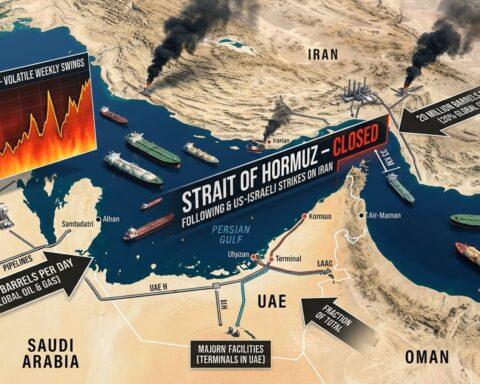
Take the example of fertilisers; while global fertiliser prices have been skyrocketing, thanks to the crisis in the Middle East and shipping disruptions in the Strait of Hormuz, Indian farmers have thus far remained immune due to government subsidies. There was a phase this year, till about August, when prices kept spiralling. Further, Urea moved up to around US$ 950 per metric tonnes. By August 2026, the supply situation had improved, and prices fell by about 10%. Nevertheless, the challenge remains, as input costs have gone up substantially.
In September 2026, it was reported that the landed cost of sulphur had nearly doubled since the beginning of the year, to around US$ 1,050 per tonne, raising input costs for manufacturers of Di-Ammonium Phosphate (DAP), Single Super Phosphate (SSP) and other complex fertilisers. Pertinently, India remains heavily dependent on imported sulphur for fertiliser production.
In 2025, the country imported 2.25 million tonnes of sulphur, around 84% of it from the Middle East, primarily from Oman and the United Arab Emirates. However, imports between January and May 2026 declined 26% year-on-year. The phosphatic and potassic (P&K) fertiliser industry requires an estimated 3 to 3.5 million metric tonnes of sulphur annually.
The Crude Oil Story
The supply of crude from traditional partners in the Middle East has dwindled and with Brent prices going up due to the war over Iran, prices in India of fuel have gone up, be it petrol for cars or aviation fuel for planes. Average prices this year have gone up from around Rs. 99 per litre to a high of Rs. 117. Remember, for vehicles what customers are getting is petrol blended with 20% Ethanol. In Delhi, note that Speed 100 petrol is selling at Rs. 167 per litre! That gives a sense of the actual increase in the price of petrol.
But the larger crisis is not about pricing, it is about supply. Traditional sources like Iraq and Saudi Arabia have scaled back production, in the face of increasing conflict in the region. Saudi Arabia has reportedly suspended some long-term contract supplies to India in the face of the ongoing conflict with the Houthis.
While India continues to purchase crude from Russia, it is no longer at the discounted rates. One-third of India’s imports are from Russia. Officially, India sources crude oil from 40 countries, including Iran.
The US has offered India a regular supply of energy and thus, LNG and LPG is being imported in large quantities from this source. The challenge is that the landed cost per barrel is going up, making it difficult for the government to keep a check on prices for too long. Already, India’s cost per barrel is at US$ 124 approximately and this is putting pressure on the exchequer. India is paying around US$ 20 more than the international benchmark, partly driven by the war in West Asia and other attended costs.
Retail Food Inflation is also headed upwards
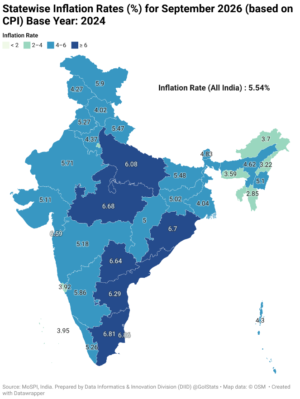
The food situation also has the same story in terms of prices. Government data shows that, retail food inflation rose from 5.97% in August to 7.74% in September, touching a 21-month high. Consequent to oil prices going up, the cost of cooking oil has also gone up year-on-year. Onion and garlic prices have skyrocketed. According to a recent article in Times of India, regular rice prices have risen by roughly 12%, while sugar remains about 22% more expensive than this time last year.
Conclusion:
Statistics alone cannot convey the full extent of the strain. Behind the numbers lies a more sobering reality: the cost of sustaining India’s economy is rising on multiple fronts, from essential commodities and industrial inputs to energy and consumer goods. What matters is the cumulative impact. Pressures that may appear manageable in isolation, but when combined, reinforce one another, squeezing household budgets, raising operating costs for businesses and placing an increasingly heavy burden on the wider Indian economy.
The ‘Four F crisis’, that Dr. Jaishankar is warning the world from the platform of the UN is already on us. Government has thus far managed to keep India on an even keel, but it comes at a cost. India’s Four F crisis is no longer a distant threat but a test of the country’s economic resilience and diplomatic resolve. How long can the government subsidise the farmers and the industries? More importantly, the fuel situation; it cannot hold the price, as it is today, for too long. Government subsidies and short-term interventions may cushion the immediate impact, but they cannot indefinitely insulate farmers, industries and consumers from rising global costs. The crisis is here and is here to stay.
The challenge, therefore, is twofold: to protect the domestic economy from immediate shocks while building a more durable framework for energy security, food supplies and financial stability.
Dr. Jaishankar’s call for renewed multilateral cooperation must translate into practical partnerships that reduce vulnerabilities and distribute risks more equitably.
India cannot control the conflicts disrupting global markets, nor can it remain immune to their consequences. It can, however, diversify its sources of supply, strengthen strategic reserves and work with like-minded nations to prevent essential commodities from becoming instruments of geopolitical coercion.
The real test will be whether India can turn this warning into a coordinated national response before the mounting pressures of food, fuel, fertiliser and finance begin to undermine the very stability the government is striving to preserve.