 Dr. Bhashyam Kasturi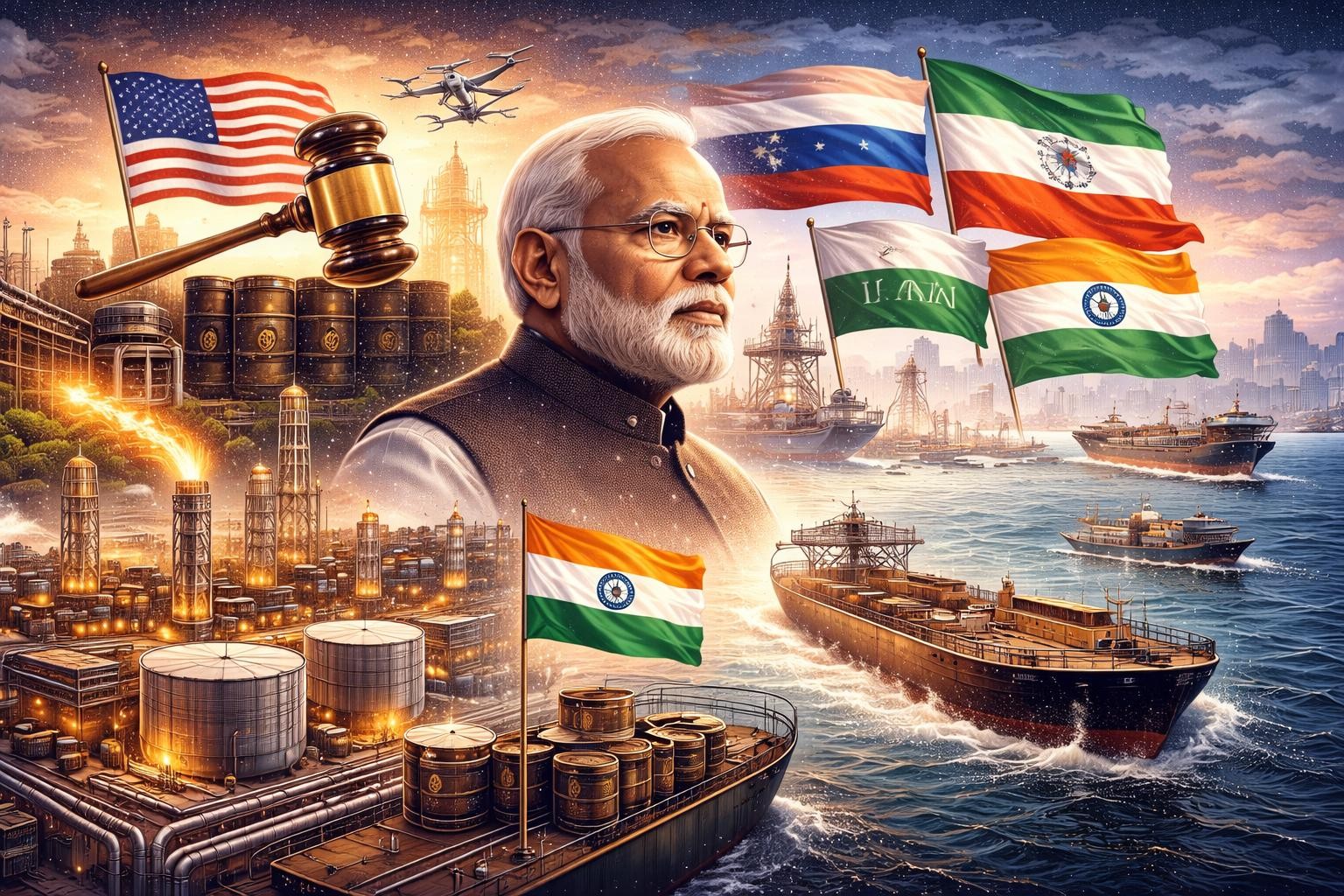
The New Normal
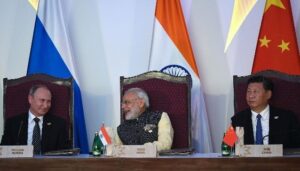
The US visit of Chinese President Xi Jinping near coincided with the passing of the Lindsay Graham bill granting the US President powers to impose 100% tariffs on nations importing or buying Russian energy. A short while prior to that Xi Jinping and Russian President Putin were in New Delhi to attend the 18th BRICS Summit. These developments are of significance as they indicate the increasingly complex world that India is navigating.
The manner in which India has played its diplomatic cards, can be laid out in this order. First, using the BRICS platform to engage with both China and Russia bilaterally for geo-economic purposes. Second, continuing the trade deal discussions with the US, primarily focusing on getting a waiver on Russian energy purchase from the US, and finally, pursuing FTA with countries as diverse as Japan, the UK and the EU.
Just thinking of the complex and intertwined world that India is managing currently demonstrates the complexity of the challenge. US unilateral sanctions and tariffs are the new normal. India’s ability to deal with and get past these measures is the challenge for the next decade.
The New US Sanctions and Tariffs Act
First of all, let us analyse the Lindsey O. Graham sanctioning Russia and Iran Act of 2026 passed into law by President Donald Trump on 18 September 2026. The Act provides that most of its measures are to be imposed within 30 days of enactment, i.e., by 18 October 2026. The Act frames many of its measures as mandatory, meaning that the President must implement them where the circumstances described in the Act are determined to be present. This is easier said than done, as this process involves fact-finding and a generous dose of interpretation. The Act gives the President the authority to waive any measures that are in the national interest of the United States. The President can waive sanctions required by the Act, by certifying to Congress that the waiver is in the US national interest and explaining the basis for that determination. This implies that any waiver given to India this time will come with costs.
Specific Aspects of the New Law
The first thing to note is that the Act deals with both Russia and Iran, with the majority of clauses relating to Russia. The Act extends the sunset date for the Iran Sanctions Act of 1996, ensuring Iranian sanctions related to the energy sector and development of weapons of mass destruction remain in effect until 2031. Significantly, it imposes new sanctions and tariffs on Russia and targets government officials, financial institutions, and the energy sector.
Additionally, it further extends secondary sanctions to foreign entities and individuals who engage in activities supporting Russia’s military, energy, and financial sectors. While several countries including India are determined to be on the US watch list, the interpretation is: the Act will be imposed on the top five largest importers of Russian gas or oil and top five countries involved in evasion of Russian oil sanctions in the last 12 months.
That being said, the President is given discretion regarding the identification of these countries. However, it does not specify what data sources will be used to identify the countries, or how to quantify actions of countries that would place them among the top five countries “facilitating Russian oil sanctions evasion.” Different parts of the US administration, including Treasury, State and OFAC will have a different perspective, unless all of them have access to the same data sets.
The Act requires the President to increase the tariff rate on countries subject to its provisions. However, there is a caveat – it expressly prohibits the President from imposing duties, if that country’s imports of Russian natural gas are below 15% of Russia’s total gas exports over the preceding 12-month period and the country has taken “significant steps” to reduce those imports. Notably, there is no comparable exemption for crude oil purchasers.
Can India get a waiver?
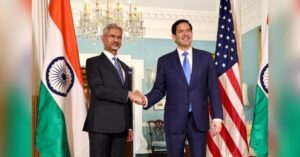
Where does that leave India? From the above, it appears that India will have to seek a waiver from the US President for purchases of Russian oil. One solution has already been proposed by Marco Rubio, US Secretary of State to EAM Dr. S. Jaishankar at their meeting in New York, on the sidelines of the UNGA on 23 September 2026. The US readout inter alia states, “Secretary Rubio and Minister Jaishankar……also discussed sanctions that could be levelled against states that engage economically with Russia and Iran. The Secretary emphasized that the United States remains well-positioned to help regional partners address their energy security challenges.” In other words, the US is ready to sell crude oil from its own or other sources to India.
India has in the past obtained waivers for purchase of oil from Iran. The Russia waiver may be more difficult to negotiate, given the present geo-political circumstances. Nevertheless, India must persist.
India’s Strategy
What is little noticed is that despite the scare of the 100% tariffs, India has continued trade talks with the US. Also, India has already made a set of commitments to the US in February 2026 under the Framework Agreement. These commitments include “eliminating or reducing” tariffs on US industrial goods.
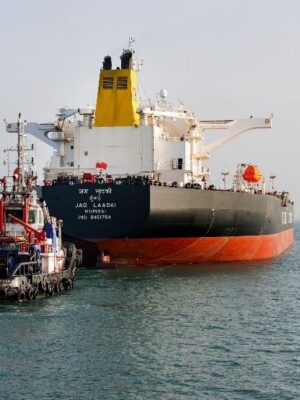
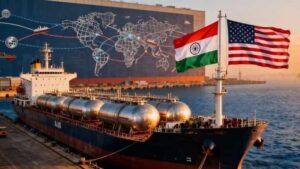
In December 2025 and January 2026, India did reduce Russian oil purchases in view of US sanctions, But by March it had gone up again and by July it had reportedly accounted for 52% of India’s total imports. Early September data showed another drop to 1.9 million bpd. This latest dip is attributed to tighter Russian export availability, Chinese competition, and scheduled maintenance at Indian refineries. Notably, there has already been a shift in India’s energy imports, with imports of liquefied natural gas (LNG) and liquefied petroleum gas (LPG) from the United States increasing. In the first half of 2026, India imported 155.25 billion cubic feet (BCF) of LNG from the US. LNG exports from the US to India spiked by 227% in a single month-over-month surge between April and May 2026 alone.
One of the other things that India has done to favour US firms is the passing of the SHANTI Act. By repealing the old Civil Liability for Nuclear Damage (CLND) Act of 2010, the new law changes the rules of engagement for international suppliers. Earlier US companies like Westinghouse had refused to invest in India because of Section 17(b) in 2010 Act which gave Indian operators the right to sue foreign firms if an accident took place due to defective equipment provided by the manufacturer. More recently, India and the US signed an agreement for the supply of Javelin ATGM, the deal being valued at around US$ 45 million. That the defence relationship remains robust was reinforced by India’s purchase of an 113 additional GE 404 engines and six more Boeing P-8I.
One of the primary US concerns, relating to Walmart and Google, was the zero MDR on large merchant UPI payments. From 15 October, NCPI has proposed levying a MDR charge for UPI payments above 2000.

While the Amendments to the FCRA bill have been sent to a Joint Parliamentary Committee for further investigations. The fact remains that Western governments and NGO’s expressed apprehension over the draft bill, in terms of oversight into NGO fundings and creation of a designated authority to take over assets of NGOs whose registration had not been renewed.
Under the radar, another development took place, which shows India’s ties with the US. At the SelectUSA Investment Summit, held in May 2026, Indian companies announced a US$ 20.5 billion in investment commitments. The official US press release noted, a significant share of the investment is driven by India’s pharmaceutical sector, with more than US$ 19.1 billion in planned investments in US manufacturing, research and development, and new facilities.
The Road Ahead looks bumpy for India
What is the future of India’s crude oil purchases from Russia and if India turns down its supply from Moscow? Will it turn to the US? According to informed government sources, all necessary steps are being taken to meet the situation including seeking a waiver from the US as well as continuing to purchase oil from Russia, to meet any shortfall in the near future.
In 2022, India purchased 310,000 barrels of crude oil from the US. This went down to 164,000 bpd in 2023, because India procured cheaper Russian crude.
A similar pattern could play out this time too given the situation in the Gulf and issues of transportation. India could go to Iran for crude, but that again would require a US waiver. While Iraq and Saudi Arabia have been traditional suppliers, the supply chain challenge remains. With the Houthis on the warpath, the Saudi energy system is at high risk and may not be a firm source of supply. Such uncertainty makes it difficult for India to pin down traditional suppliers. Nigeria is the only other source from which India could buy more crude oil.
The next few months could well send oil prices high again in the Indian markets, as New Delhi seeks a waiver from the US for Russian oil purchases. Also, the cost of Russian crude has since risen making it more expensive. According to Reuters, Russian Urals traded at a US$ 4 to US$ 5 per barrel premium above Brent, on a delivered basis to Indian ports in March and April 2026. Spot market competition pushed emergency premiums as high as US$ 7 per barrel, above typical benchmarks.
Thus, pricing and availability, both matter to India. The government is relying on the market and private companies dealing in oil trade to get us past this crisis. This could be better done, by an inhouse assessment of what New Delhi could and should do. After all, from buying heavily discounted Russian crude in 2022-23 to a more market related price of purchase today, India has come down the road, knowing fully well the risks involved in investing too heavily in one nation.
BRICS Summit and New Geo-Politics
That is why the BRICS Summit was important for India, as it meant being able to discuss Russian crude with President Putin and trade with China, both being important components of India’s economic growth in their own ways.
That is why the Delhi declaration of the BRICS Summit spoke of energy security being central to national security as well as resilient supply chains. But geopolitics being what it is, this has since been overtaken by another event – Donald Trump and Xi Jinping have agreed to discuss tariffs. During the US-China Summit (25 September 2026), both sides agreed on recommendations for more favourable tariff treatment relating specifically to non-sensitive goods going both ways.
India needs a concerted effort to obtain a trade deal with the US. Such engagement can only come about with a whole of government effort. The Prime Minister could call a meeting of the Cabinet with all concerned Ministers to discuss and arrive at early solutions. Prior to that of course, the concerned ministries have to be called by the Cabinet Secretary for a review of where India stands. Informed sources say that an internal review process on the matter is ongoing. At the end of the day, much will depend on whether India gets a waiver from the US. That is the real strategic leverage that America has today.