 Dr. Bhashyam Kasturi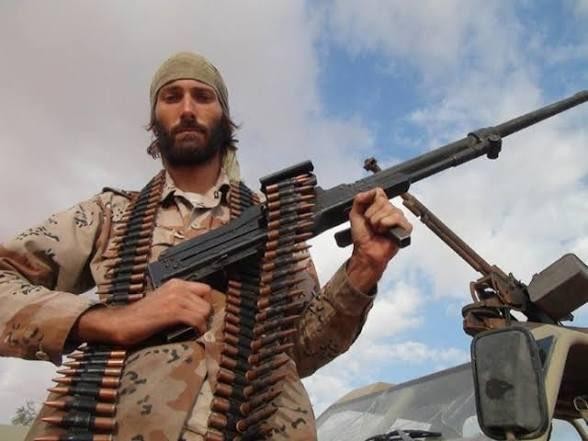
When Sergio Gor, the U.S. Ambassador to India, raises the detention of an American national at the highest levels of the Indian government, it inevitably invites scrutiny. Diplomatic interventions of this nature are not, by themselves, evidence of wrongdoing or official complicity. But in the context of a case involving allegations of a wider security conspiracy, they raise a legitimate question: what, precisely, prompted such a high-level intervention?
Gor is said to have raised the arrest of Matthew Aaron Van Dyke, a U.S. national, with both the External Affairs Minister and the National Security Adviser. What followed has added an unexpected twist to the case. The National Investigation Agency’s initial chargesheet had reportedly invoked terrorism-related provisions against Van Dyke and six Ukrainian nationals. Yet, the chargesheet filed on September 8 takes a markedly different legal course: it does not invoke UAPA against any of the accused. Instead, the NIA alleges that the foreign nationals violated India’s immigration and foreigners laws by entering the country illegally.
This is mysterious, because Van Dyke, is a self-proclaimed former special forces soldier, who owns a private company engaged in providing military manpower to foreign governments.
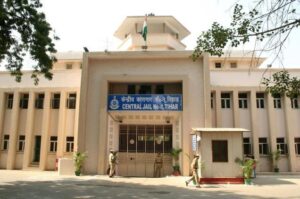
First arrested in March 2026, the seven have been in Tihar jail for months and Van Dyke even went on a hunger strike for not getting the food that he wanted.
There is, at present, no public evidence establishing that India and the United States reached any such understanding. But the chronology is striking enough to warrant scrutiny. Did the US and India reach some sort of understanding regarding Van Dyke, because he was operating in Myanmar and not in India?
A case that began as a UAPA investigation into an alleged terror conspiracy has, at least for now, produced a chargesheet based on immigration violations, while the more serious allegations remain under investigation.
The NIA Chargesheet
The NIA chargesheet, filed on 8th September 2026, before Special Judge Prashant Sharma, accuses the seven arrested of offences under Sections 21 and 23 of the Immigration and Foreigners Act. Adding that “more time is required to ascertain and verify the true and complete facts about the commission of offences under UAPA.
Earlier, when Van Dyke was arrested on 13 March, the NIA had specifically connected the “Matthew Van Dyke module” to a 20 February 2026, attack on a Myanmar National Airlines passenger plane, and alleged that two FPV kamikaze drones fitted with RPG-type warheads were supplied to insurgent groups, that struck and damaged the civilian aircraft.
Pertinently, the first FIR filed on March 13, 2026, was registered under Section 18 of the UAPA, along with other offences. While the chargesheet currently filed only invokes provisions of the Foreigners Act, primarily Sections 21 and 23. Security officials anonymously quoted by the Indian media, state that “no India link” has been established, in the case of Van Dyke. Strangely, the group of seven were arrested at airports far apart, including Kolkata, Lucknow and New Delhi.
The allegation is that the accused imported huge quantities of drones and drone parts into Myanmar through India. Obviously, the drones were meant for insurgent groups in Myanmar. It is also fair to assume that the Ukrainians were brought in to provide training in drone operations, to Myanmar insurgents. That the Ukrainian Ministry of Foreign Affairs also protested the arrest of six of their nationals indicates that there was prior knowledge of the operation, at least within intelligence circles of Ukraine.
Investigations under UAPA continue, says NIA
Thus, the latest NIA chargesheet claims that, “A substantial part of the further investigation with respect to the offences committed under UAP Act, 1967, has been completed.” It goes on to state that “Further investigation is undergoing and more time is required to ascertain and verify the true and complete facts about the commission of offences under UAPA, in view of import and recovery of huge quantity of drones and accessories through India and seizure of huge number of digital devices whose scrutiny is underway… .”
This indicates that the allegations about the import of drones is yet to be proved and further investigations could “indicate their possible involvement in acts affecting/threatening the unity, integrity, security and sovereignty of India or strike terror on any section of the people of India, in a manner affecting India’s interests.” The chargesheet goes on to state that “Further investigation under 193(9) Bharatiya Nyaya Sanhita have been allowed…to be continued to unearth all the aspects of the larger conspiracy in the instant case against the arrested accused persons and others….. .”, according to The Print, PTI, 8 September 2026.
The case took another significant turn on September 18, when a Delhi court granted Van Dyke default bail after the statutory 180-day period for completing the investigation had expired. The court held, in effect, that the continued investigation into the UAPA allegations could not be used to keep him in custody indefinitely without a chargesheet addressing those offences. The court also indicated that the other six accused could claim the same statutory protection.
The development brings the central anomaly in the case into sharper focus. The NIA has maintained that its investigation into the alleged terror conspiracy remains open. Yet the chargesheet filed on September 8 proceeded under immigration and foreigners laws rather than the UAPA.
“No Threat to India”: Amit Shah’s Earlier Remark Raises Questions
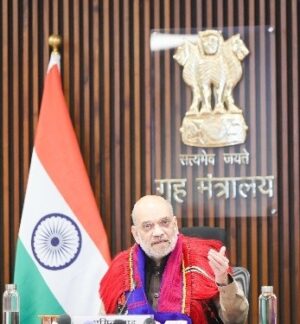
Recall that soon after the arrest, Union Home Minister Amit Shah was reported to have stated – the US and Ukrainian nationals who went to Mizoram, posed no threat to India. He added that these individuals were trying to use Indian territory as a transit point for entry into Myanmar. Shah said that the persons were caught as they were planning to transit through Mizoram into Myanmar, where insurgent bases would be used to impart training. He added that these individuals did not take the necessary advance permit required by foreigners to enter Mizoram, according to Times of India, 28 March 2026. This basically summed up the Government’s position as early as March, therefore the latest chargesheet filed by the NIA should not come as a surprise.
Who is Matthew Van Dyke?

He is founder of an NGO, ‘Sons of Liberty International’ and claims to be a documentary film-maker. The NGO, founded in 2014, is a private military contractor that helps train, equip and advise foreign forces. Since 2022, Van Dyke and his company have been helping Ukraine in its fight against Russia.
Van Dyke is basically a mercenary, who fights for money and his experience in the Libyan Civil War and Ukraine hold him in good stead, when it comes to providing advice to foreign governments. He has also been involved in training forces in the Middle East against the ISIS. His career in the business has made him visible on several news channels and has been quoted by major Western newspapers.
If There Was No Threat to India, Why the Terror Probe?
The question still remains, as to why the US Ambassador to India, Sergio Gor, should take up his case with Indian authorities? Could Van Dyke’s association with Ukraine have something to do with it? That possibility has been raised, but as of now, there is no public evidence establishing that Kyiv asked Washington to intervene on his behalf. If it is true, as it has been reported, that the group of seven were heading to Myanmar to undergo training with insurgent forces, the issue of why Myanmar was chosen, arises? Why should Ukrainians come all the way to learn guerrilla tactics in Myanmar?
Those questions matter because the geography of the case may be as revealing as the charges themselves. India appears, at least from the NIA’s account, to have been the transit point; Myanmar was allegedly where the substantive training took place. If so, understanding who arranged the journey, who financed it, who was to receive the training and why Myanmar was selected could be crucial to understanding the larger conspiracy the NIA says it is still investigating.
Van Dyke and others are mercenaries, who are fishing in troubled waters, in India’s backyard. It is well known that the US uses private military contractors for operations in foreign lands. The experience of Iraq and Afghanistan is only too well known.
With the latest chargesheet filed by the NIA it becomes clear that the full Myanmar story has not come to light. Atleast, not in a manner NIA would have wanted it to, leading to filing of charges under the Immigration and Foreigners Act.