 Kalyan Chatterjee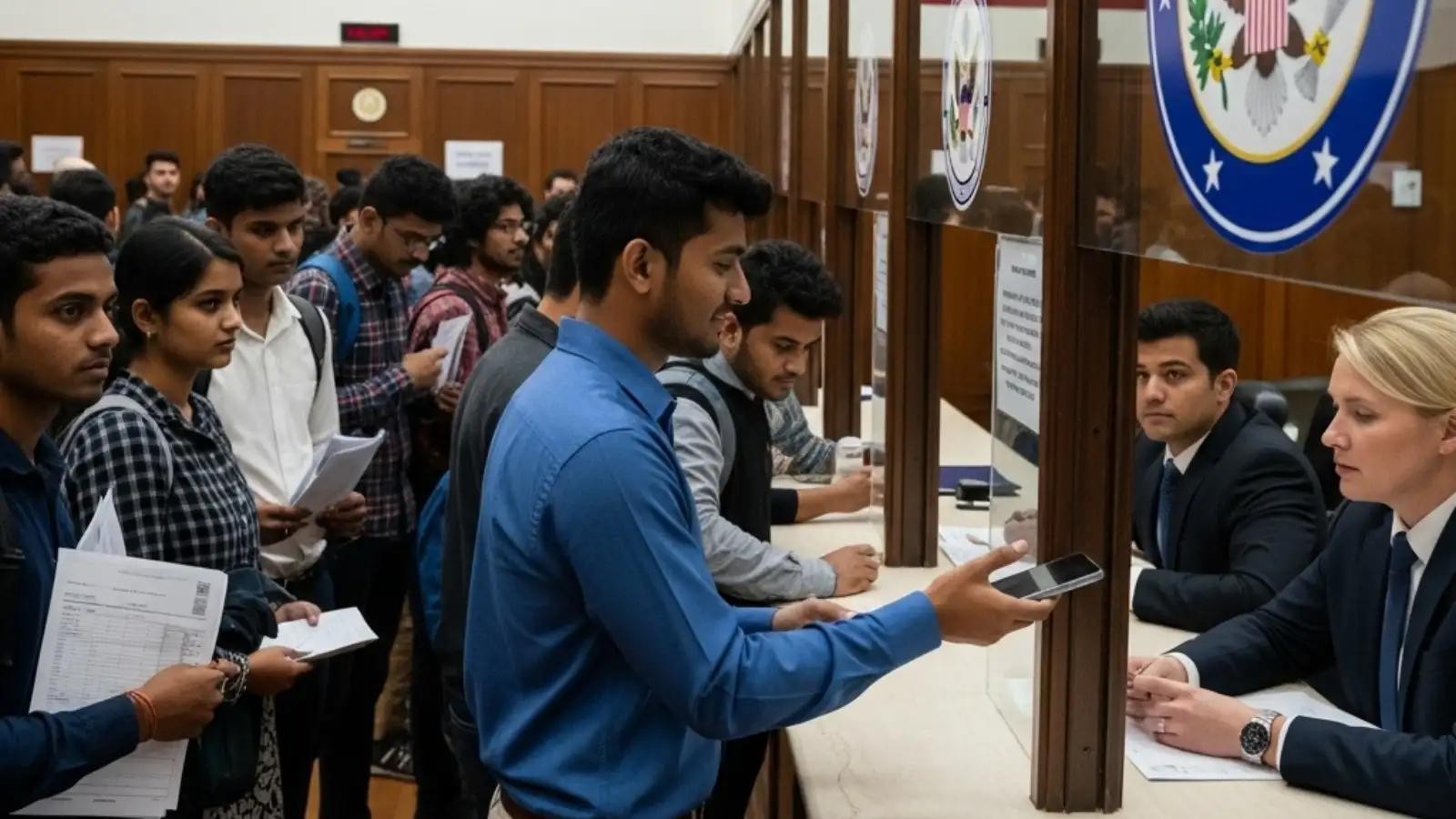
International Students Vital for Universities
Apart from the fact that the exclusion of overseas students would hit at the funding of American educational institutions itself, international students are a vital component of a general student body, according to the Virginia-based Human Rights Research Center (HRRC). “They bring diversity, perspective, and a potentially reshaping academic addition to an intentionally international university program.”
This is certainly true in the case of Indians who have brought laurels to American academia. As many as five Indians, who carried out their work in the US and won the Nobel Prize over the past six decades in various disciplines – Har Govind Khurana (Medicine), S. Chandrashekhar (Physics), V. Ramakrishnan (Chemistry), Amartya Sen (Economics) and Abhijit Banerjee (Economics).
Sundar Pichai, Satya Nadella and Indira Nooyi are shining examples of Indians who chased the American dream and made it to the top.
HRRC further said, “The Trump administration’s escalating campaign against international students—via visa revocations, political vetting, and institutional intimidation— represents a dangerous erosion of human rights, academic freedom, and the U.S.’s role as a global leader in education”.
In several critical fields, international students are a majority: they account for 64 percent of doctoral recipients in computer and information sciences, 57 percent in engineering, and 54 percent mathematics and statistics, according to a report in the Chronicle for Higher Education.
Fear Among International Students

The wave of visa revocations has been reinforced by increasingly aggressive actions by US Immigration and Customs Enforcement (ICE). Foreign students have been detained and transferred to immigration detention centres, fuelling fear and uncertainty among international students across the country.
For example, Indian PhD scholar Ranjani Srinivasan, at Columbia University, escaped the detention. But the way ICE treated her has created an atmosphere of fear among international researchers, many of whom are now considering other places to pursue their studies. Another Indian, Badar Khan Suri, a professor at Georgetown University, was picked up from his home in Virginia, a few days after Ranjani Srinivasan.
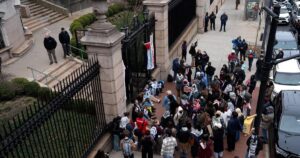
Mahmoud Khalil, a Columbia University student, was taken away by ICE agents from the inside the Columbia Campus, in New York, and another Turkish student Rumeysa Ozturk, in Boston. Which only underlines the completely insecure atmosphere that has been created by the Trump administration for international students in the US. Homeland Security Secretary, Kristi Noem, who eventually had to resign, unleashed agencies like ICE on foreign students, giving them complete freedom to detain them without warrants or even providing evidence. Most students who have faced harassment at the hands of ICE have found out that they can expect no help from university authorities.
According to Inside Higher Education, April 24, 2025, more than 280 colleges and universities had identified over 1,800 international students and recent graduates whose legal status had been altered by the US State Department. The universities were not given the grounds on which the action had been taken. Though Secretary of State, Marco Rubio, has repeatedly stated that some behaviour, including participating in protests, will not be tolerated. But amid threats like these and fear of detention, especially since March, 2025, has seen a 20 per cent drop in student enrolment in the US, during the spring semester of 2026, according to the Association of International Educators NAFSA.
Fifth year PhD student, Ranjani Srinivasan’s (37), ordeal began on March 5, 2025, when she was informed by the Chennai American Consulate that her F-1 visa had been revoked. In a statement she posted on Instagram on March 22, 2025, she said that, at first the international students office at Columbia assured her, that there had been no change in her legal status and she could continue. But on March 7, presumably ICE agents knocked on her door seeking entry into her room without either identifying themselves or a warrant. On the advice of her roommate, who was more familiar with American ways, they refused to open the door.

The unhelpful attitude of the university authorities convinced Ranjani that she had to leave the campus which she did on March 7, itself. It was as well that she did, because not only did ICE return to her flat the next day but also picked up another student – Algerian origin Mahmoud Khalil, who had permanent resident status in the US. Eventually, On March 11, Ranjani left New York City for Canada, using a visitor visa she had obtained earlier. Once she was out of the US, Srinivasan’s lawyers notified ICE of her departure on March 14. ICE demanded proof. But before the lawyers could provide the proof, Fox News posted a statement by Homeland Security Secretary, Kristi Noem, including a security camera clip from LaGuardia Airport on X (formerly Twitter), on March 14, showing Ranjani wearing a black jacket and grey cap and walking with a suitcase. The statement accused Ranjani of being a terrorist sympathiser and claimed that she was self-deporting using the CBP App, though this is not clear from the clip. Ranjini denied that she had used the CBP App.
Ranjani felt let down by the university administration who she had expected would protect her. “Until this point, I had imagined that I just had to wait it out and the University would intervene to protect me…. I was wrong”, stated by Rajni, on March 9. Further, she said wrote in a statement uploaded on Instagram later, “ICE illegally terminated my SEVIS and Columbia arbitrarily de-enrolled me, causing me to lose my legal status, worker status, and housing. This immediately made me vulnerable to detention.” She also stated, “I was quite sure the University was working closely with law enforcement.” And she was not wrong.
Both Mahmoud and Ranjani believed the action against them stemmed from their participation in protests at the Columbia University’s Manhattan campus, in 2024, against Israel’s military campaign in Gaza. The US government, however, argued that the demonstrations amounted to support for Hamas, which it has designated a terrorist organization. What neither of them anticipated was the broader shift underway in Washington. Within weeks of returning to office, the Trump administration sharply escalated its pressure on Columbia University. In March 2025, it cancelled roughly $400 million in federal grants and contracts, accusing the university of ‘continued inaction in the face of persistent harassment of Jewish students. The action followed an executive order President Trump signed in January 2025, directing the DOJ to investigate and punish “anti-Jewish racism” at universities. The government warned that the 400 million dollars was only an “initial cancellation” and held the Damocles’ Sword over Columbia’s head of a much larger sum of 5 billion dollars in total federal grant commitments.
Columbia decided to play ball and made a deal with the Department of Justice. The deal signed in July 2025, involved the payment of 200 million dollars as a fine to resolve funding disputes and another 21 million dollars to a settlement fund, for faculty and staff who have faced harassment during the protests, against the Israeli bombing of Gaza. A senior administration official described the deal with Columbia as a roadmap for elite universities that offered a blueprint for future deals with campuses facing similar scrutiny.
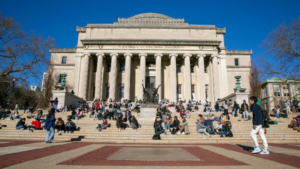
Student Workers of Columbia alleged that Columbia had made its students less safe, under already precarious and dangerous circumstances. Columbia University’s failure to publicly defend Ranjani left her increasingly vulnerable to action by the Department of Homeland Security and to harassment from right-wing groups.
Another incident that sent shivers down the spines of international students, was the arrest of Turkish doctoral student Rumeysa Ozturk at the Tufts University Somerville campus in Boston on March 25, 2025, and the revocation of her F-1 student visa. A video of her arrest showed her being stopped and taken away by masked ICE from outside the university. A year earlier Ozturk had co-authored an opinion piece in the student-run ‘The Tuft Daily’ calling on University President, Sunil Kumar, to implement the student community demands to divest from companies with ties to Israel and to acknowledge Palestinian genocide. Following this, her personal information was made public by Canary Mission, a group that documents those whom it describes as anti-Israel and antisemitic.
In the southern state of Georgia, a lawsuit was filed in district court in Atlanta in April 2025, on behalf of 133 foreign nationals, including students from India, China, Colombia, Mexico and Japan, whose visas were revoked. The judge issued a temporary restraining order, preventing their deportation. Nine of the original 17 students in the lawsuit were citizens of India and five were from China. The other three were from Colombia, Mexico, and Japan. Later dozens of more students were added in the complaint. While the visa statuses of the were reversed due to the restraining order, what eventually transpired is not known. These students argue that their removal from the Student and Exchange Visitor Information System (SEVIS) — an online system that tracks and monitors non-immigrant students — was improper and devoid of due process. According to the complaint, some students faced visa revocations, based on vague or unfounded accusations of criminal activity, despite no formal charges or convictions against them. One notable case involved a senior at Georgia Tech, who received a termination notice just days before his graduation, reportedly based on a previously dismissed traffic charge.
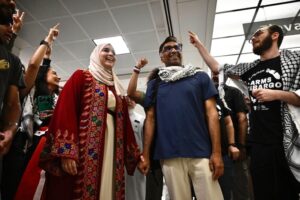
Though Ranjani Srinivasan went to Canada, it is not clear whether she continues to stay there, or she has returned to India. A person familiar with her situation said, however, that Ranjani remained active on Instagram, although she had switched her account to private, apparently as a precaution. She may be justified as her entry into Canada was highlighted by ThEJ.CA, an international Jewish News newspaper, calling upon the Canadian government to strengthen immigration control to as “the influx of activists with antisemitic tendencies threatens the safety and well-being of Jewish Canadians.”
Badar Khan Suri, a postdoctoral fellow, was released on bond after 58 days in ICE custody across various detention centres. The Alwaleed Center for Muslim-Christian Understanding (ACMCU) looked after his wife and two children during his detention and raised money to pay legal fees on behalf of Suri.
History Repeats
Such incidents are reminiscent of the Kent State University (Ohio) tragedy of May 1970, in which four students were killed and nine injured when national guardsmen opened fire on unarmed youngsters, protesting against President Richard Nixon’s expansion of the Vietnam War to Cambodia. At that time too, the tone had been set by the president himself, who described the student protestors as draft dodgers, country-haters, radicals and revolutionaries, expressing his “visceral disdain for antiwar protestors”, according to the San Francisco magazine ‘Mother Jones’. And just as the Trump Administration has given full immunity to ICE, the administration of Ohio took no action against the national guardsmen, instead indicting 25 students on charges of rioting, assault and arson. The only difference is that this time around the immigrant issue has become mixed up with foreigners in higher education.
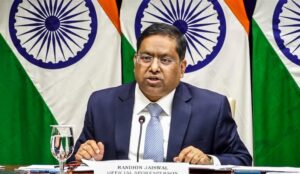
When asked about the detentions, the Indian external affairs ministry, said, “they had learnt of the incidents from media reports but none of the students had contacted the embassy, which would have helped them with their well-being and safety. But also advised them to comply with American law while staying in the US.”