 Dr. Bhashyam Kasturi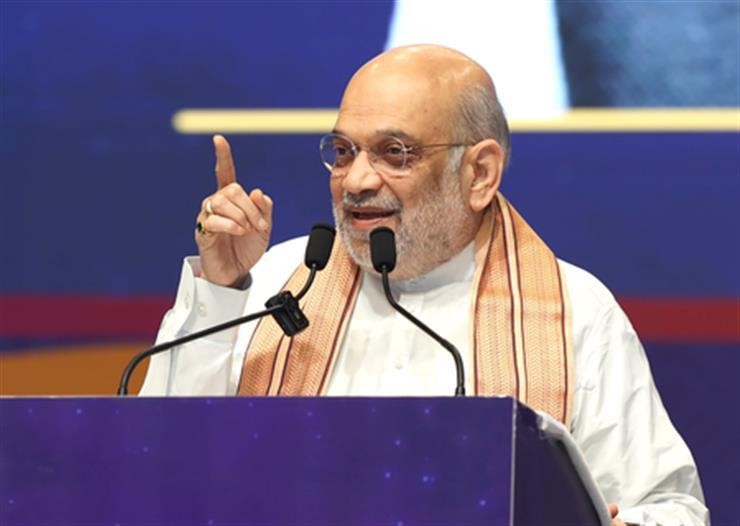
What Amit Shah’s Message Means for Bangladesh
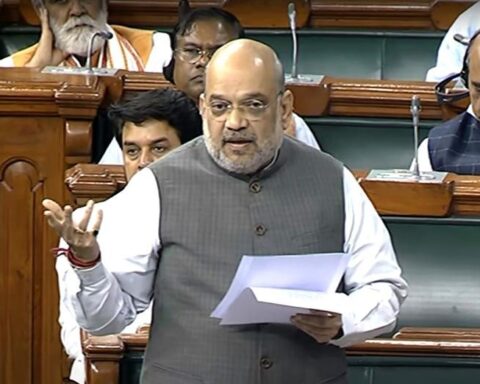
But the context for this meeting was really set by India’s Home Minister, Amit Shah, when he said on 29th May, that West Bengal would not file cases against illegal migrants if they voluntarily returned to Bangladesh. Speaking at a public event in Gujarat, the Home Minister said that while the State Government had set up detention centres, it would be good if illegal individuals voluntarily left India. His message was two-fold. One as he stated before the elections, task of fencing of the India-Bangladesh border would be completed and second, all illegal migrants would be identified and deported. Thus, the message to Dhaka was very clear.
Border Guard Chiefs Meet in New Delhi, Resume Border Dialogue

DG Major General, Mohammad Ashrafuzamman Siddiqui, visited New Delhi from 8th to 11th of June 2026. He held discussions with the DG BSF, Daljit Singh Chaudhury, on the most critical transborder issues impacting the security of both India and Bangladesh. To begin with a couple of facts need to be spelt out. This was a routine affair, the 57th Border conference between the heads of the border guarding forces of India and Bangladesh. Second, the state of play currently on the border, including infiltration, border fencing, smuggling and other issues were discussed. What is different this time – it’s the setting. The change of guard in West Bengal, the State Government handing over land to the BSF for fencing that had been held up by the previous government and the Central Government expressing its determination to push back illegal migrants.
Attacks on BSF Personnel
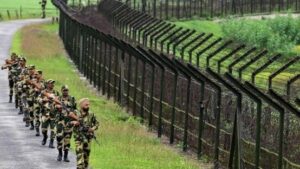

Going by official statements, the most significant outcome as mentioned during the joint media briefing by both sides, was the agreement to reduce incidents of assault on BSF personnel by ‘Bangladesh-based transborder miscreants’. This would be achieved by joint patrolling particularly during late night or early morning patrolling by the BSF. According to MHA statistics, 204 BSF personnel were injured by criminals, involved in smuggling, facilitating illegal migrants and other illegal activities. In 2026 alone, over 40 BSF soldiers were injured in clashes along the border.
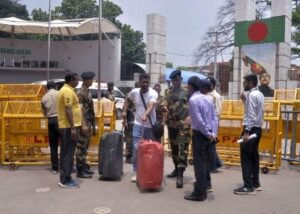
Smuggling of gold, narcotics and more seriously, breaching of the fence by criminals and others is a challenge faced by the BSF in addition to the riverine terrain. In recent months, border tensions have flared up because of the border patrol face-offs and push-in and push back of illegal migrants.
The Home Minister Takes Center Stage: Courtesy call on Amit Shah
The DG BGB Siddiqui paid a courtesy call on Home Minister Amit Shah on 10th of June 2026 and handed over a letter from Bangladesh’s Home Adviser Salahuddin Ahmed. The letter is said to emphasize on the need for India to stop the push in of illegal migrants into Bangladesh. Contextualising the current situation, it would be fair to assume that the letter talks of the frequent cases of pushing in undocumented individuals. Zee News reports that the letter specifically urged India not to send women, children and men across the unfenced part of the border, especially at night. This assertion appears to be unusual.
India’s Official Position
India’s position on undocumented individuals who are staying in West Bengal and other States, is that these individuals are checked and verified prior to deportation. That is why the process is slow and time consuming. To allege that India is ‘pushing in’ illegals into Bangladesh, that too women and children at night, appears to be a little far-fetched. India’s position is that details of illegal migrants being sent back, is regularly shared with the BGB, but delay in verification from the Bangladesh side leaves little option for the BSF. Greater clarity comes from the remarks of the MEA spokesperson who recently stated, “Any foreign national who is residing illegally in India will face action under Indian laws. Talks are ongoing between both sides regarding reports of some people being in no man’s land”.
Bangladesh’s Stand
Bangladesh claims that the BSF tried to push at least 200 people into its territory at several locations between May and June 2026, which was resisted by the BGB and locals. The BGB claims that they managed to forestall this move by India and all individuals were turned back towards India. India has repeatedly stated that it follows due process in verifying and then sending back undocumented individuals.
The recent tensions between India and Bangladesh show two interesting aspects, both of which are security related.
The first, on the Indian side and the role of the BSF. The force appears to have been reoriented on border guarding with Bangladesh and this must have removed some of the web of inefficiencies that persisted earlier. What is probable is that the change in the BSF’s stance on the border may have been responsible for the spate of attacks by criminals, narcotics smugglers and others.

Second, the perceptions about India in Bangladesh have apparently shifted, partly because of the BJP victory in West Bengal. This translates to the felt need to cooperate with India, while trying to ensure that the Bangladesh Nationalist Party (BNP) led government is seen to be doing the right thing in the public eye. That is what makes the letter noteworthy. High-level engagement between the two countries on home affairs has been notably sparse in recent years. The last publicly known meeting between Bangladesh’s and India’s home ministers took place in November 2022, when Bangladesh’s then Home Minister, Asaduzzaman Khan, met India’s Home Minister, Amit Shah, on the sidelines of ‘No Money for Terror’ Ministerial Conference in New Delhi. Against that backdrop, the decision to send a personal letter to Mr. Shah underscores the sensitivity—and growing urgency—of the migration issue in the relationship between the two neighbours.
New Equation in India-Bangladesh Relations:
Home Minister Amit Shah is thus the new equation in India-Bangladesh relations. While foreign policy is guided by the principle of doing business with the government in power in Bangladesh, the Home Minister has made it clear that ties will depend on illegal migrants being repatriated as per the Indian law and ensuring that the India-Bangladesh border is fenced and secure.