 Dr. Bhashyam Kasturi
‘General Elections’ in Gilgit Baltistan, violent protests and deaths in Azad Jammu and Kashmir and prevailing unease in both areas that constitute Pakistan’s illegal occupation of territory of the Jammu and Kashmir State are not new or revolutionary. India’s response to the developments in the region are along the old predicable lines.
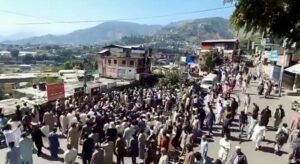
The recent protests, on 9 June, 2026, in PoJK (consisting of Gilgit Baltistan & Azad Jammu & Kashmir), particularly in Rawalkot, led to the reported death of 30 people. Economic misery, unemployment and lack of resources have episodically made the population in PoJK, revolt against their Pakistani masters. The proximate cause of the protests in PoJK was the decision of the government to hold 12 seats in the Assembly for refugees in the elections, due to be held on 27 July. The decision of the Joint Action Awami Committee (JAAC) to protest this decision, led to a pre-emptive crackdown by the police and paramilitary forces, leading to unrest and violence.
The problem is there for all to see. What should India do? While a complete re-taking of the region is a difficult proposition, it is not impossible. It can occur if there is a sustained and consistent campaign by India to make the people of PoJK feel that they are ‘Indians’ and not Pakistani’s.
Elections in Gilgit Baltistan
In the ‘General Elections’ held in Gilgit Baltistan, the Pakistan People’s Party won 11 of the 24 seats in the Assembly. The elections which were due in January 2026 had been postponed on account of the terrain and weather. The challenge is that the new government will not be in office as the Election Commission of Pakistan has stated that final results cannot be released until re-polling is held in five constituencies. This is the fourth election held to the Assembly since 2009 and each time an election is held, the further away India moves from Gilgit Baltistan. The real challenge is the complete lack of attention to the needs of the people of the region that has been evident since 1947. Currently, Gilgit Baltistan faces an energy crisis. Power outages during winter are 16-19 hours a day and badly affect the lives of students, shopkeepers, healthcare institutions, and small industries. While electricity demand has grown significantly in the past few years, generation capacity in the region remains very low, resulting in frequent shortages. Furthermore, reduced water flow and freezing water make small hydropower plants inoperable during winter. Successive administrations have failed to prioritise new and renewable energy technologies, like alternative power sources and advanced energy storage, to deliver a permanent solution for citizens. Thus, the people of the region see the mere slogan of electioneering as an unnecessary drama that does nothing to address the real problems facing the people of the region.
Violence in Azad J&K
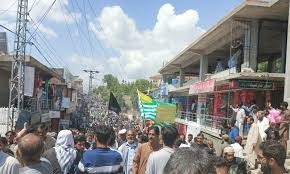
The same is the case with Azad Jammu and Kashmir. In the last couple of years, there have been several protests against high electricity charges and unemployment. Each time, the government of Pakistan manages to curb, bribe and quell the protests without much ado. The latest protests also are in similar vein. The JAAC was banned by the AJK government and tensions arose over the death of a trader on 7 June 2026. When the protestors gathered at the hospital where the trader had been taken, police decided to disperse them and in the ensuing melee, six people were killed. The clashes occurred a day ahead of planned protests by JAAC, which had called the demonstration to protest the reservation of 12 seats for refugees in July 27 elections to the region’s legislative body, out of 45 up for grabs. The group was also protesting earlier incidents of violence, internet blackouts, the group’s ban, as well as issues such as electricity shortages, inflation, unemployment, alleged resource exploitation, and political marginalisation. Founded in September 2023, the JAAC is a coalition of traders, transporters, lawyers and student groups that has become the most credible grassroots platform in PoK.
The JAAC had called a region-wide shut down and a long march on June 9, to press a 38-point charter of demands. Chief among them is the abolition of 12 seats in the PoK assembly reserved for so-called “refugees from Indian Kashmir” — seats that Islamabad has long used to install a captive bloc in the Muzaffarabad assembly, regardless of how PoK’s own people vote. Of the 53 assembly seats in all, those 12 are filled and manipulated from Islamabad, sources in the region said, even though barely any such migrants live in the territory.
India’s Stand on POJK
India rightly condemned the violence perpetrated by the Pakistan Rangers in Rawalkot and reminded the world community to look at the manner in which Pakistan has handled the region. India now needs to work towards getting the people of PoJK their rights in a sustained and concerted manner
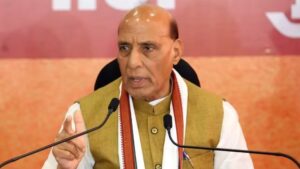
Rajnath Singh, defence minister, has on several occasions spoken of the region coming back to India based on the volition of the people themselves. In September 2025, Defence Minister Rajnath Singh said India would regain control of PoJK without resorting to military action, asserting that the people of the region are themselves seeking freedom. A classic case of psychological war that needs to reinforced. Rajnath Singh made these remarks while addressing the Indian community in Morocco adding that “PoK will be ours on its own. Demands have started being made in PoK; you must have heard the sloganeering.” Five years ago, the defence minister had made similar remarks, during an Indian Army event in Jammu and Kashmir. “I had said then that we will not need to attack and capture PoK; it is anyway ours. PoK itself will say, ‘Main bhi Bharat Hoon’. That day will come,” he said. There is no reason for India to move away from making this happen at the earliest.