 Kalyan Chatterjee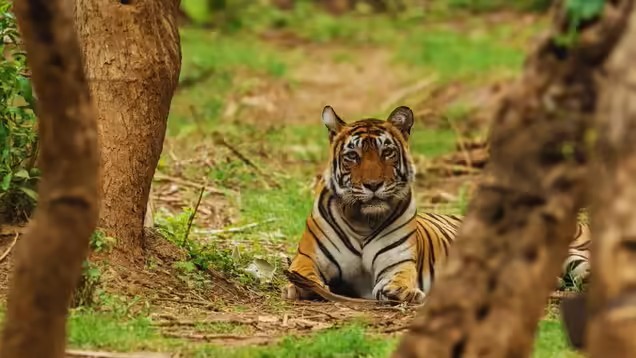
Sariska’s Fall: The Scandal That Exposed India’s Conservation Failures
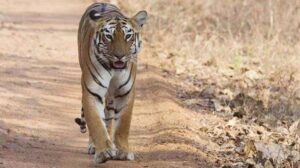
When the extinction of tigers at Sariska was officially acknowledged in 2005, the government of the day swung into action and appointed a five-member task force, to investigate the reasons for the extinction and recommend measures to improve tiger conservation. The Task Force was made up of wildlife and environmental experts. This followed a visit to the Reserve by a team of trackers from Wildlife Institute of India (WII), that failed to discover any trace of the animal even after 15 days of scouring the range. An independent inquiry by the CBI endorsed this finding. The Sariska extinction came as a big setback to India’s flagship ‘Project Tiger’ conservation programme kicked off in 1973 to prevent extinction of this majestic big cat.
The Task Force, that included renowned ecologist, Madhav Gadgil, and Hemendra Singh Panwar, former Project Tiger head, submitted a 206-page report ‘Joining the Dots’, perhaps the most comprehensive report on tiger conservation ever published in the country. The Task Force painted a damning picture. Tigers had not simply disappeared from Sariska; they had been systematically wiped out by poachers while park authorities and their officials continued to report reassuring — and ultimately misleading — population figures year after year, consecutively for five years. The deception masked a deepening crisis. At the same time, illegal mining operations were eating away at the reserve’s fragile ecosystem, degrading habitat and draining scarce water resources across the Aravalli landscape. By the time the truth emerged, one of India’s premier tiger reserves had been emptied of the very species it was meant to protect. It recommended among other things a re-organisation of the tiger conservation administration and measures to strengthen protection.
Who Owns the Forest? The Debate Over Inviolate Spaces
One contentious question that emerged in the report was creation of people-free ‘inviolate spaces’ habitation protected areas (PA) for the regeneration and survival of tigers. The alternative was to allow human wildlife coexistence to continue. The creation of ‘inviolate space’ involves the uprooting of hundreds of villages that have existed from well before the PAs came into existence, a process which is politely referred to, in official and scientific circles as ‘relocation’. For its part, the report conceded that policy must accept that people will continue to live in PAs, but it left the issue unresolved. It must be kept in mind that it was in 2006 that the Forest Rights Act (FRA) was passed by Parliament recognizing the rights of forest dwellers.
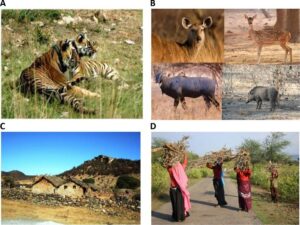
Further, the report pointed out that the tiger habitats were also the areas where the majority of tribals co inhabit the tiger’s home and were forest-dependent. They lived within a biomass subsistence economy; and could only survive only if they have access to forest resources. For them, life is just not possible without the forests. ‘Resolution, therefore — untested across the world — will lie in our abilities to create an environment so that the tiger, forests and people can coexist.’
The controversy surrounding the idea of an ‘inviolate space’ for tigers was so pronounced that it surfaced within the pages of the Task Force Report itself. The document revealed a sharp divergence of opinion among its authors, reflecting a broader national debate over whether effective conservation required the exclusion of human activity from critical tiger habitats. A dissent note was submitted by its member, Valmik Thapar, a naturalist and wildlife film maker, who protested against its recommendation that the habitat must be shared between the people and the tigers. Replying to this, Task Force Chairperson Ms. Sunita Narain said that key problem was that the conservationist constituency had become extremely exclusivist. She accused “some conservationists of having a direct interest … through businesses in hotels and film making which has led to even greater alienation of all against the tiger, which they believe is being protected for the sake of a few.”
This assumes great significance in tiger conservation as there are as many as 29 villages in the Sariska Reserve core area (Gobind Sagar Bharadhwaj), according to a report ‘View of Sariska Tiger Reserve: A Managerial Approach to the Problems of Landscape’. Three villages have been moved out, but in addition, there are another 146 villages within a 3-km radius of the Reserve.
Where Tigers and People Once Lived Together
The Report also noted that, many researchers had recorded the special relationship traditionally existing in Sariska between the Gujjars, the Tigers and the nature. But official interference and constant intimidation had led to such a breakdown that, it is widely suspected that villagers hired the services of traditional hunting communities to ‘protect’ themselves and their livestock from the tigers. It is important to note here that the government has no provision for awarding compensation for livestock killed by animals inside a protected area.
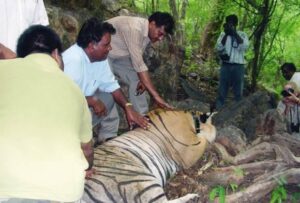
The Report also noted that, many researchers had recorded the special relationship traditionally existing in Sariska between the Gujjars, the Tigers and the nature. But official interference and constant intimidation had led to such a breakdown that, it is widely suspected that villagers hired the services of traditional hunting communities to ‘protect’ themselves and their livestock from the tigers. It is important to note here that the government has no provision for awarding compensation for livestock killed by animals inside a protected area.

According to the WII Monitoring Report, the tigers began to breed only after 2012. By 2022 their number had grown to 19 and they crossed the 50-mark by 2025. The numbers are based on estimates that use a combination of techniques – radio collars, direct sighting, camera traps and pug marks. These techniques were put into use after the unreliability of counting pug marks was revealed by the Sariska episode in which no one had any idea of the dwindling number of tigers, till the last few months. According to wildlife experts, in the absence of reliable population monitoring there is no way of knowing whether efforts to save the tiger are succeeding or failing.
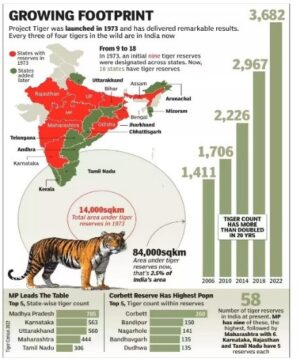
But while rising tiger numbers are shown as a sign of success of wildlife conservation, few detailed studies have been carried out, on the larger picture of the ecological impact of the repopulation of this apex carnivore and thereby in the preservation of biodiversity. Former Union Minister and Chairman of the Indian Wildlife Board, Dr. Karan Singh, who kickstarted the Project Tiger in 1973, recently said, “The tiger was just the peak of the pyramid. The entire environment and ecology also gets conserved along with the tiger. But he also admitted that it was a mistake not to involve forest dwellers, in the first phase of the Project. They are closely associated with the forests and know everything.”
The emphasis with regards to tiger conservation has rather fallen on the creation of ‘inviolate space’ for the animals and relocation of villages, a polite term that actually means, throwing people out of their homes. The argument runs thus: problem- rampant poaching and habitat degradation has resulted in the decimation of the tiger population. Solution: throw the indigenous and other forest dwellers out of the forests.
Ecologist, Ghazala Shahabuddin, however, was sceptical about the need for an inviolate space for tiger breeding, dismissing it as a “buzzword that has been accepted globally at its face value”. Dr. Shahabuddin, who has carried out extensive research in Sariska, said, “To the contrary, the tiger thrives within moderate disturbance, whether human or otherwise, since it needs a certain degree of heterogeneity in the landscape”. She held out the example of the Nagarhole Reserve, where natural forests were cleared by the British in the 18th and 19th centuries to create teak and coffee plantations. Later, these plantations were turned into a national park which has a high human density, where the tigers thrive too.
HISTORIC ANTHROPOGENIC CHANGE
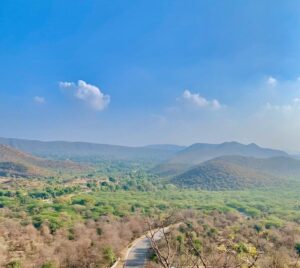
Further, Dr. Shahabuddin said that there are also persistent signatures of historic anthropogenic change in flora and fauna in Sariska that cannot be attributed solely to current forest dependencies. There is much evidence of persistent effects of past timber extraction and other state-sponsored commercial activities, during the past century. However, forest managers continue to solely blame current forest dependencies for the current degraded state of the forest. She said, “Villagers claimed that much of the degradation was due to timber extraction and grazing by outsiders, possibly with the abetment of the forest establishment”.
Mr. Gopal Singh of Kapavris, who has been working with local pastoral communities in Alwar both inside and outside the Sariska Reserve, for the restoration of traditionally maintained ecosystem and waterways, felt that the forest officials were keen to get rid of the villages inside the Sariska Reserve, as they did not want people to keep a check on their mismanagement of the forests.
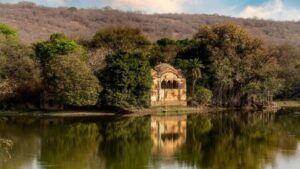
Mr. Gopal Singh of Kapavris, said, “Local agro-pastoralist Gujjar communities living in over 26 villages within the sanctuary have for centuries been the traditional custodians of the ‘Oran’ – a sacred forest ecosystem comprising of grassland, medicinal trees, shrubs and ‘Oran talaab’ -waterways, that is unique to Rajasthan. The ‘Orans’ are a part of the ‘Siliserh Chhind’ – the intricate system of grazing lands and arid forests located within and around the tiger reserve”. He pointed out, “They are the main source of livelihood for the Gujjar community”. Further, he said, “Historically, the ‘Orans’ were managed by local communities with women playing a significant role in the preservation of wildlife and biodiversity. After Sariska was acquired by the government, the shift in ownership and management from the community to the forest department led to gradual deterioration of the ‘Orans’.”
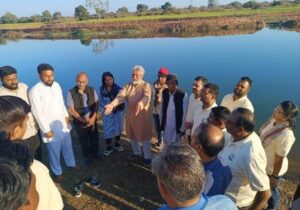
Waterman, Dr. Rajendra Singh, of Tarun Bharat Sangh (TBS) which has worked for revival of water bodies in the Alwar area, is more forthright in his criticism of efforts to evict the Gujjars from villages. He said, “These people who have been living with tigers for ages have now been declared enemies of the tiger, ignoring the Indian tradition of achieving harmony between nature and human culture. Bureaucrats are eager to remove the village as they would profit by it. They are motivated by convoluted thinking that attaches more value to the economic infrastructure rather than the natural cultural infrastructure. They have forgotten their natural excellence and bowed to artificial intelligence.”
Dr. Yadavendra Jhala, a wildlife scientist who has worked closely with Project Tiger, a strong votary of the ‘inviolate space’ hypothesis, is now prepared to take the middle path saying that ‘land sharing’ between the people and predators are also necessary for the recovery of tiger populations.
Conclusion
As India prepares to celebrate Sariska’s revival on the global stage, the reserve stands as both a conservation triumph and a reminder of unfinished business. The tiger has returned. Whether the future belongs to a model of exclusion or one of coexistence remains an open question. In the end, Sariska’s most enduring lesson may be that saving wildlife is not only about protecting animals. It is also about deciding what place people will have in the landscapes they have long called home.