 Dr. Bhashyam Kasturi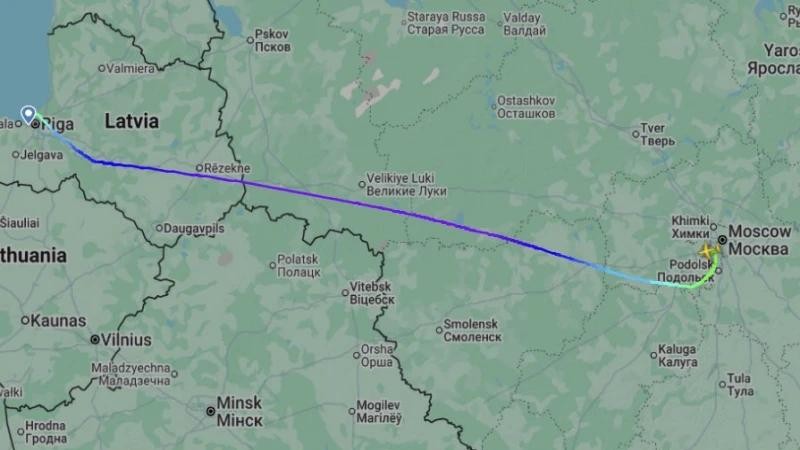
The visit was ‘Semi-routine’ says Trump

President Donald Trump said the CIA Chief’s visit was “semi-routine”, indicating that it had been pre-planned, but elements of the trip were added on, due to intelligence obtained just prior to the visit. Trump added his hope that the war in Ukraine would end soon. The Russian State media described the visit as a regular meeting, emphasising however, that Ratcliff did not meet President Putin. This suggests that the US side may have officially sought a meeting with the Russian President, but it was not acceded to. The US must have gathered intelligence on a possible escalation in Ukraine by Russia and conveyed the same to Moscow. However, any US ‘warning’ to Russia in the given circumstances is futile, unless it is backed by perceptible deterrence. Recall that, the then CIA Chief, William Burns, was in Moscow, in November 2021, to tell the Russians not to attack Ukraine, which eventually occurred in February 2022.
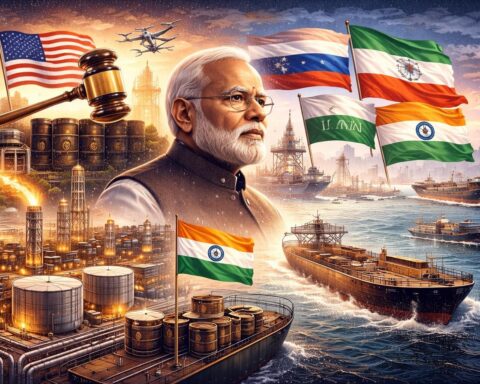
Globally, it is not unusual for governments to send intelligence chiefs to convey messages. For instance, in India’s case, NSA Ajit Doval visited Moscow, in August last year and again in May 2026. In the first instance, he paid a courtesy call on President Putin, to convey a message from Prime Minister Modi on India’s energy purchases from Moscow. Most such engagements are built into regular intelligence liaison meetings, so that deniability is always there. However, intelligence channels are usually used, when the political establishment feels more confident in such conversations, as opposed to using a diplomatic channel in the form of a special envoy. Ratcliff is a Trump nominee and supporter; therefore, he is more likely to stick to the pre-arranged narrative, as advised by Trump. Such channels are also discreet, making it easier to confidentially carry and convey warnings or even requests.
Trump’s Push to End the Ukraine War

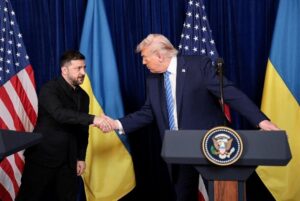
Ultimately, one point on which Trump has remained consistent is his determination to bring the war in Ukraine to an end. That commitment was underscored most recently in his remarks to the American media following CIA Director John Ratcliffe’s visit to Moscow, when Trump again spoke of the need to bring the conflict to a close. Politico quoted Trump, “I hate to disappoint people. We would like to see the war with Ukraine end.” The question, therefore, is whether the CIA chief carried to Moscow a new peace proposal — perhaps one drafted with the mediation of Oman or Qatar?
At the same time, the Trump administration’s strategy of economic warfare against Iran, with further sanctions reportedly in the pipeline, suggests that Ratcliffe’s discussions may also have extended to Moscow’s support for Tehran in the ongoing conflict. That could include the supply of military equipment to Iran, as well as the extent of Russia’s diplomatic backing for the Iranian position.
The El Pais, a Spanish newspaper, noted that Moscow discussions were probably focused on Iran, in view of the upcoming Midterm elections in the US. It hints at a likely Iranian attack or a request to Russia to stop supplying intelligence to Tehran, which could be used against the US. Given the Western media focus on Ukraine, the Iran angle appears to have been deliberately underplayed, and likely was the primary focus of discussions in Moscow.
Russia’s War in Ukraine: What Comes Next?
Thus, there is a dual messaging going on; first, the US is warning Russia of more sanctions if it deals with or supports Iran. Second, it is requesting Moscow to wind down the war in Ukraine, as reported by the New York Times. Recall that Ukraine’s recent deep strikes with long-range drones, have not only disrupted Russia’s energy infrastructure but have also brought the war directly to the doorstep of ordinary Russians. Yet the Kremlin appears, for now, content to remain largely on the defensive while continuing to wage a hybrid war against Ukraine and the West.
Extending the conflict to NATO would have the potential of widening the war and further impacting the Russian economy. Thus, Putin is probably playing for time, while keeping all options open.
Central Asia: America’s Next Strategic Frontier
In the wider global context, the US is also interested in how Russia sees the world, especially its relations with China and North Korea. As well as the activities of multilateral forums like the SCO and BRICS. With the Russians using North Korean military manpower for operations in Ukraine, the US sees the Russia-China axis with renewed interest.
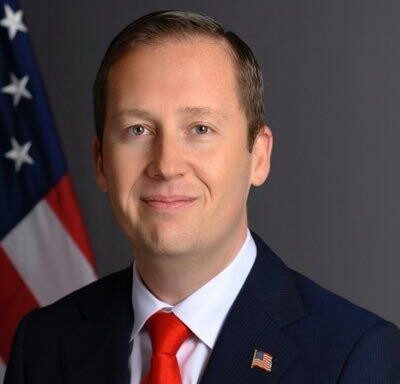
This is evidenced by the US’ latest outreach via Sergio Gor, who is also his Special Envoy for Central Asia, to Bishkek. This is for the World Nomad Games, which were inaugurated near simultaneously with the SCO Summit. On the sidelines, Gor met with both the Uzbek and Kyrgyz President, indicating US efforts to renew their push into Central Asia. Two things are clear from the Gor presence in Bishkek. First, the Russia-China axis on Iran and Ukraine, requires a US counter in Central Asia, going beyond energy. Second, while the US watches India’s participation at these Summits carefully and does not particularly like it, it grudgingly accepts India’s autonomous foreign policy choices.
In the long run, the Russia-China tango is the new centre of power in Eurasia, with Russia being the smaller partner. The only new thing is the conglomeration of other powers like North Korea and Iran into this tango.
The challenge for India is to balance relations with all these countries and the US, while maintaining its core national interests in an uncertain world.